

 Online Reporter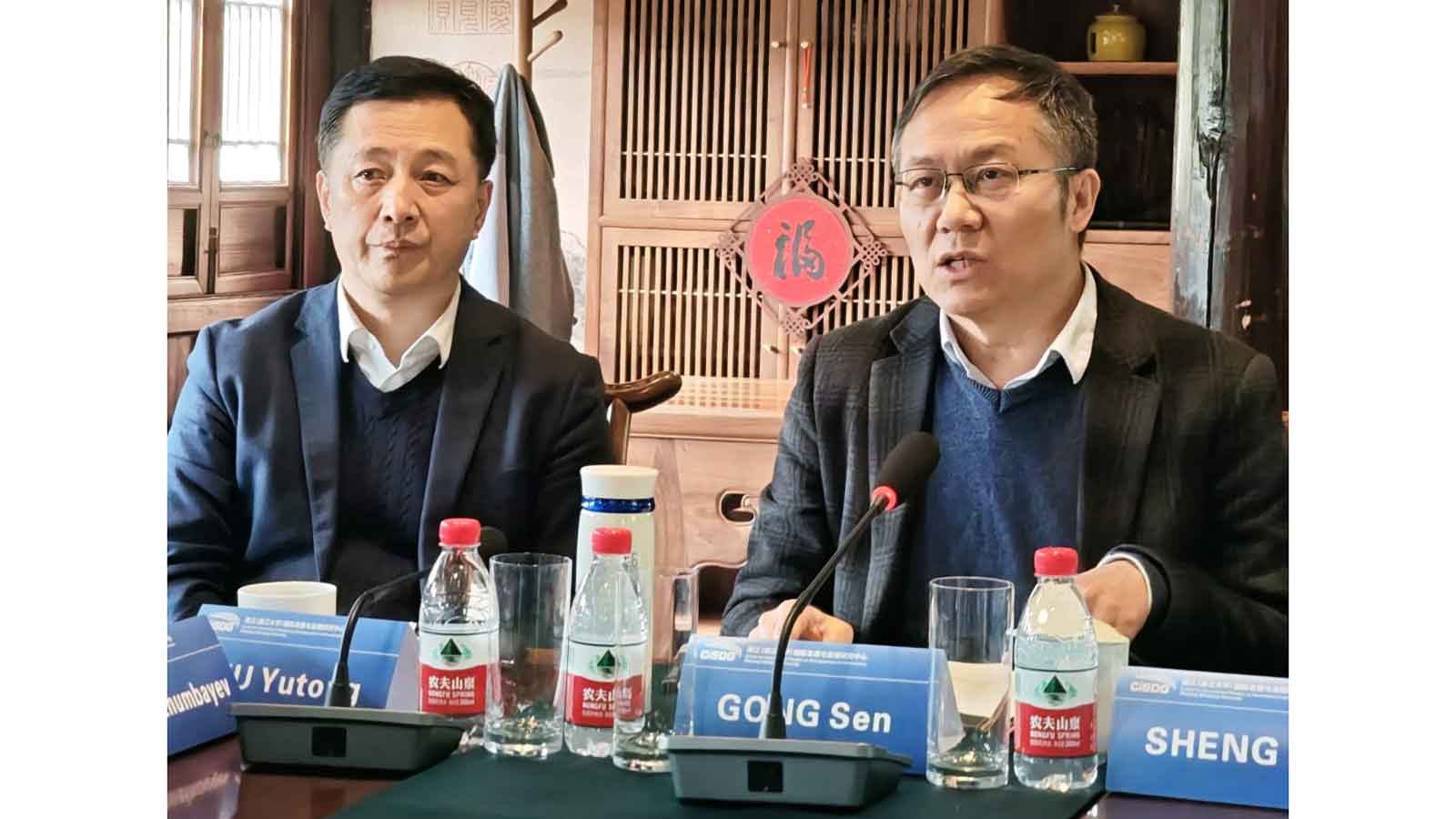
Kuda Bwititi in Zhejiang province, China
CHINA’S Zhejiang province has an overseas investment volume of more than US$600 billion, with plans to increase that figure this year—a development that could unlock further opportunities for Zimbabwe as the country launches its Artificial Intelligence.
The eastern Chinese province, one of the country’s most economically dynamic and technologically advanced regions, is home to world-famous companies including Alibaba, DeepSeek, and robotics giant Unitree. As Zimbabwe launches its AI policy, valuable lessons can be drawn from Zhejiang’s significant innovation ecosystem.
Speaking to journalists, Professor Gu Jianxin, the Director General of Foreign Affairs for Zhejiang province, outlined the scale of the region’s global footprint.
“Every year, we have a ranking for regional innovation capacity. This province always ranks highly among the most innovative provinces. There are so many high-tech companies. We have Unitree, which makes the world’s famous robots. It’s a birthplace to many tech companies like Alibaba.”
Unitree Robotics, headquartered in Hangzhou’s Binjiang District, has emerged as a global leader in civilian robotics, specialising in high-performance quadruped and humanoid robots that have performed at the 2022 Winter Olympics and 2023 Super Bowl.
Dr Sen Gong of Zhejiang University’s Centre for International Studies on Governance and Development outlined the key elements behind Zhejiang’s success. He underscored the importance of “actors and their competences, actors’ interactions, and institutional framework” in building a technological innovation system.
Also, Dr Gong noted that regional innovation requires “institutionalised learning and information exchange” and a “cultural base or social capital: productive culture to systemic innovation, culture of cooperation.”
For Zimbabwe, as it unveils its AI policy, these lessons are timely. The country seeks to harness artificial intelligence for economic transformation while ensuring local beneficiation of resources—similar to Zhejiang’s approach of developing indigenous technological capabilities.



