Africa Moyo
Zimbabwe and the African Development Bank (AfDB) have increased pace of deliberations over debt clearance, a top AfDB official has said.
AfDB executive director representing Southern Africa Group II Constituency, Heinrich Mihe Gaomab II, who visited Zimbabwe recently to assess the Bank’s projects in the energy and water sectors, said the two parties will further engage during the Spring Meetings next month.
The 2019 Spring Meetings of the World Bank Group and the International Monetary Fund (IMF) are slated for Washington, DC from April 12 to 14.
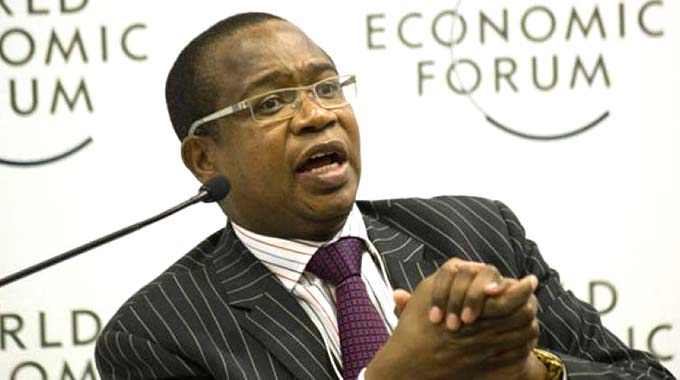
Finance and Economic Development Minister Professor Mthuli Ncube is expected to attend these crucial meetings.
Gaomab II said: “It’s (debt clearance) an agenda item that is foremost for the nation of Zimbabwe, it is also an agenda item that is in the minds of the bank.
“The debt clearance situation going forward is that we are still going to maintain engagements with Zimbabwe. There has been quite strong level of talks, high levels of talks among us and we are still going to meet at the Spring Meetings to discuss further.
“But the commitment is there, there is a strong sense of commitment by Zimbabwe.”
On its part, Government says it “knows about our arrears” to the AfDB.
Harare says “good progress” has been made over the debt issue.
AfDB is owed $605 million and Zimbabwe is considering a bridge finance whereby the AfDB, under the Arrears Clearance Window (Pillar II) of the Fragile States Facility or their Transition Stabilisation Facility, gives Harare a grant of about $500 million to settle the debt.
That would mean that the country’s net payment would be around $120 million.
A previous report compiled by the AfDB suggested that Zimbabwe was the “most likely” country to benefit from the Fragile States Facility (Pillar II) operations in the African Development Fund-12, compared to other countries in protracted arrears such as Somalia and Sudan.
Zimbabwe also owes the World Bank $1,2 billion, and under the pari-passu principle, the country cannot choose to pay creditor and ignore the other.
Minister Ncube recently said they are working on a strategy of paying all creditors at the same time, in line with the pari-passu principle.
In October 2016, Zimbabwe cleared its US$108 million arrears with the International Monetary Fund’s Poverty Reduction and Growth Trust.
The country had been in arrears since 2001.
Harare is making frantic efforts to see through the current arrears clearance plan, which was accepted by multilateral financial institutions in Bali, Indonesia, in October last year.