Zimpapers Reporter
PRESIDENT MNANGAGWA has pledged commitment to strengthening the United Nations’ role in maintaining international peace and security, with Zimbabwe set to take up a non-permanent seat on the UN Security Council.
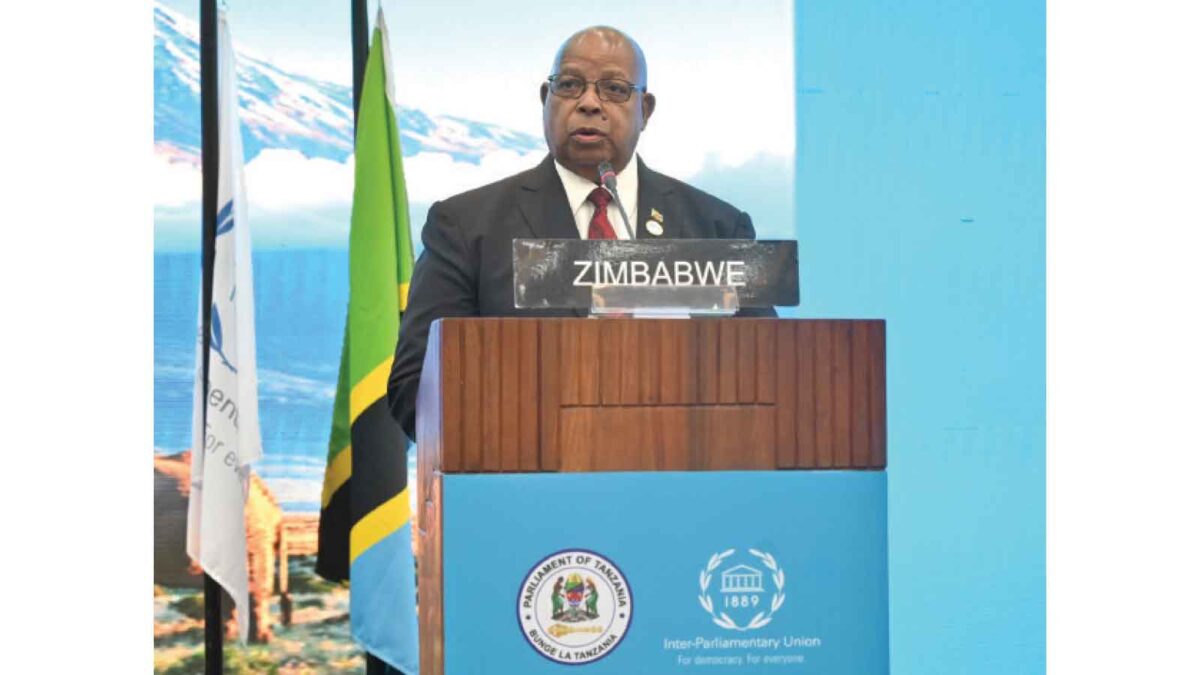
The commitment, anchored in preventive diplomacy, multilateralism and respect for international law, was conveyed by Speaker of Parliament Advocate Jacob Mudenda while addressing delegates at the 153rd Assembly of the Inter-Parliamentary Union (IPU) and related meetings held in Arusha, Tanzania, from Monday to Friday.
Held under the theme “Enhancing good governance and empowering communities through inclusivity, trust and opportunities for all”, the assembly brought together parliamentary representatives to discuss governance and inclusive development.
Said Adv Mudenda: “Zimbabwe and its Parliament, through the President, Dr ED Mnangagwa, would like to thank profusely the governments of the IPU family for having voted resoundingly for Zimbabwe to be a non-permanent member of the United Nations Security Council.
“In that regard, President Dr ED Mnangagwa has pledged that Zimbabwe will advance efforts for global peace and security guided by the principle of preventive diplomacy and faithful adherence to multilateralism, as well as the respect for international law.”
Adv Mudenda called for Africa’s experiences and perspectives to be given greater recognition in shaping international governance frameworks.
He said the continent’s 54 member states, representing about 1,4 billion people, had valuable governance experience that could inform global standards, particularly in addressing resource constraints, institutional weaknesses and external pressures.
“We ask not for approval of our approaches, but for partnership in developing global standards that work for the majority of the world’s people,” he said.
Adv Mudenda said Zimbabwe’s development philosophy of leaving no one and no place behind demonstrated the importance of inclusivity in building trust and expanding opportunities.
He cited parliamentary women’s and youth caucuses as practical measures to promote participation and empower marginalised groups.
Zimbabwe has established women’s and youth empowerment banks to widen access to finance and promote economic inclusion.
People with disabilities are catered for through the implementation of the Disability Act, while devolution funds support development projects targeting communities across the provinces.
Adv Mudenda warned that rapid digitalisation could deepen existing inequalities if legislation failed to keep pace with technological change.
He said public services, civic participation, economic opportunities and access to information were increasingly moving online, potentially excluding those without internet access.
“Yet 2,6 billion people globally remain without internet access while Sub-Saharan Africa’s internet penetration stands at approximately 37 percent,” said Adv Mudenda.
“Parliaments must, therefore, take responsibility for the regulatory framework of digital inclusion, otherwise digital exclusion will entrench every other form of inequality.”
Adv Mudenda said Parliament had established a Committee of the Future to address digital exclusion through long-term planning, including a 50-year vision and the development of a legal framework for emerging technologies, particularly artificial intelligence.
He urged IPU member parliaments to cooperate in developing legal frameworks that promote good governance, strengthen trust and ensure that technological advancement creates opportunities for all.