Oliver Kazunga-Senior Reporter
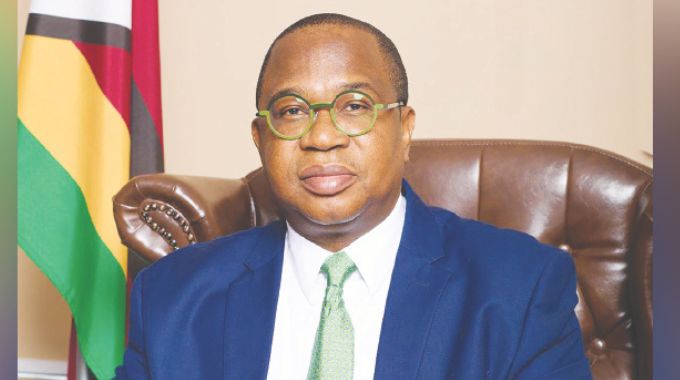
ZIMBABWE is projecting a record current account surplus of more than US$3 billion by December, with Finance Minister Professor Mthuli Ncube saying improving external balances are strengthening the banking sector and expanding its capacity to finance economic activity.
This comes as the Government continues to consolidate macro-economic stability, sustain economic growth, and improve access to financing for businesses amid persistent global economic uncertainties.
Speaking at a virtual Press conference yesterday at the ongoing 2026 International Monetary Fund (IMF) and World Bank Annual Meetings in Bangkok, Thailand, Prof Ncube said the country’s improving external position was beginning to be reflected in the banking sector.
“Come December 2026, we should be able to record a current account surplus of over US$3 billion — this is a record. All these resources are coming to our banking sector; that’s where you find some of this current account surplus,” he said.
Prof Ncube said the growth in external resources was supporting increased deposits in the banking sector, enabling financial institutions to extend bigger loans than previously possible.
Against this background, he said some banks were already extending loans of up to US$100 million, which is evidence of growing lending capacity.
“Our banking sector is also growing in terms of deposits, and we are able to support bigger loans as we go forward. We are already beginning to see this, where some banks are able to extend loans as much as US$100 million now in size,” he said.
The projected surplus would mark a major development in Zimbabwe’s external accounts, although its ultimate impact on businesses and households will depend on the composition of the inflows and how effectively financial resources are channelled into productive activity.
A current account surplus occurs when a country’s receipts from exports of goods and services, income, and transfers exceed its corresponding payments abroad.
It can help strengthen external resilience, but it is not the same as money directly available to the Government for spending.
Prof Ncube attributed the improving economic environment to prudent fiscal and monetary policies, saying better coordination between Treasury and the Reserve Bank of Zimbabwe was helping to sustain stability.
“We are also able to explain that the current macroeconomic stability, which is a result of prudent fiscal policy and prudent monetary policy and good coordination between the two — that macro stability is also having a positive impact on the economy.
“Companies are finding it easier to plan and to invest, even to pay their taxes. Where they would pay Government last, now they are able to pay Government on time,” he said.
Improved compliance, Prof Ncube said, was helping strengthen Government revenue collection, and Treasury expected to end the year with a positive primary fiscal balance while working to build a buffer to protect the economy against anticipated climate-related pressures.
“So even our tax revenues are responding positively. As I speak, we expect to end the year with a positive balance, just primary balance, but of course we have got debts to pay, so we have to clear some debts.
“We are trying hard to even build a buffer that will help us to deal with the El Niño shock into next year.”
Prof Ncube also said the Government had avoided using the Reserve Bank to finance its expenditure through money creation.
“On the fiscal front, the fiscal authorities, led by myself, have not used the Reserve Bank window to borrow. We have not been financing Government activity through reserve money accumulation and printing of money.”
On the foreign exchange market, he said the premium between the official and parallel exchange rates had narrowed to within 15 percent.
He added that the Reserve Bank would introduce a new foreign currency trading system in the coming few weeks to improve price discovery and exchange-rate management.
The projected current account surplus comes against the backdrop of continued economic growth, although the Government expects expansion to moderate next year because of climate risks. Prof Ncube said Zimbabwe recorded growth of 8.3 percent last year and was projecting 5 percent growth this year, followed by 3.5 percent in 2027.
“The Zimbabwean economy is growing robustly. Even with El Niño threatening us, we still expect a growth rate of 3,5 percent, which is even higher than what we experienced in 2024 when we had a similar climate shock. Every sector is doing well, whether looking at manufacturing, agriculture, mining and so forth.”
However, the anticipated climate shock remains a key risk to agricultural production, food security, and overall economic performance, making the Government’s planned response and its ability to build financial buffers particularly important.
Alongside its domestic economic priorities, Zimbabwe is pursuing international support to accelerate the clearance of external arrears and improve its engagement with creditors. As at the end of September 2025, total public and publicly guaranteed (PPG) debt in US dollar terms stood at US$23.4 billion, representing an 8.5 percent increase from US$21.5 billion as at end-December 2024.
The debt stock comprises external debt amounting to US$13.6 billion (58.1 percent) and domestic debt of US$9.8 billion (41.9 percent). The increase in the stock of PPG debt from end-December 2024 is primarily attributed to the increase in domestic expenditure arrears to service providers, which rose from US$34 million in December 2024 to US$1.3 billion as at end-September 2025. These arrears have been derived from raw data, which has not been validated by Treasury.
Prof Ncube said the Government was seeking bridge financing and planned to approach potential financiers in Europe and elsewhere. He added that the Government was considering alternatives if concessional financing proved difficult to obtain.
“If we can secure this bridge financing, then that will enable us to clear our arrears. If there is no champion to help us with bridge financing, then we may be able to look at commercial solutions as well,” he said.
Prof Ncube said the Government was determined to make progress on arrears clearance by the end of March 2027.
“We are really determined that come end of March next year, we really should make progress on this arrears clearance,” he said.
The minister called for African countries to receive more affordable, longer-term financing to fund infrastructure and build resilience against climate shocks.
He said Zimbabwe had urged the IMF to increase support for countries facing growing financing pressures.
“We need the IMF to double down on supporting African countries with their various funding needs to deal with climate shocks, to deal with resilience, but also to have access to cheaper capital, longer-term capital, finance infrastructure and so forth,” he said.