Online Reporter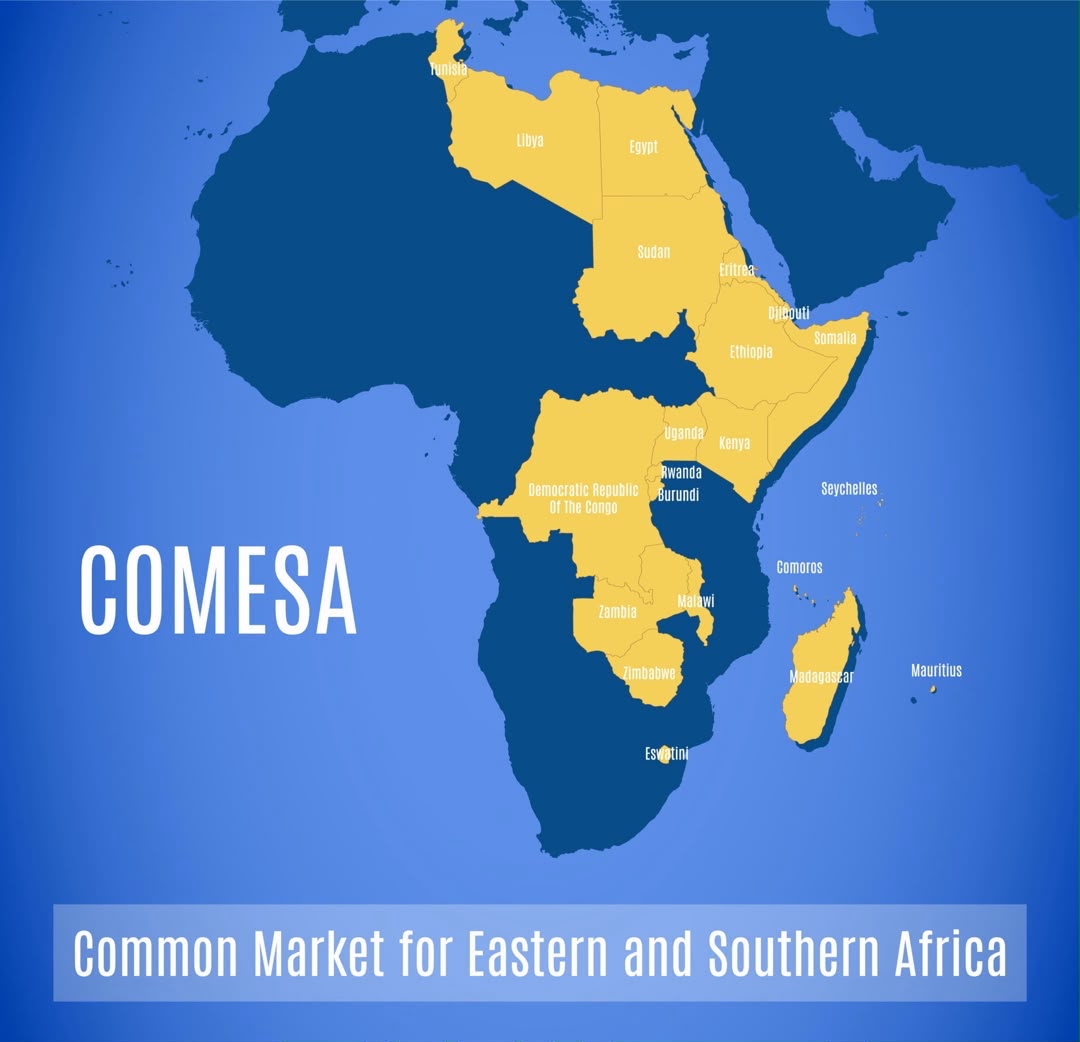
Gibson Mhaka Zimpapers Politics Hub
THERE are summits that come and go, leaving behind little more than communiqués, official photographs and memories of diplomatic pleasantries.
Then there are summits that offer countries an opportunity to put their economic ambitions firmly on the regional map.
For Zimbabwe, the 25th Common Market for Eastern and Southern Africa (COMESA) Heads of State and Government Summit, to be held in Harare from October 19 to 22, falls into the latter category.
It comes at a particularly important juncture for the Second Republic as Zimbabwe prepares to assume the COMESA chairmanship and host a gathering centred on “One Market, One Future: Advancing Inclusive
Industrialisation, Investment and Regional Integration in COMESA”.
The theme itself provides an appropriate platform for Zimbabwe to demonstrate what President Mnangagwa’s “Zimbabwe is Open for Business” policy means in practical economic terms.
The policy, which has been a prominent feature of the Second Republic’s economic diplomacy, was conceived around attracting investment, rebuilding international economic relationships and creating a more competitive business environment.
Government’s own Vision 2030 explicitly identifies enhanced domestic and foreign investment and the creation of a competitive and friendly business environment as pillars of the national development agenda, encapsulated in the “Zimbabwe is open for business” philosophy.
The forthcoming COMESA Summit therefore presents Harare with an opportunity to connect that national investment message with a regional market of enormous economic potential.
This is where the summit must move beyond the ceremonial.
Zimbabwe will not simply be hosting visiting Heads of State and Government. It will be receiving policymakers, investors, business leaders, development partners, academics and private-sector players from across Eastern and Southern Africa.
The COMESA Business Forum, scheduled for October 19 to 21, will bring together business leaders, investors, policymakers and other economic stakeholders, while the accompanying multi-sectoral exhibition will provide a platform to showcase products, services, technologies and investment opportunities.
This presents an important distinction.
An “Open for Business” Zimbabwe cannot merely tell investors that it is open. It must demonstrate where the opportunities are, what has changed in the business environment and, most importantly, how investors can participate in Zimbabwe’s economic transformation.
That means the country’s participation at the summit should extend beyond protocol.
Mining, agriculture, manufacturing, tourism, infrastructure, energy, financial services and information and communication technologies provide obvious entry points.
Zimbabwe has substantial mineral resources, an agricultural base, industrial capacity and tourism assets. But the larger opportunity lies in connecting these sectors to regional value chains.
The COMESA theme of inclusive industrialisation makes this particularly relevant.
Instead of viewing COMESA simply as a destination for Zimbabwean exports, the bloc can be approached as a platform for building production networks in which Zimbabwean manufacturers, farmers, miners, technology companies and service providers participate alongside businesses from other member states.
This is consistent with the broader direction of regional integration.
COMESA comprises 21 member states and is designed to promote trade, investment, economic cooperation and regional integration. The bloc’s current agenda includes industrialisation, investment, regional value chains and greater movement of goods, services and capital.
For Zimbabwe, this means that the Open for Business message should increasingly be understood through the language of regional value chains.
A foreign investor looking at Zimbabwe should not only see the domestic market.
They should see Zimbabwe as a potential production base from which goods and services can access the wider COMESA market.
That is the real economic significance of hosting the summit.
The 19th COMESA Business Forum provides an especially important bridge between diplomacy and commerce. Its programme includes discussions on trade and mobility, regional value chains, financing and investment, digital transformation, artificial intelligence and innovation.
These are precisely the areas in which Zimbabwe needs to position itself.
The country therefore has an opportunity to put its investment proposition directly before people who can turn economic discussions into commercial relationships.
This is also where the Second Republic’s engagement and re-engagement thrust acquires an economic dimension.
President Mnangagwa has repeatedly linked the “Zimbabwe is Open for Business” message to the country’s efforts to attract foreign direct investment and strengthen economic partnerships. In a 2019 address, he described the message as an invitation to those beyond Zimbabwe’s borders to partner the country in the revival, renewal and transformation of the economy.
Seven years later, the COMESA Summit offers a different but complementary platform for that message.
This time, the audience is not only global investors.
It is Zimbabwe’s neighbours.
And neighbouring markets matter.
Regional trade can provide businesses with opportunities to expand beyond the limitations of the domestic market, while regional value chains can help companies specialise, source inputs more efficiently and reach consumers across borders.
The COMESA Business Forum is therefore more than an event on the margins of the Summit. It is potentially the commercial heart of Zimbabwe’s hosting opportunity.
For Zimbabwean companies, the message should consequently be clear: the summit is not simply something the Government is hosting; it is a platform through which the private sector can find buyers, partners, financiers, technology providers and new markets.
Government, for its part, has a role in ensuring that the investment message is matched by the practical conditions investors and businesses require.
The credibility of an Open for Business proposition ultimately rests on issues such as predictability, efficient trade facilitation, infrastructure, access to finance, reliable energy, digital connectivity, skilled human capital and the ease with which businesses can operate across borders.
This is where Zimbabwe’s COMESA chairmanship can acquire substantive economic meaning.
The official COMESA announcement on the hosting agreement says the Summit will consider the state of regional integration, industrialisation and regional value chains in areas including critical minerals, agriculture and manufacturing, as well as the bloc’s Medium-Term Strategic Plan for 2026-2030.
These discussions intersect directly with Zimbabwe’s own development ambitions under Vision 2030.
The challenge, therefore, is not to repeat the phrase “Zimbabwe is Open for Business” until it becomes familiar.
The challenge is to make the phrase visible in the opportunities presented at the summit.
A mining investor should be able to see opportunities beyond extraction, including beneficiation and value addition.
An agricultural investor should see opportunities in processing, irrigation, logistics and agro-processing.
A manufacturer should see access to regional markets.
A technology company should see opportunities in digital trade, artificial intelligence and public-sector modernisation.
A tourism investor should see Zimbabwe as a gateway into a wider regional tourism economy.
This is how a national investment slogan becomes an economic proposition.
There is also a domestic audience for this message.
Zimbabwean businesses, particularly small and medium enterprises, need to see themselves as participants in regional integration rather than spectators to Government-to-Government engagements.
The COMESA Business Forum and exhibition can help expose local enterprises to regional buyers and investors. ZimTrade has already identified the gathering as an opportunity for Zimbabwean exporters to engage a regional market of more than 640 million people, with a combined GDP of about US$1 trillion.
That scale should sharpen the country’s ambition.
The success of the COMESA Summit should ultimately not be measured only by how smoothly the event is conducted.
Its longer-term significance will be reflected in the business partnerships established, investments generated, exports expanded, value chains created and regional trade barriers addressed.
Zimbabwe’s recent regional leadership experience, including its chairmanship of SADC, provides additional diplomatic context, but the COMESA opportunity has a distinctly economic character.
It is an opportunity to put commerce alongside diplomacy.
It is an opportunity to demonstrate that engagement and re-engagement are not ends in themselves, but instruments through which Zimbabwe can widen economic partnerships.
And it is an opportunity to give practical meaning to the President’s long-standing “Zimbabwe is Open for Business” message.
The October summit will bring the region to Harare.
The more important question is what Zimbabwe will put before the region when it arrives.
The answer cannot simply be speeches.
It must be opportunities — investable opportunities, tradeable products, scalable enterprises, regional partnerships and industrial projects capable of creating jobs and expanding production.
That is where the Open for Business message meets the “One Market, One Future” vision.
For Zimbabwe, the COMESA Summit is therefore not only about assuming a regional leadership role.
It is a chance to present the country as a participant in, and potential production hub for, an increasingly integrated African market.
The opportunity is there.
The task is to turn the language of openness into the language of enterprise, investment, production and trade.