Nduduzo Tshuma in JOHANNESBURG, South Africa
ZIMBABWE’S economic resurgence and growing appeal as a safe investment destination, driven by policy reforms under President Mnangagwa, took centre stage at the Zimbabwe-South Africa Business Forum here yesterday amid calls for deeper economic cooperation to drive regional growth.
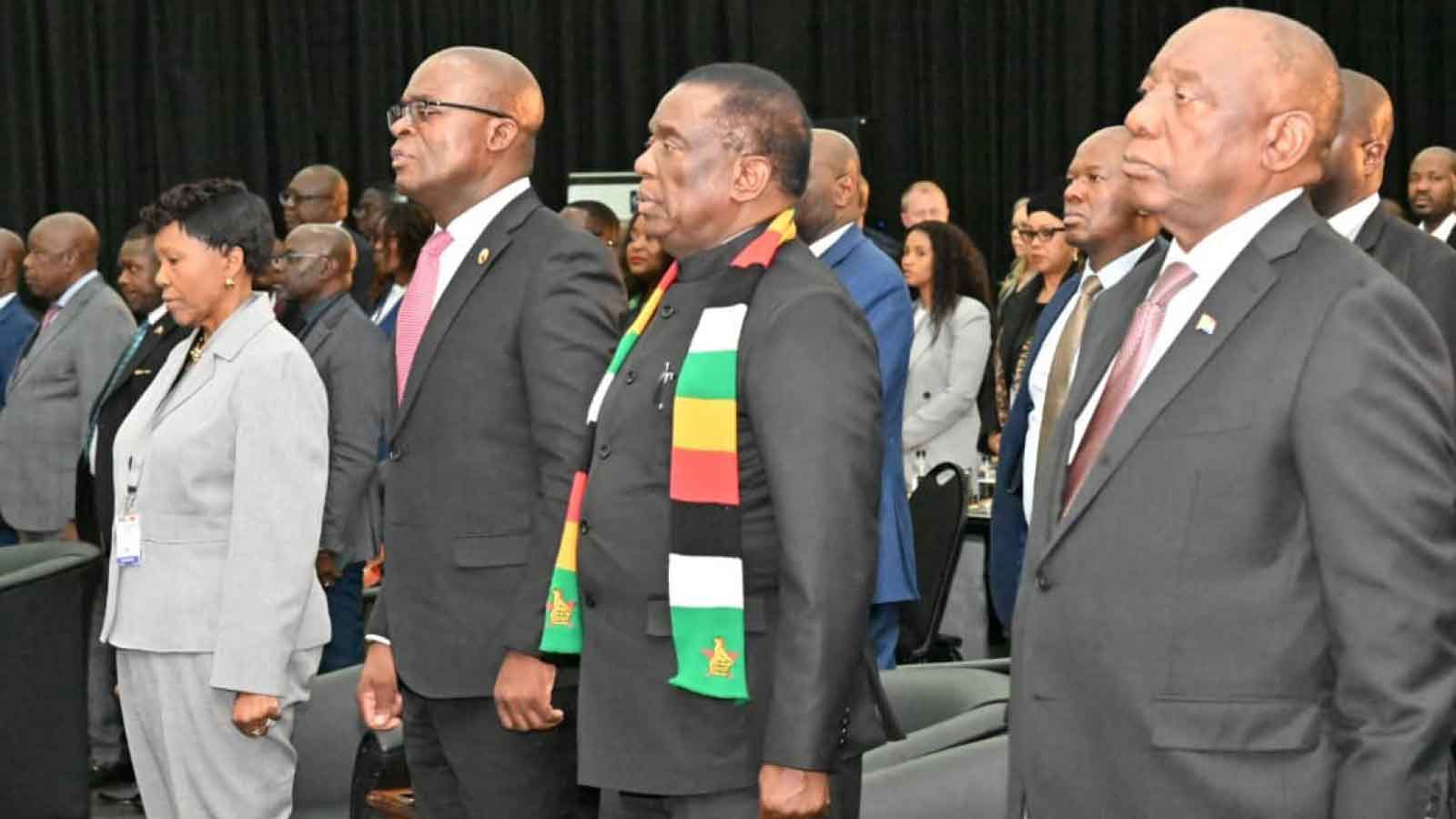
The forum, held on the sidelines of the Fourth Zimbabwe-South Africa Bi-National Commission (BNC), brought together 250 business leaders from the two countries, with the discussions focusing on moving beyond traditional trade towards investment, industrialisation, innovation and value addition.
Addressing the Presidential Session at the Gallagher Convention Centre in Midrand, President Mnangagwa said the two countries should strengthen their economic partnership by pursuing joint investment, research, innovation and high-impact projects.
He said recent SADC engagements in Durban had reinforced the importance of industrialisation in driving regional development, with Zimbabwe and South Africa playing pivotal roles in advancing that agenda.
President Mnangagwa said disruptions to global supply chains, rapid technological advances and growing competition for strategic resources had exposed the vulnerability of countries that lacked strong productive capabilities.
“Our answer is not to withdraw from the world, but to participate in it from a stronger position. That position of strength is derived from closer cooperation back home and here,” he said.
President Mnangagwa said Zimbabwe remained committed to working with its neighbours, the region, Africa and international partners to strengthen production, innovation and livelihoods.
He said while Southern Africa was endowed with critical minerals, fertile agricultural land, industries, universities and technical institutions, the region must ensure its natural resources feeds local industries instead of creating value elsewhere.
The President said young people represented another important resource, with universities, tertiary institutions and innovation hubs already producing ideas and prototypes in agriculture, mining, manufacturing, engineering, energy and information technology.
President Mnangagwa called on financial institutions, development finance institutions and private investors to identify promising innovations and support their mass production, saying some of the industrial solutions required by the region could already be in the hands of its young people.
“Some of the industrial solutions we require may already be sitting in the hands of our young people. This is where the relationship between Zimbabwe and South Africa assumes even greater importance,” he said.
“Our cooperation must not be limited to how much we sell to one another. We need to consider partnerships across the borders, that is, what we can do together.”
Zimbabwean and South African businesses, President Mnangagwa said, are already interconnected through trade in machinery, technology, inputs, services and markets, but the next step should be co-investment, joint research, technological innovation and mobilisation of financing for regional high-impact projects.
“Then, our businesses can use these partnerships to reach markets beyond Zimbabwe and South Africa. That is how a bilateral relationship begins to contribute to the transformation of an entire region,” he said.
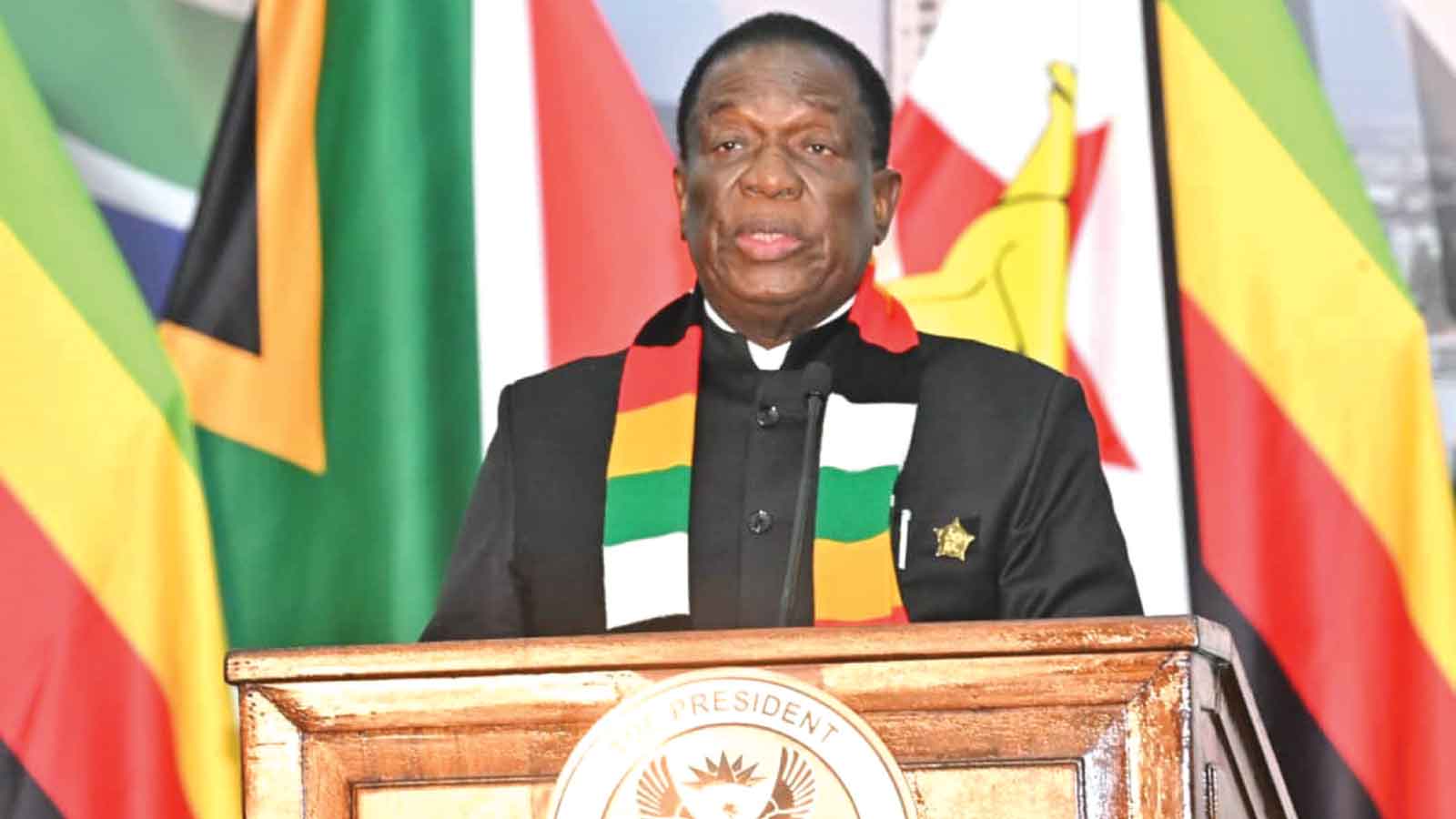
President Mnangagwa said governments would continue providing political direction through the BNC and other frameworks while creating an environment where productive investment could thrive, technology could be exchanged and innovation commercialised.
Speaking at the same occasion, President Ramaphosa said while South Africa is Zimbabwe’s largest single source of imports from the rest of the world, there remains considerable scope to grow bilateral trade.
He welcomed Zimbabwe’s decision to eliminate trade restrictions in line with SADC trade protocols, saying this would help unlock further opportunities between the two economies.
President Ramaphosa said the African Continental Free Trade Area also presented an opportunity to expand intra-African trade but stressed that businesses had to turn government agreements into tangible economic activity.
“Governments can determine policy, sign agreements and ratify protocols, but it is business that turns a signed agreement into a shipment, a factory or a job,” he said.
President Ramaphosa said South Africa regarded Zimbabwe as a key regional market for its goods, products and services and remained optimistic about the prospects of the Zimbabwean economy.
Citing the African Development Bank, he said Zimbabwe’s real GDP growth had risen to an estimated 7.5 percent in 2025, driven by growth in sectors including mining and agriculture, while inflation had declined following the introduction of the Zimbabwe Gold currency.
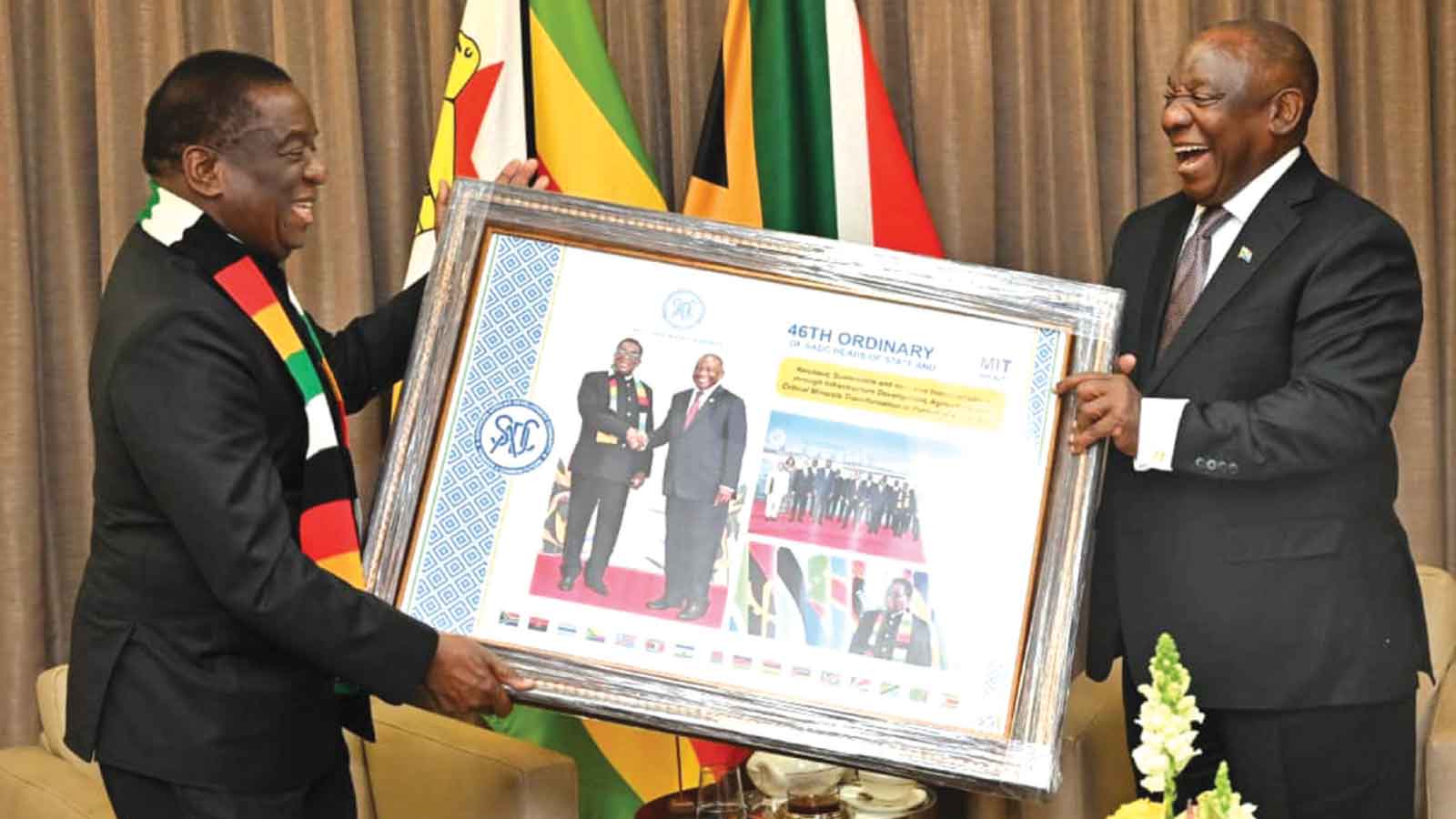
President Ramaphosa said greater economic stability and predictability would give South African exporters and investors confidence to commit capital at scale.
“Zimbabwe is moving ahead in more ways than one, is modernising, it is punching ahead, growing at 7,25 percent and so the economy of Zimbabwe is in great recovery. The mining sector is growing and they are doing a number of very wonderful things,” he said.
“The Zimbabwe that we are dealing with, that we are trading with, is a Zimbabwe that is on the move. So, for us as South Africa, it is a real joy to have a neighbour on our northern side who is growing, becoming a market for us but also a neighbour who would want to start making South Africa a market, creating finished goods that they can bring to South Africa so that we are not the only ones that export finished goods.
“This is where the equalisation must come from; we don’t compete against each other, we compete with each other against the world and indeed the continent.”
President Ramaphosa said the modernisation of the Beitbridge Border Post had helped address longstanding challenges, including inadequate infrastructure, inefficient processes and limited staffing, which had previously resulted in trucks waiting several days to cross.
He said the developments formed part of a broader vision for a corridor linking the Port of Durban to the Democratic Republic of Congo, transforming transport routes into arteries of industry, commerce and employment.
The Musina-Makhado Special Economic Zone was cited as an example of the potential to develop industrial corridors supporting mining beneficiation, agriculture, agro-processing, milling and packaging.
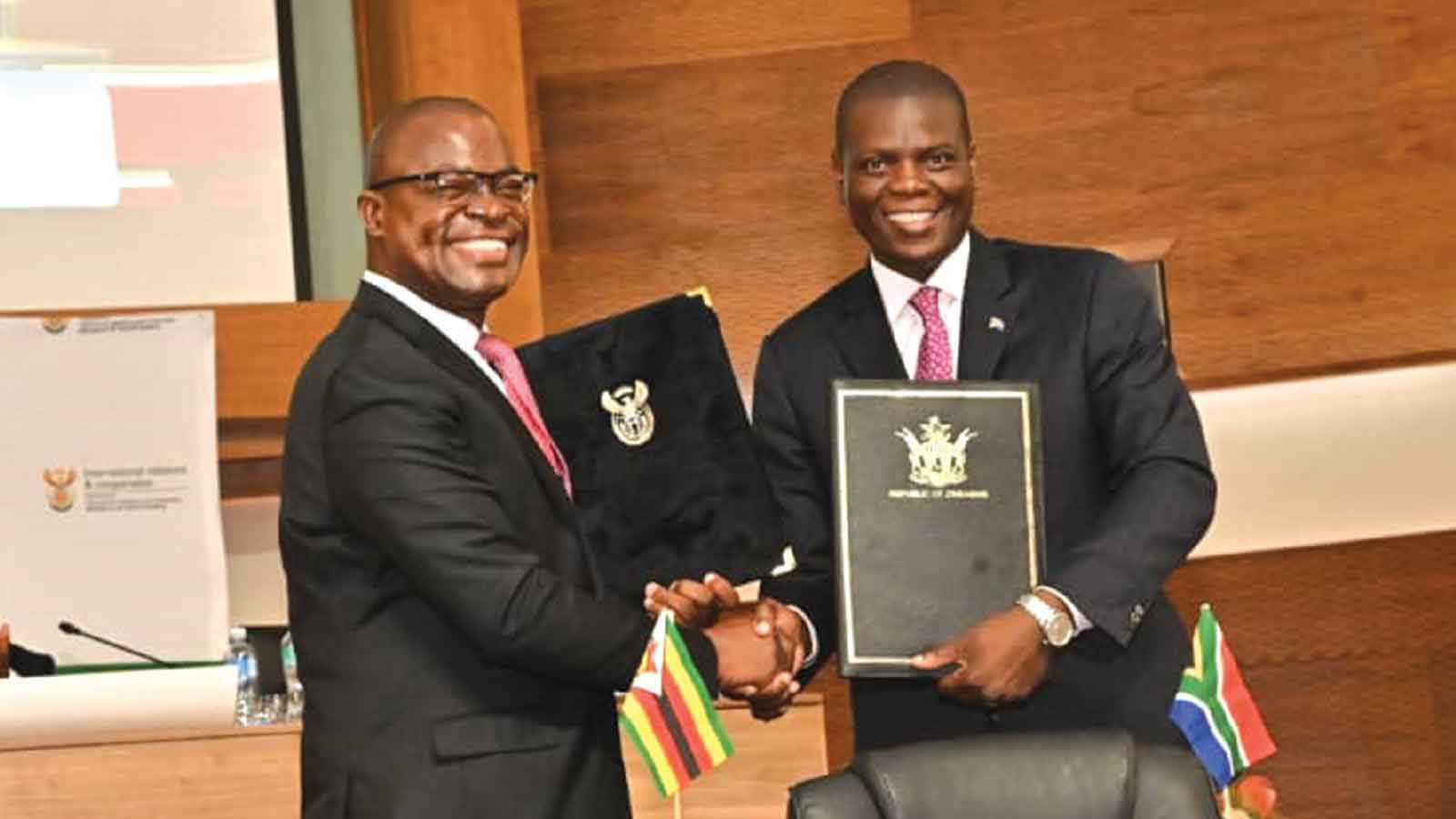
President Ramaphosa said Zimbabwe’s exports of gold, chromium ore and semi-finished steel to South Africa presented opportunities for joint ventures that would ensure more refining and finishing took place within the region.
The two governments have established a Joint Technical Committee on Trade and Industry to facilitate cooperation in industrial value chains, infrastructure, special economic zones, trade, tourism, transport and logistics, while work is also progressing on a draft Memorandum of Understanding on Economic Cooperation.
President Ramaphosa said the Business Forum should translate these frameworks into partnerships that create decent jobs, particularly for women and young people, transform value chains and combine the strengths of both economies.
Meanwhile, President Mnangagwa arrived back home last night and was welcomed at the Robert Gabriel Mugabe International Airport by Vice President Dr Constantino Chiwenga, Cabinet ministers, service chiefs and other senior Government officials.