Online Reporter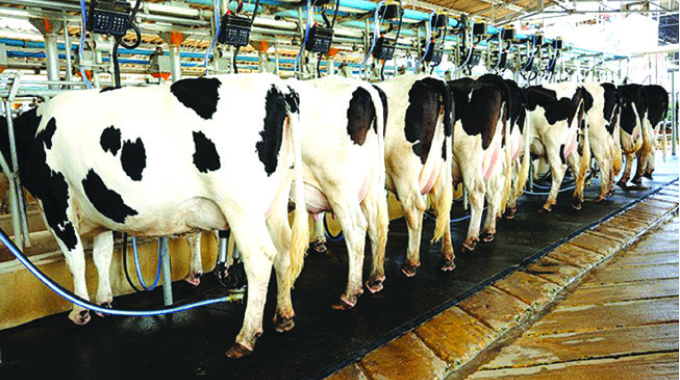
Edgar Vhera
Specialist Writer – Agribusiness
ZIMBABWE is positioning itself to become the agro-industrial hub of the region, marking a shift from being known only as the breadbasket of Southern Africa to becoming the nucleus of agricultural trade.
Agriculture, Mechanisation and Water Resources Development Minister Dr Anxious Masuka said this on Wednesday when he officially opened the 12th Annual General Meeting (AGM) of Zimbabwe Association of Dairy Farmers (ZADF).
The AGM ran under the theme: “Driving sustainability, innovation and efficiency in inclusive dairy farming.”
Dr Masuka said Zimbabwe had advanced so much that it was now on an unstoppable march to become an agro-industrial hub of the region.
“The country is nicely nestled in the centre of Southern African region, has good transport and logistics, good soils and conducive climate,” he said.
Dr Masuka called on dairy value chain players not to dread free trade brought about the African Continental Free Trade Area (AfCFTA).
“The AfCFTA provides an opportunity for Zimbabwe, not a threat as the country’s market is 16 million people while the ACFTA provides a market of over 1, 2 billion people.
“So, let’s look at that as an opportunity, not as an impediment to growing our businesses and to be future ready, what elements should we begin to look at,” he said.
Dr Masuka said the theme of the AGM was rhymed with the Second Republic’s vision that states that innovation must drive modernisation and industrialisation towards a prosperous and empowered upper middle-income society by 2030.
Statistics from the Dairy Services Unit (DSU) reveal that local commercial milk production rose 85 percent to 122 million litres last year from 66 million in 2017.
The dairy sector was targeting to be self-sufficient with a 10 percent growth this year to around 134 million litres.
The country required 120 million litres to be self-sufficient between 2009 and 2016, that figure rose to 130 million from 2017 to 2020 and further increased to 131 spanning 2021 and 2025.
He said the country now needed about 150 million litres annually for self-sufficiency due to increased demand and the 2030 vision was to increase commercial milk production to 200 million litres.
ZADF national chairman, Mr Edward Warambwa said dairy farmers were not only producing milk but contributing to national food and nutrition security, creating employment, supporting rural livelihoods and strengthening Zimbabwe’s agricultural economy.
“Despite the many challenges that continue to confront our dairy farming sector, such as rising production costs, climate change, constrained access to affordable finance and market pressures, farmers have remained resilient.
“Through innovation, improved genetics, better feeding systems, technology adoption and stronger partnerships, we continue to make steady progress towards a more productive and competitive dairy industry,” he said.
Department of Veterinary Services (DVS) chief director Dr Pious Makaya said a healthy dairy herd was the foundation of a productive, competitive and sustainable dairy industry.
The safeguards Zimbabwe’s livestock through effective disease surveillance, prevention and control programmes that protect farmers’ investments and strengthen national food security.
“Looking ahead, our focus is on upscaling dairy herd vaccination programmes and animal health protocols through enhanced disease surveillance, expanded vaccination coverage, strengthened veterinary extension services, timely disease reporting, improved laboratory diagnostic capacity and the adoption of modern animal health management practices.
“These interventions will improve productivity, strengthen resilience, facilitate market access and position Zimbabwe’s dairy industry for sustainable growth,” he said.
The climax of the day was the honouring of various women recognised under the banner “Celebrating Women in Dairy.”
Among these are former Vice President Dr Joyce Mujuru, 2026 World Milk Day commemorations host farmer, Mrs Pauline Hela and Agricultural and Rural Development Advisory Services (ARDAS) chief director, Mrs Medlinah Magwenzi.