Theseus Mauruki Shambare in VICTORIA FALLS
ZIMBABWE has developed improved tobacco-curing barn technologies that could reduce farmers’ operational costs by up to 78 percent while easing pressure on the country’s woodlands, offering smallholder growers a more affordable and environmentally sustainable way of producing the crop.
For years, flue-cured tobacco production has been associated with deforestation because of the substantial quantities of firewood required to cure the crop. Beyond the environmental cost, sourcing, cutting, transporting and handling firewood also places a financial and labour burden on farmers.
The latest Kutsaga Central Chimney 2 (KCC2) system presents an opportunity to address both challenges by reducing fuel requirements and improving the efficiency of the curing process.
Figures provided for the system indicate that seasonal operational curing costs could fall from the traditional wood-burning average of US$400–US$800 per hectare to between US$88 and US$176 per hectare.
This represents potential savings of US$312–US$624 per hectare per season, with farmers spending about 22 percent of their previous fuel bills.
The innovations, developed through two decades of research by the Tobacco Research Board (Kutsaga), have reduced fuel requirements from about nine kilogrammes of wood-equivalent per kilogramme of cured tobacco in conventional barns to approximately two kilogrammes in improved designs.
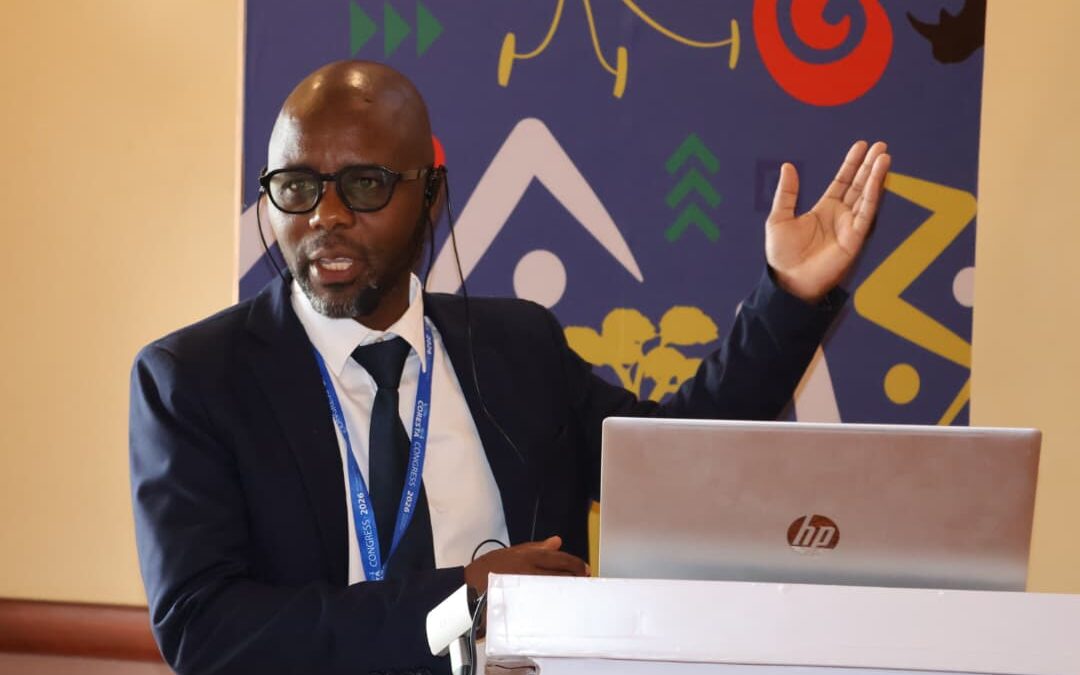
Presenting at the 70th Cooperation Centre for Scientific Research Relative to Tobacco (CORESTA) Congress in Victoria Falls, Kutsaga Agricultural Data Science and Engineering Department researcher Dr Mthulisi Ngwenya said the research had evolved in response to the growth of smallholder tobacco production and the need to make curing more energy-efficient.
Zimbabwe has approximately 135 000 smallholder tobacco growers, who account for about 95 percent of registered growers and 85 percent of national tobacco output.
“The results have been encouraging. Over the past 20 years, we have achieved a reduction of approximately 78 percent in firewood consumption through improved barn technologies,” said Dr Ngwenya.
The research has produced several barn designs, including the Rocket, KCC1, Family, Gunny and the latest KCC2, alongside investigations into alternative energy sources such as liquefied petroleum gas (LPG), biomass briquettes and biogas.
However, researchers say reducing fuel consumption alone is not enough, as uneven heat and moisture distribution can compromise the quality of cured tobacco and ultimately affect farmers’ returns.

Kutsaga Agricultural Data Science and Engineering Research Officer Owen Mudadisi said this challenge informed the development of the KCC2 barn, which uses a redesigned duct and ventilation system to improve heat and moisture distribution without depending on grid electricity.
“A barn that saves wood, a barn that saves coal can still fail the farmer,” he said.
Comparative trials found that the KCC2 achieved twice the moisture uniformity of the KCC1, with a lower coefficient of variation of 3,11 percent compared to 5,03 percent.
However, researchers identified ventilation gaps that prolonged the initial curing process, requiring further modifications and trials before the expected improvements in curing time and fuel consumption can be confirmed.
Kutsaga is also exploring LPG, which recorded consumption of 0,91 kilogrammes per kilogramme of cured tobacco during trials, while biomass briquettes and biogas are being investigated as possible alternatives.
The technologies are being showcased at the global congress, providing an opportunity for researchers, tobacco scientists and industry players to exchange knowledge on improving curing efficiency and responding to growing sustainability demands.
Dr Ngwenya said wider adoption would require collaboration with industry players and other stakeholders to translate research findings into practical solutions for farmers.
“The next step is for the tobacco industry to identify the most suitable designs and lead their wider adoption among growers,” he said.