Online Reporter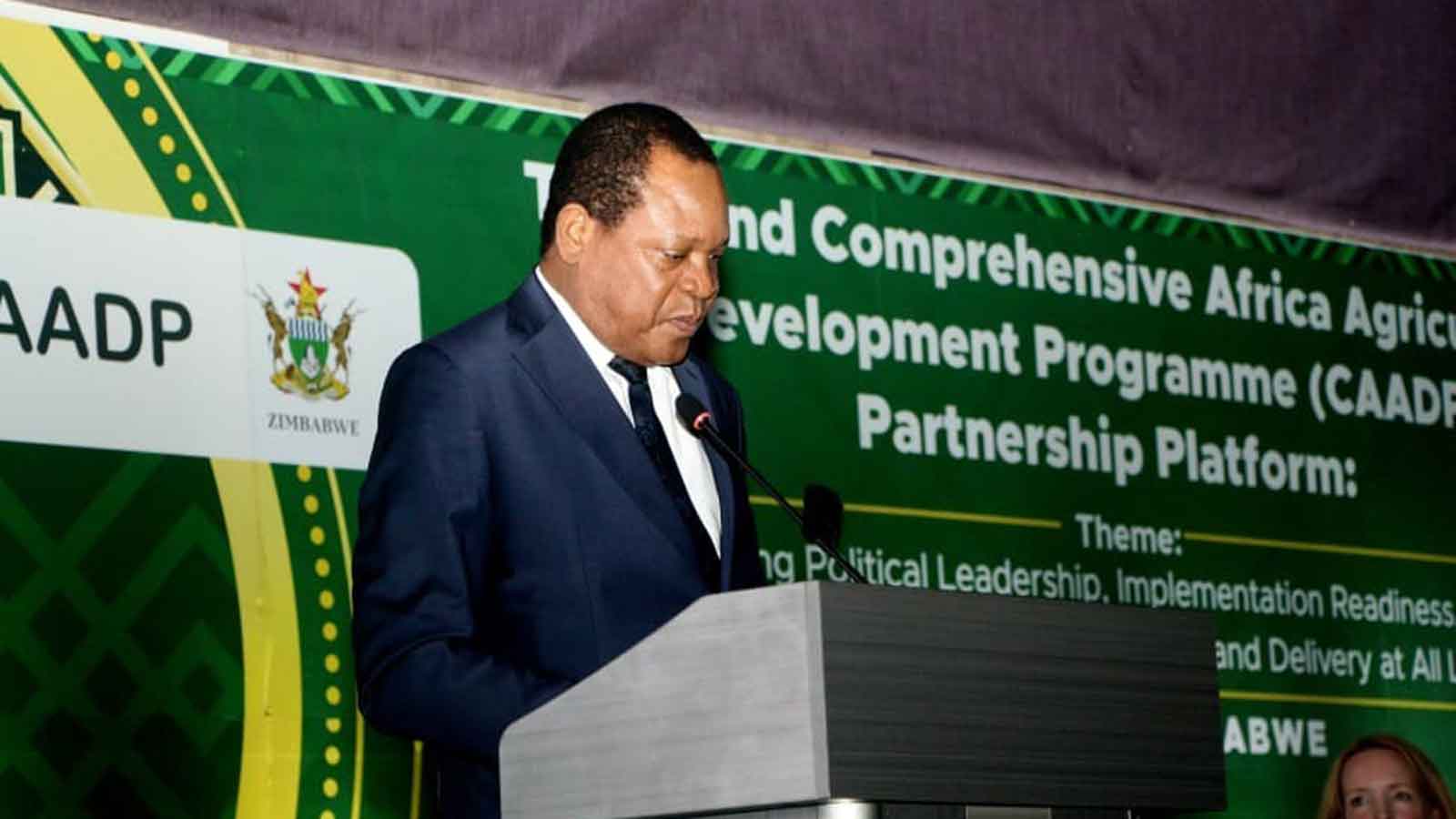
Edgar Vhera
Specialist Writer – Agribusiness
ZIMBABWE has domesticated the Comprehensive Africa Agriculture Development Programme’s (CAADP) Kampala Declaration in its blueprint, the Agriculture, Food Systems and Rural Transformation Strategy 2 (AFSRTS 2: 2026-2030), which focuses on a whole-of-government and whole-of-society approach.
This was said by Agriculture, Mechanisation and Water Resources Development Minister Dr Anxious Masuka recently while officially opening the 22nd CAADP Partnership Platform and the first Kampala Policy Learning Event (KAPLE).
The platform runs from September 15 to 18 under the theme “Strengthening Political Leadership, Implementation Readiness, Financing, Partnerships, Mutual Accountability and Delivery at All Levels.”
CAADP is a policy framework created by the African union (AU) in 2003 to boost agricultural growth, reduce poverty and end hunger across the continent.
Dr Masuka said this was not just a meeting, but the first-time nations and partners convened under the new dispensation of the Kampala Declaration and the CAADP Strategy and Action Plan (2026-2035).
“This moment signifies a critical, deliberate and collective shift from the commitments of the Malabo era to a new decade of accelerated and tangible delivery,” he said.
The 5th CAADP Biennial Review Report confirmed that the continent is not on track to meet the Malabo goals by 2025.
The CAADP Malabo Goals were set on seven concrete commitments adopted by AU Heads of State in June 2014 to transform the continent’s agriculture, end hunger and halve poverty by 2025.
“This was a collective failure, but also a powerful catalyst for change,” he highlighted.
“The Kampala Declaration, which we adopted in January 2025, is our united response—a renewed commitment to build resilient, inclusive and sustainable agrifood systems.”
The new CAADP Strategy and Action Plan (2026-2035) is built on six strategic objectives and 22 ambitious, measurable targets that will guide the path forward.
Dr Masuka said Zimbabwe took the spirit of the Kampala Declaration and wove it into the fabric of its national development agenda.
“Our recently launched AFSRTS 2 is the direct vehicle for domesticating the CAADP Kampala agenda,” Dr Masuka said.
“The AFSRTS 2, a central pillar of the National Development Strategy 2 (NDS 2), shares a parallel and integrated framework with the six Kampala strategic objectives
The Kampala goal seeks to increase agrifood output by 45 percent and reduce post-harvest losses by 50 percent.