Business Reporter
Zimbabwe is primed to extract substantial benefits from its vast lithium resources amid a bullish short-to-medium-term price outlook, supported by strong investment inflows and an aggressive policy shift towards local beneficiation.
The southern African nation holds the largest lithium reserves in Africa and ranks between 5th and 7th globally for its hard-rock pegmatite lithium deposits.
Driven by massive investments, primarily from Chinese firms, the country is positioned to remain Africa’s largest lithium producer through 2030, with output projected to reach 160 000 tonnes.
Zimbabwe accounted for roughly 9,6 percent to 9,7 percent of global lithium production in 2025, which demonstrates the country’s strategic position to benefit from any global demand price upswing.
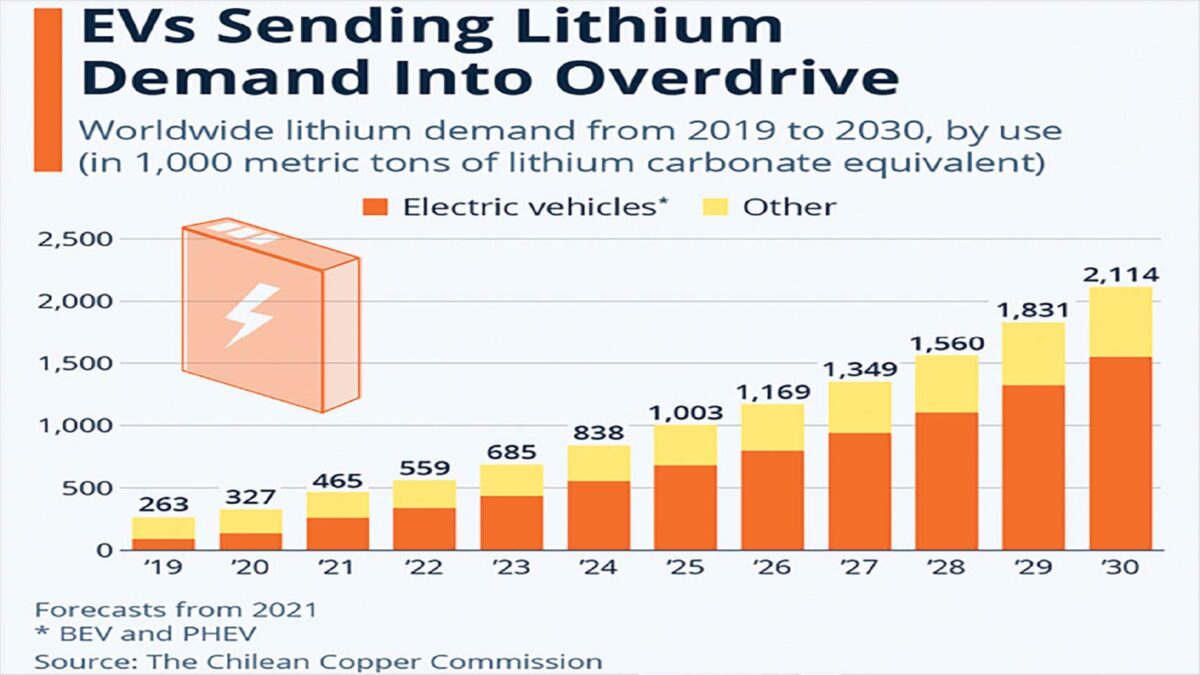
Globally, countries are pushing for clean energy and transitioning away from fossil fuels under the legally binding framework of the Paris Agreement, which operates under the United Nations Framework Convention on Climate Change (UNFCCC), hence the forecast strong lithium demand.
Speaking in an interview following a media tour at Prospect Lithium Zimbabwe last week, Minerals Marketing Corporation of Zimbabwe (MMCZ) marketing manager, Mr Gumisai Nenzou, said that despite recent global market volatility, fundamental supply and demand mechanics support a firm pricing environment going forward.
Global lithium markets have experienced sharp swings in recent weeks, with Chinese lithium carbonate futures falling roughly 8,4 percent on Tuesday to US$16 252 per tonne, marking a nearly 48 percent decline from their mid-May peak of almost US$31 380.
The price retreat was triggered by the European Union’s plans to restrict Chinese hybrid vehicle imports to about 350 000 units annually starting this December, down from the current annual import run-rate of roughly 650 000 vehicles.
The restriction has raised immediate concerns over near-term EV battery demand, putting additional pressure on global lithium producers.
Because Chinese investors dominate the domestic mining industry, Zimbabwe exports almost 100 percent of its lithium to China.
Despite the market contraction and global pricing pressures, MMCZ remains optimistic about short-to-medium-term demand fundamentals, projecting that structural growth drivers will stabilise prices.
“We expect the prices for lithium to remain firm,” said Mr Nenzou. “This is underpinned by increasing demand for use in energy storage systems as well as electric vehicles, mainly because of the clean energy transition that we are witnessing across the globe.”
The MMCZ holds the statutory mandate to market and sell all minerals produced in Zimbabwe, excluding gold and silver.
The lithium sector has emerged as one of Zimbabwe’s most lucrative mining frontiers, drawing immense foreign direct investment into major operational hubs, including Bikita Minerals, Sabi Star, Prospect Lithium Zimbabwe (PLZ), Kamativi, Sandawana Mine and Gwanda Lithium Mines.
Previously, the sector relied on raw lithium ore extraction, but the Government’s policy prohibiting raw ore exports compelled miners to establish domestic processing infrastructure, effectively transforming the extractive landscape into an industrial supply chain.
Major multi-billion-dollar investments by international investors fast-tracked the construction of crushing, flotation and chemical conversion plants, expanding the country’s producer base and evolving output into high-grade concentrates.
The Government has set December 31, 2026, as the deadline for exporting lithium concentrates.
During the eight months to September, Zimbabwe’s lithium exports generated US$2,11 billion.
Spodumene concentrate accounted for the bulk of earnings at US$1,8 billion, driven by a 283 percent price surge, while petalite contributed US$155 million.
Furthermore, the country recorded US$190 million in lithium sulphate sales, reflecting initial gains from local processing.
Mr Nenzou noted that rising investments in the lithium value chain continue to expand the country’s producer base while improving unit pricing power.
“What we have witnessed is an increase in the investments in the lithium value chain where we now have several producers of lithium,” he said, pointing to the structural migration from raw ore to value-added chemical derivatives.
The pricing dynamic is heavily dictated by the degree of processing; raw ore fetches the lowest prices, while spodumene and petalite concentrates command higher spot rates.
Moving further up the value chain to lithium sulphate yields a substantial premium over concentrates, and converting to battery-grade lithium carbonate captures peak market value.
“When you move from the raw mineral to the concentrate and then to the sulphate, there is a significant increase in the value of the products that are being produced,” Mr Nenzou explained.
Local lithium producers are now advancing towards lithium sulphate production and progressing into lithium carbonate refining.
PLZ — which pioneered local lithium sulphate production — is currently moving ahead with plans to establish a dedicated lithium carbonate plant.
As global automakers and clean-tech supply chains aggressively secure battery-grade materials, Zimbabwe’s deliberate push towards downstream processing ensures the country captures higher economic value, increases foreign currency inflows, creates skilled technical employment, and secures its position in the global green energy supply chain, analysts have said.