Online Reporter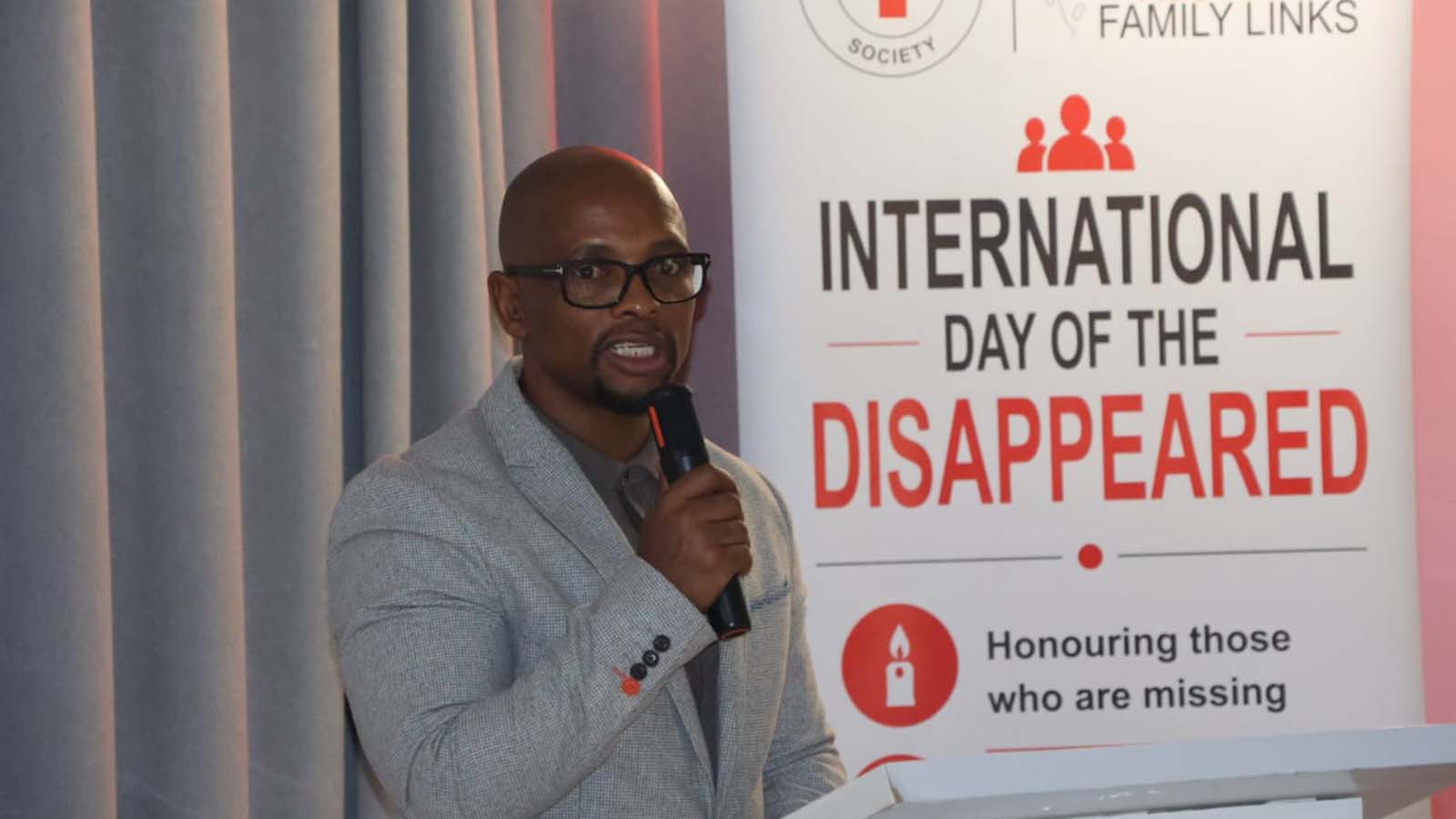
Theseus Mauruki Shambare
THE Zimbabwe Red Cross Society had 355 missing-person cases on its tracing database at the end of last year, highlighting the scale of family separation linked to migration, disasters, violence and other humanitarian emergencies.
The organisation received 78 new tracing cases in 2025 and successfully closed 38 cases after locating missing relatives.
The figures were revealed during International Day of the Disappeared commemorations in Harare on Monday, where humanitarian organisations called for stronger cooperation in tracing missing people and reuniting separated families.
Zimbabwe Red Cross Society Restoring Family Links National Officer Cassandra Ncube said the organisation received 1 200 inquiries during 2025 from people seeking assistance to trace missing relatives.
“End of 2025, we had 355 cases in our database where people had requested us to look for their loved ones. In 2025 alone, we had 78 new tracing cases,” Ms Ncube said.
She said 38 cases were positively closed during the year, meaning the organisation had succeeded in locating the missing relatives.
The tracing programme forms part of the Red Cross Society’s Restoring Family Links initiative, which seeks to prevent family separation, restore contact between relatives and reunite families where possible.
The programme reached 21 634 beneficiaries in 2025 through services provided at Tongogara Refugee Settlement, Beitbridge and rural communities.
The organisation facilitated 18 300 calls and recorded 65 705 internet sessions, providing people with communication services to reconnect with relatives.
Ms Ncube said 65 705 represented internet sessions rather than individual beneficiaries, as some people repeatedly accessed the service.
The organisation also exchanged six Red Cross messages, a traditional service used when relatives have no access to telephones or internet connectivity.
IFRC Head of the Country Cluster Delegation for Zimbabwe, Zambia and Malawi Mr Kopano Benjamin Masilo said Zimbabwe’s position as a source, transit and refuge country made family tracing an increasingly important humanitarian function.
“Zimbabwe is a country that sends out migrants to other countries due to economic pressures and people looking for greener pastures. We are also a country of transit for migrants from different countries like the DRC, Malawi and Mozambique who are transiting mainly to South Africa,” he said.
Mr Masilo said the country also hosted more than 15 000 refugees and asylum seekers, particularly people from the Great Lakes region.
The multiple migration flows, he said, increased the need for mechanisms that could prevent families from losing contact and assist in tracing people who become unaccounted for.
The Red Cross is also working with the Zimbabwe Republic Police on the Transnational Approach to the Missing and Deceased programme, which is currently being implemented in Zaka.
The programme focuses on collecting ante-mortem information that can assist authorities in identifying people who may have died and establishing whether they are among those reported missing.
The organisation has trained officers at national, provincial and station levels, working with the ZRP’s Interpol, Victim-Friendly Unit, Training and Forensics departments.
Zimbabwe Red Cross Society secretary-general Mr Elias Hwenga said families of missing people needed answers and dignity rather than being reduced to statistics.
“These are not just numbers, names or mere cases; they are mothers, fathers, sons and daughters and their families deserve answers and dignity,” he said.
The organisation said it is also conducting research into the risks faced by women and children during migration, including the routes taken by migrants travelling through Zimbabwe.
The Missing Migrants Research Project examined migration drivers, protection risks and coping mechanisms, with findings expected to inform humanitarian and Government responses.
The Red Cross said strengthening technology, community awareness and cooperation with law-enforcement agencies would be critical in ensuring that missing people can be traced and families reunited.