Theseus Mauruki Shambare
ZIMBABWEAN climate and disaster risk experts have called for improvements to the country’s drought forecasting systems, proposing monthly weather forecasts to strengthen early-warning mechanisms ahead of the 2026/27 El Niño-affected rainfall season.
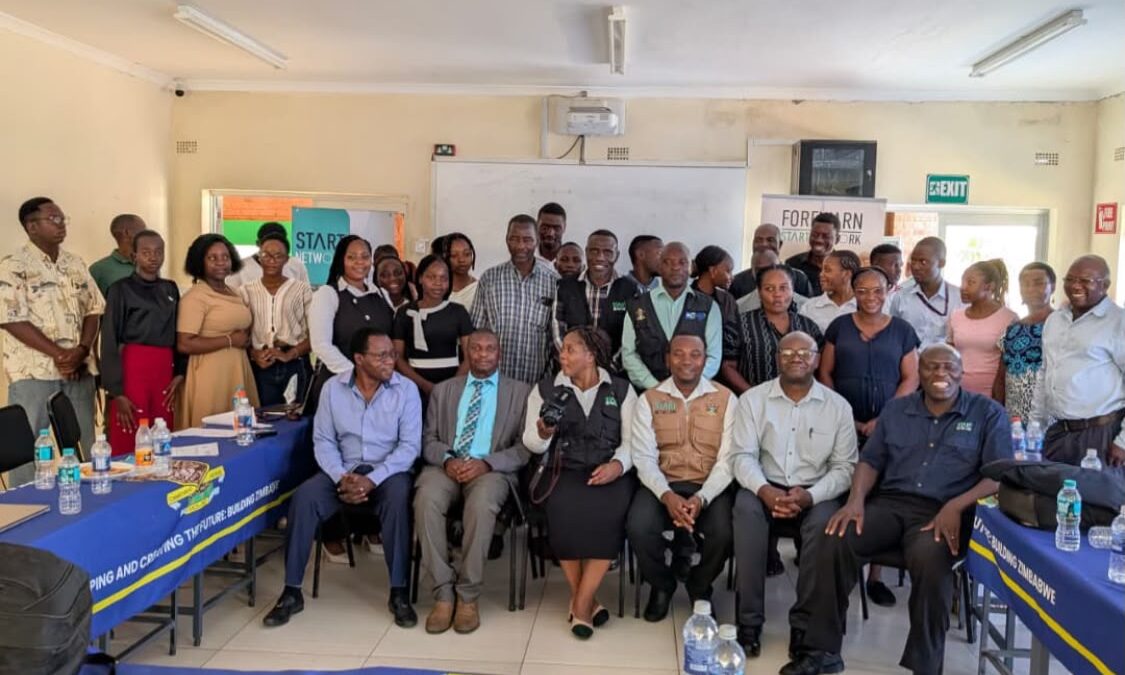
The proposals emerged during an inaugural public lecture on Anticipatory Action hosted by Bindura University of Science Education (BUSE), Start Network and the Forecast-Based Warning, Analysis and Response Network (FOREWARN) Expert Group in Zimbabwe on Tuesday.
Participants called for a shift from reliance on three-month seasonal forecasting periods towards monthly forecasts, arguing that shorter forecasting intervals could provide more timely information for agricultural planning and disaster preparedness.
They also proposed adopting a moving-average approach instead of relying on a fixed 30-year period when analysing rainfall patterns and climate trends.
Meteorological Services Department representative Isaac Masawana highlighted the importance of the Standardized Precipitation Index (SPI) in monitoring drought conditions, alongside the influence of El Niño and the Indian Ocean Dipole on rainfall patterns.
“The Standardized Precipitation Index is important in monitoring drought conditions, while El Niño and the Indian Ocean Dipole are key factors influencing rainfall patterns,” he said.
Professor Emmanuel Mashonjowa, an agricultural meteorologist at the University of Zimbabwe and chairman of the FOREWARN Expert Group, highlighted challenges in seasonal climate forecasting, particularly difficulties in quantifying El Niño and La Niña conditions during neutral or weak phases.
“There are challenges in seasonal climate forecasting, particularly in quantifying El Niño and La Niña conditions during neutral or weak phases. There is therefore a need to use multiple climate indicators and probabilistic forecasting to improve drought prediction,” he said.
BUSE Dean of Science, Professor Munyaradzi Shumba, said Zimbabwe needed to move away from responding to disasters only after communities had suffered losses.
“For too long our response to disasters has followed a familiar pattern. The drought comes, the crops fail, livestock die, and only then do we mobilise assistance. By that time, families have already sold their assets, children have left school, and recovery takes years,” he said.
He added: “Anticipatory action asks a simple but powerful question: if we can see a hazard coming, why do we wait for it to become a disaster before we act?”
Professor Desmond Manatsa, chairman of BUSE’s Department of Geosciences, underscored the urgency of translating scientific knowledge into practical preparedness measures ahead of the coming season.
“The 2026/27 El Niño season is already upon us, and the knowledge shared today can make a difference within months, not years,” he said.
Manatsa also challenged students to contribute to strengthening the country’s disaster preparedness systems.
“Zimbabwe needs young people who can read a forecast, analyse risk, design a trigger, and explain it to a village head or a minister,” he said.
The discussions also examined the Ready-Set-Go framework, which provides two intervention windows covering October to December and January to March, allowing humanitarian actors to prepare and mobilise resources ahead of anticipated hazards.
Participants called for stronger collaboration between Government, universities and humanitarian organisations to improve forecasting, strengthen early-warning systems and translate climate information into timely interventions.