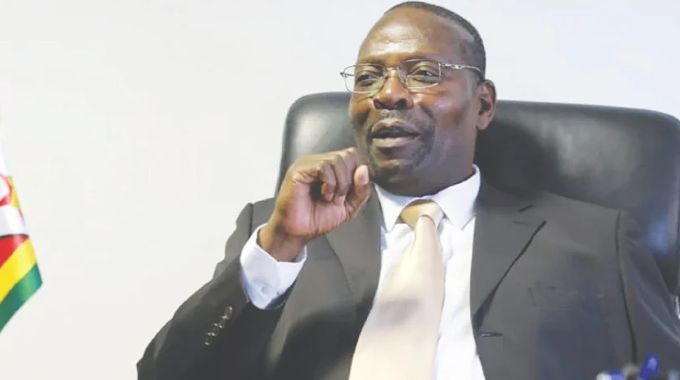
Prosper Ndlovu in Moscow, Russia
ZIMBABWE and Russia are turning their historic moral solidarity into economic sovereignty, with a new thrust on beneficiation, local value retention and securing alternative payment systems to by-pass Western sanctions, Zimbabwe’s Ambassador to Moscow, Cde Mark Grey Marongwe, has said.
Speaking in an interview here ahead of Vice President Kembo Mohadi’s visit, Amb Marongwe said the deepening ties must be understood as a deliberate strategy to strengthen sovereignty.
He said unlike Britain, France or Belgium, Russia carries no colonial history in Africa.
“They didn’t have colonies, they were not there at the Berlin Conference in 1884,” he said.
“We do not have any physical example we can point at showing that they participated in our subjugation like what our former colonial masters did.”
Amb Marongwe said this history explains why during the liberation struggle Russia provided training, arms, munitions and other required materials to Zimbabweans.
He said that legacy, including the training of many liberation struggle veterans created a foundation of political trust that is now being repurposed for economic sovereignty.
On the recent Russia-Africa Summit, which President Mnangagwa attended and also took the opportunity to meet President Vladimir Putin, Amb Marongwe said African leaders and President
Putin agreed that the era of declarations was over.
“What we are doing now is to turn those agreements into tangible benefits for our people. We now want action on the ground to benefit citizens,” he said.
Amb Marongwe said the central pillar is beneficiation and value retention under President Mnangagwa’s Vision 2030.
He said instead of investors from countries such as Russia coming in to extract raw materials, the thrust now is value addition and beneficiation so that the country derives maximum benefits from its natural resources such as minerals.
“We believe from raw chrome to ferrochrome, this can be done in Zimbabwe,” said Amb Marongwe.
He said the push is about redefining friendship in commercial terms.
“We have to benefit from these exchanges. Not symbolically, but in real terms. This does not mean that we are not friends. This does not reduce the level of friendship. We are simply saying, we are on a commercial table, discussing on behalf of our people,” said Amb Marongwe.
He criticised the traditional investment model where a foreign investor brings US$10 million and retains 70% control permanently.
“In fact, what should be happening is, for the first 10 years, we dispense with the original input of the US$10 million. After that, we get a minimum of 50-50. You have been paid, you invested. You can’t continue milking the cow. The cow sometimes dies and you must buy another one.”
He said economic ties strengthen internal sovereignty, noting: “If the population deduces what is happening as something that is undervaluing their resource, they can cause instability,” said Amb Marongwe.
On financial sovereignty, Amb Marongwe said both Zimbabwe and Russia have suffered from sanctions.
“We need to come up with payment platforms that avoid the platforms held by the United States and its European allies so that we avoid weaponising these platforms to enforce illegal sanctions.
We might need to expedite arrangements to empower BRICS so that there is a BRICS currency,” he said.
Amb Marongwe also pointed to a psychological barrier to sovereignty, saying Russia has more competencies in different sectors that many people do not know about.
He said Russia leads in areas critical to Zimbabwe, from being the first to send a satellite to orbit, to leaders in cancer medicines, cyber and artificial intelligence.
With VP Mohadi coming in to cement collaborative partnership gains, Amb Marongwe said the Zimbabwe-Russia relationship is transitioning from moral solidarity to economic sovereignty, from memoranda to manufactured goods, from raw exports to finished or semi finished products and from dollar-based trade to alternative payment systems.