Judith Phiri and Theseus Mauruki Shambare Zimpapers Writers
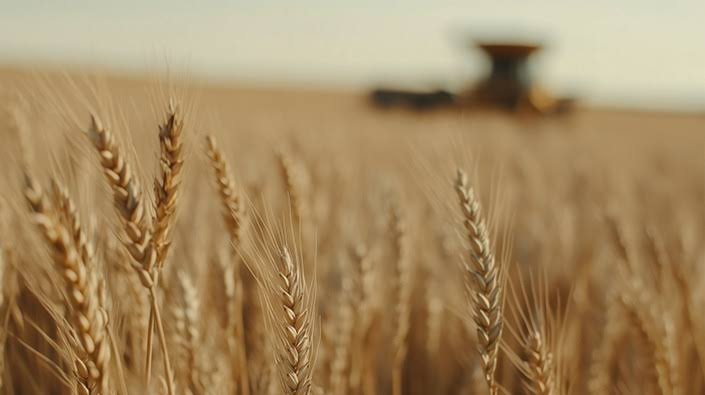
ZIMBABWE is on course to achieve a bumper winter wheat harvest of at least 600 000 tonnes, with farmers having harvested nearly 570 000 tonnes, as Government steps up efforts to complete the remaining crop before the onset of rains.
The country has harvested 108 569 hectares of the 130 316 hectares planted during the 2026 winter cropping season, representing 83 percent completion, with farmers being urged to accelerate operations and finish harvesting by Friday to minimise post-harvest losses and safeguard grain quality.
Ministry of Agriculture, Mechanisation and Water Resources Development Permanent Secretary Professor Obert Jiri said the country had surpassed its national planting target of 125 000 hectares by 5 316 hectares, with the harvested crop having produced an estimated 568 581 tonnes at an average yield of 5.2 tonnes per hectare.
Prof Jiri said Government expected harvesting to be completed soon, with the remaining crop likely to push national production to at least 600 000 tonnes.
“So, as of yesterday, we had harvested 108 000 hectares of the 130 000 hectares that we grew. And out of that 108 000 hectares, we had harvested almost 570 000 metric tonnes,” he said.
“We hope that by the end of this coming week, we will be finished. We hope to reach at least 600
000 metric tonnes when we do the harvesting.”
With approximately 21 747 hectares still to be harvested, 482 combine harvesters are operating
across the country, harvesting an average of 30 hectares each per day, with total daily harvesting
estimated at about 14 000 hectares.
Mashonaland West has the largest area under wheat production, with 36 237 hectares planted and
26 610 hectares harvested, representing 73 percent completion. The province has recorded
production of 163 918 tonnes at an average yield of 6.2 tonnes per hectare.
Mashonaland Central is leading in harvesting progress, having harvested 23 827 hectares out of 25
476 hectares planted, representing 94 percent completion. Production stands at 140 579 tonnes,
with an average yield of 5.9 tonnes per hectare.
Mashonaland East has harvested 20 814 hectares out of 25 850 hectares planted, translating to 81
percent completion, with production at 104 070 tonnes and an average yield of five tonnes per hectare.
Manicaland has harvested 15 857 hectares out of 16 375 hectares planted, representing 97 percent
completion, the highest harvesting rate among the provinces. Its production stands at 44 400
tonnes, with an average yield of 2.8 tonnes per hectare.
In the Midlands, 10 526 hectares had been harvested out of 13 567 hectares planted, representing
76 percent completion. The province had recorded 61 051 tonnes at an average yield of 5.8 tonnes
per hectare.
Masvingo had harvested 4 194 hectares out of 5 302 hectares planted, representing 79 percent
completion, with production of 15 098 tonnes.
Matabeleland North had harvested 2 451 hectares out of 2 906 hectares planted, translating to 84
percent completion, with production standing at 13 726 tonnes.
Matabeleland South had harvested 4 290 hectares out of 4 603 hectares planted, representing 93
percent completion, with production of 25 740 tonnes and an average yield of six tonnes per
hectare.
Prof Jiri said Mashonaland West and Mashonaland East had the largest outstanding harvesting areas, but prevailing dry conditions were expected to facilitate the completion of the exercise.
Matabeleland South provincial Agricultural and Rural Development Advisory Services director Mrs
Shupikai Sibanda said harvesting was progressing well in the province, with most farmers having completed the exercise.
“Currently we are at 98 percent and most of the wheat on bigger hectares is now done and now
harvested. We are just left with a few pockets that we need to harvest and we are predicting that
maybe early next (this) week they should be done.
“We are also encouraging farmers to expedite, just finish before the predicted rains come or start.
Our yields are looking good, averaging around six tonnes per hectare and we are happy with what
we have harvested so far,” she said.
Matabeleland North provincial Agricultural and Rural Development Advisory Services director Mr
Sibangilizwe Dlodlo said 2 562 hectares out of 2 906 hectares had been harvested, representing 88
percent completion.
“Most of Matabeleland North province should be done with harvesting by Friday, November 06,
2026, save for Umguza which should be done a week later,” he said.
Farmers have also been urged to speed up harvesting, threshing and transportation to prevent
potential losses arising from changing weather conditions and delays. They have been encouraged
to deliver harvested wheat to designated collection points and store it under appropriate conditions
to preserve grain quality.
The anticipated output would consolidate Zimbabwe’s wheat self-sufficiency position, with local
production now exceeding the country’s traditional domestic requirements.
Prof Jiri said the country’s growing agricultural output had strengthened its capacity to meet
domestic demand, although expansion in the milling and food-processing industries was also changing wheat consumption patterns.
He said industrial requirements had increased substantially over the past three years, reflecting population growth, expanding processing capacity and changing diets.
“The industry has expanded so much from a requirement of less than 360 000 tonnes three years ago to now a requirement of more than 552 000,” he said.
The increase in demand has, however, maintained the need for specialised wheat imports, particularly hard wheat used in blending and gristing by the milling industry.
Prof Jiri said Zimbabwe continued importing these varieties because of their specific quality characteristics and suitability for industrial processing.
This means that while the country has achieved overall wheat self-sufficiency, it still relies on imports to meet particular industrial specifications.
The distinction highlights the next phase of Zimbabwe’s wheat production ambitions, which will require not only increasing volumes but also diversifying locally produced wheat varieties to meet the requirements of processors.
Prof Jiri said Government remained committed to sustaining domestic production while exploring opportunities to supply external markets.
“We are now wheat self-sufficient and we are proud of that fact. We will continue to ensure that in terms of wheat, we continue to be self-sufficient and to produce enough for ourselves and hopefully for export as well,” he said.
The projected 600 000-tonne harvest would provide a strong foundation for the country’s food security and agro-industrial development, while creating opportunities for farmers to respond to growing demand.