Ivan Zhakata
CheckPoint Desk
Did you know Zimbabwe is home to some of Africa’s most spectacular natural wonders, many of which remain unexplored by the majority of its own people?
Located in north-western Zimbabwe, overlooking the Zambezi Valley, Chizarira National Park is one of the country’s most remote and lesser-known wilderness destinations. Its name is associated with the idea of a great barrier, fitting for a landscape characterised by rugged escarpments, deep gorges, natural springs and spectacular mountain scenery.
The park covers approximately 1 910 square kilometres and supports wildlife including elephants, lions, leopards, buffaloes and the rare roan antelope.
It is also a birdwatcher’s paradise, with more than 360 recorded bird species.
2. Chilojo Cliffs – Gonarezhou’s red sandstone masterpiece
Deep inside Gonarezhou National Park, in the country’s south-eastern Lowveld, stands the magnificent Chilojo Cliffs. These towering red sandstone formations overlook the Runde River Valley, creating one of Zimbabwe’s most spectacular natural landscapes.
The cliffs have been shaped over thousands of years by natural erosion and offer breathtaking views of the surrounding wilderness. Gonarezhou, whose name means the place of many elephants, is also home to elephants, buffaloes, lions, leopards and numerous bird species. They remain the most striking geological features in Zimbabwe.
3. Chirinda Forest – A rainforest hidden in Chipinge
Did you know Zimbabwe has a tropical rainforest?
Located near Mount Selinda in Chipinge, Chirinda Forest is the country’s only tropical forest. A remarkable natural treasure! Unlike the dry landscapes commonly associated with Zimbabwe, this forest is characterised by dense vegetation, towering trees, rich biodiversity and a unique rainforest environment. It is particularly famous for its giant red mahogany trees, some of which are centuries old. The forest provides an important habitat for numerous plant and animal species and is a valuable centre of biodiversity.
4. Chimanimani Mountains – Zimbabwe’s rugged natural paradise
The Chimanimani Mountains are among Zimbabwe’s most spectacular mountainous landscapes.
Located along the country’s eastern border with Mozambique, the mountain range features dramatic peaks, deep valleys, natural springs, waterfalls and indigenous forests. One of its attractions is the famous Bridal Veil Falls, while its mountainous terrain offers opportunities for hiking, camping and nature exploration.
The Chimanimani National Park is also a biodiversity hotspot, with more than 2 182 recorded plant taxa, including 74 species endemic to the Chimanimani Mountains. Some of the plant species found in these mountains occur nowhere else in the world.
5. Chibasane Falls – Manicaland’s lesser-known waterfall
While the world is familiar with Victoria Falls and Mutarazi Falls, fewer know about Chibasane Falls in Manicaland.
The waterfall is among the lesser-publicised natural attractions in the Eastern Highlands, an area renowned for its waterfalls, rivers, mountains and lush vegetation.
Its relative obscurity presents an opportunity for domestic tourism development, particularly among travellers interested in exploring destinations beyond the traditional tourist circuit. Manicaland has several picturesque natural attractions that remain overshadowed by its better-known destinations, despite their tourism potential.
6. Rupise Springs – A natural treasure in Chipinge
Another lesser-known attraction in Manicaland is Rupise Springs. The springs are among the hidden attractions identified in Zimbabwe’s Eastern Highlands, an area blessed with natural water features and scenic landscapes.
7. Mutarazi Falls – Zimbabwe’s spectacular 762-metre waterfall
Hidden within Nyanga National Park is Mutarazi Falls, Zimbabwe’s highest waterfall.
Standing at approximately 762 metres, the waterfall is one of the country’s most impressive natural features.
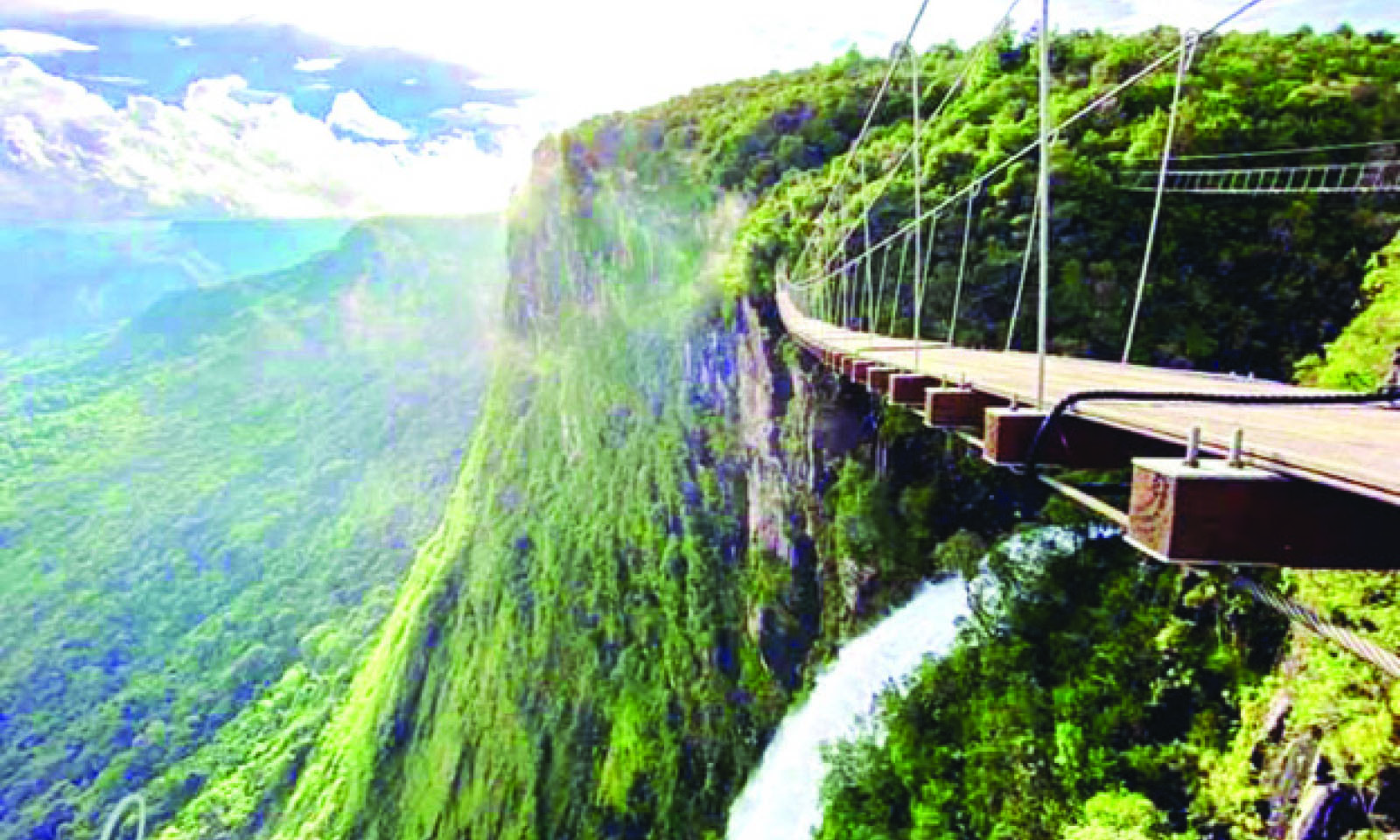
Visitors can experience the spectacular scenery through the Mutarazi SkyWalk and Skyline which offer breathtaking views of the waterfall and surrounding mountains. Mutarazi Falls is higher than Victoria Falls, although Victoria Falls is far wider and carries a much greater volume of water.
8. Chinhoyi Caves – The mysterious blue pool
Located in Mashonaland West, Chinhoyi Caves is one of Zimbabwe’s most fascinating geological attractions.
The caves contain a remarkable underground pool known as the Sleeping Pool or Chirorodziva famous for its exceptionally clear, deep-blue water.
The cave system is made up of limestone and dolomite formations and has significant historical, cultural and spiritual importance.
The pool maintains a remarkably consistent temperature of approximately 22 degrees Celsius throughout the year. Chinhoyi Caves is a Ramsar-recognised wetland of international importance. Its underwater visibility is so remarkable that specialist divers have explored depths exceeding 100 metres.
9. The Vumba Mountains – Zimbabwe’s misty paradise
The Vumba Mountains are another natural wonder that deserves greater recognition. Located near Mutare along the Mozambican border, the mountains are famous for their mist-covered landscapes, indigenous forests, botanical diversity and spectacular viewpoints.
The area is particularly attractive to birdwatchers, hikers and nature lovers. Its cool climate and lush vegetation create a striking contrast with Zimbabwe’s generally warmer interior landscapes. The Eastern Highlands are not just a collection of mountains.
They contain some of Zimbabwe’s most diverse natural habitats and offer a completely different tourism experience.
Sources: Zimbabwe Parks and Wildlife Management Authority and the Ministry of Tourism and Hospitality Industry.