Online Reporter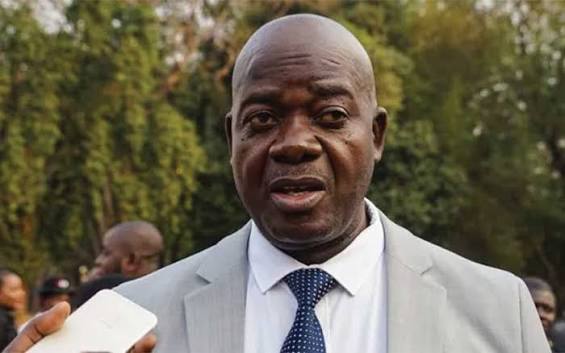
Zvamaida Murwira
Senior Reporter
Government will consider extending financial subsidy on examination fees to private schools once resources become available, considering that some learners are enrolled at those schools owing to the absence of public schools in their locality, legislators have heard.
Primary and Secondary Education Minister, Dr Torerayi Moyo, said the decision to include only Government-related schools in the provision of subsidies was determined by national strategic priorities and financial resources availability.
Dr Moyo said this in the National Assembly during a question-and-answer session recently. St Mary’s Member of Parliament, Mr Brighton Mazhindu, had asked Minister Moyo to inform the House on the justification behind the exclusion of subsidised examination fees for learners in private schools.
He said some learners attended private schools due to limited capacity in public schools, while some settlements or areas did not have public schools, forcing parents to send children to privately run learning centres.
In response, Minister Moyo said it remained Government policy not to exclude any person, but other factors forced them to do so.
“It is the Ministry’s policy that all learners in the school system should be considered in all decision-making under the Ministry of Primary and Secondary Education,” said Minister Moyo.
“However, the ministry’s policy to exclude private school learners from subsidised ZIMSEC examination fees is primarily based on strategic priorities and limited fiscal resources.”
“The Ministry acknowledges that infrastructure capacity deficits force some learners to attend private colleges. Public education funding models require strict differentiation between commercial, profit-driven entities and state-assisted institutions. For these reasons, our priority is, therefore, the less privileged, so that no one or no place is left behind.”
He said it was common that financially disadvantaged families took their children to Government-run schools while those from affluent backgrounds sent their children to expensive private schools.
“I may also want to add that it is standard practice for those from lower classes to send their children to public schools,” he said.
“Even in Western countries, private schools are for the rich, which is why the Government has decided to give a 55 percent exemption for ZIMSEC examinations and that is why private candidates are not given this subsidy. They are not beneficiaries of the 55 percent subsidy that is given to those attending public schools.”
Zengeza West Member of Parliament, Mr Innocent Zvaipa said some areas did not have Government schools, a situation that usually forces parents to enrol children at private schools.
He said the exclusion of some private schools tended to prejudice some learners as their presence at private schools was unavoidable.