Online Reporter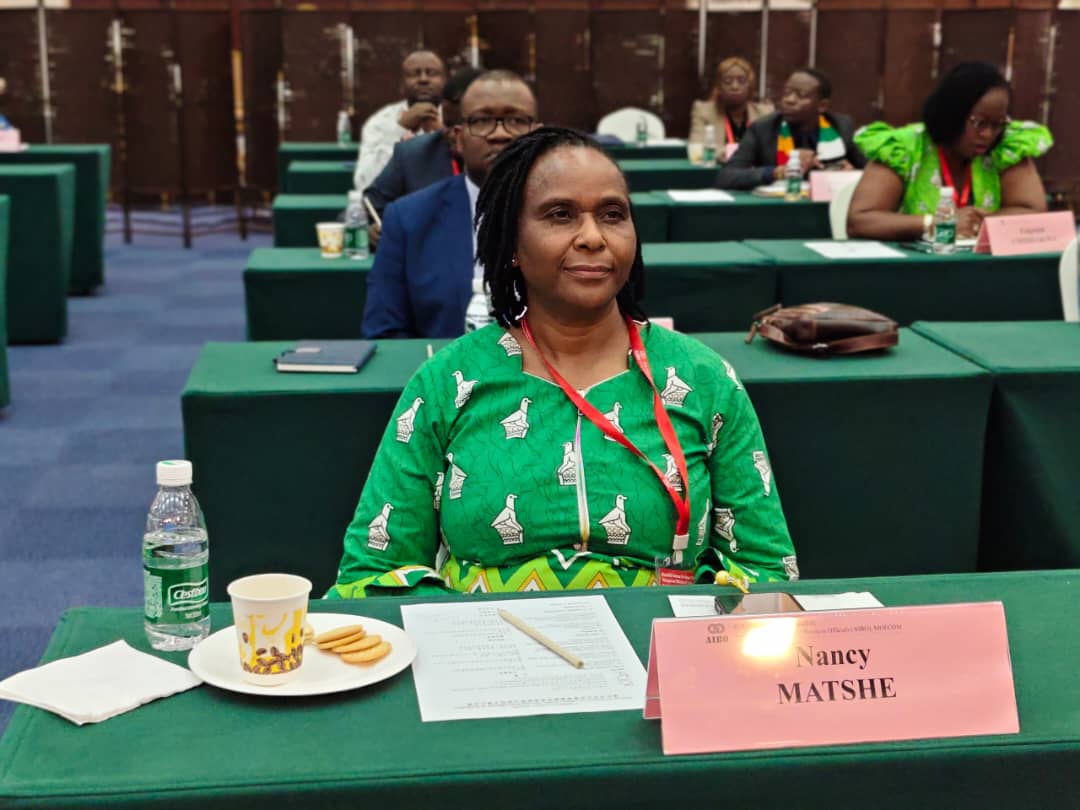
Vusumuzi Dube in Beijing, China
ZIMBABWE is set to modernise the Zimbabwe Institute of Public Administration and Management (Zipam) and transform it into a regional centre of excellence for public administration training, drawing on lessons from China’s advances in technology, innovation, human capital development and public sector capacity building.
The proposed transformation is expected to strengthen Zipam’s technological infrastructure, deepen collaboration with universities and expand its traditional domestic training mandate to accommodate public officials from across the SADC region.
The initiative follows a 12-day Ministerial Seminar for Senior Public Officials from Zimbabwe held in China and organised by the Academy of International Business Officials (Aibo), which exposed senior Government officials to China’s approach to public administration, skills development and institutional capacity building.

Zipam Director-General Dr Nancy Matshe said the seminar underscored the need for the institute to modernise its infrastructure and embrace technology and innovation to effectively support the development of a future-ready public service.
“One of the key lessons we have learnt from this 12-day seminar is that for Zipam to continue and upscale its role in the national development strategy, our infrastructure has to be modernised in order to live up to the required standards,” she said.
Dr Matshe said Aibo’s facilities demonstrated how modern technological infrastructure can transform training and professional development by enabling physical and virtual learning, innovation and the adoption of artificial intelligence.
“The technological infrastructure that we have seen here at Aibo is state-of-the-art. It enables physical learning, virtual learning, innovation, artificial intelligence and the upskilling of senior public officials.
“As we go back home, we need to modernise Zipam. We need to equip Zipam with the relevant technological infrastructure and work with our Government and universities to research and offer the relevant managerial skills that support digital governance,” said Dr Matshe.
Public Service Commission (PSC) Commissioner Rosemary Rubvumo Mukogo, who was part of the delegation, said modernisation should extend beyond infrastructure to include a broader and more strategic expansion of Zipam’s role.
She said Zimbabwe already possessed institutions and infrastructure capable of advancing public sector development, but needed to modernise them and adopt a more outward-looking approach similar to Aibo, which trains and shares expertise with officials from various countries.
“There’s a lot to learn, but one thing which I should like to underline is that we are on the right road. We have the institutions, we have the infrastructure, but what we need to do is to modernise,” Comm Mukogo said.
She said Zipam could leverage existing regional platforms, particularly the SADC Public Service Commission Forum, to position itself as a training hub for public servants from across the region.
“With Zipam, we are looking internally to the public service staff in terms of training, but we can also look externally,” she said.
“So in Zimbabwe we need to establish a centre of excellence through Zipam and the other academies, where we can train people from the region.”
Comm Mukogo said Zimbabwe already enjoyed a strong reputation for public-sector training, with officials from other countries travelling to the country to acquire skills and expertise.
“I know there is a lot of appreciation that Zimbabwe has moved a long way in terms of our training.
We are known as a country where people come to Zimbabwe to learn, so already I think we just need to mainstream and establish ourselves professionally,” she said.
She said Zimbabwe could also leverage its strong relations with China to support the modernisation drive, citing existing cooperation involving the Zimbabwe National Defence University as a model that could potentially be expanded.
Comm Mukogo said the proposed centre of excellence would enable Zimbabwe to maximise opportunities presented by regional cooperation while extending its influence to wider African platforms.
“We have an opportunity to leverage on that so that we can also establish this centre of excellence and make sure that we are benefiting and leveraging this opportunity with the SADC Public Service Commission Forum,” she said.
The proposed transformation aligns with Government’s broader focus on skills development, innovation and human capital enhancement, particularly among senior public managers.
Dr Matshe said the evolving demands of governance require senior officials to acquire new administrative, technological and managerial competencies to respond effectively to a rapidly changing public sector environment.
The seminar also exposed the Zimbabwean delegation to China’s experience in infrastructure development, technological advancement, innovation, research, human resources development, as well as the establishment of green and smart cities.