Conrad Mupesa
Mashonaland West Bureau
THOUSANDS of people in remote and underserved communities are set to gain easier access to healthcare as the Government rolls out 100 mobile health kiosks nationwide under the Presidential Ward-Based Primary Health-Care Outreach Programme.
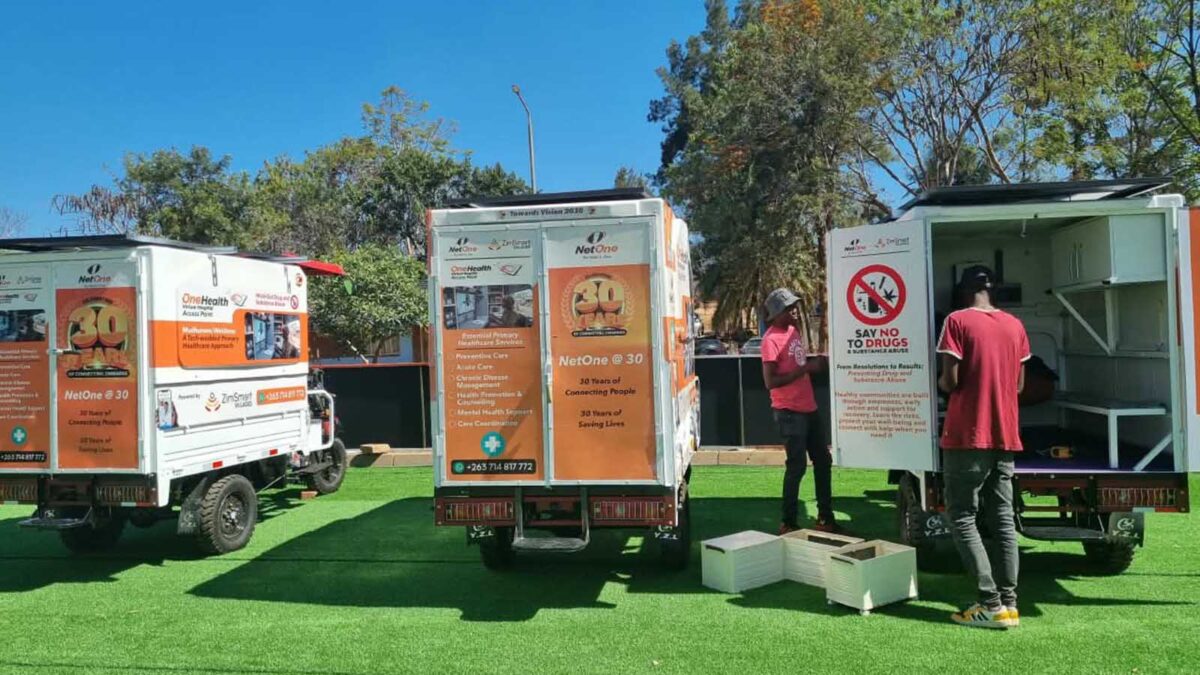
Launched by President Mnangagwa at Chinhoyi University of Technology on Saturday on the sidelines of the 23rd ZANU PF Annual National People’s Conference, the programme will deploy nurse-manned, three-wheeler units to provide medical screening, consultations, and essential services closer to communities that often face long journeys to reach health facilities.
The first 10 kiosks, funded by NetOne, will be distributed among Zimbabwe’s 10 provinces before the programme expands to the district level. Speaking after the launch, Information Communication Technology, Postal and Courier Services Minister Tatenda Mavetera said the Government was working with its partners to use technology and connectivity to improve healthcare delivery, particularly in hard-to-reach areas.
“We are working together as the ICT Ministry and the Ministry of Health and Child Care to ensure that we infuse technology with health availability to everyone across the country,” she said. “The programme will also ensure that our village health workers are provided with bicycles fitted with Starlink kits for connectivity purposes. This is happening because of President Mnangagwa’s leadership and mantra of leaving no person and place behind. Through the three-wheeler, our health teams will be able to be all over the country providing healthcare services to deserving people while at the same time cutting costs on their transport.”
She said the programme would use solar power and Starlink connectivity to enable access to digital health services. The initiative also builds on the technology-enabled healthcare vision championed by First Lady Dr Auxillia Mnangagwa to improve services for vulnerable communities.
ZimSmart Villages chief medical officer Dr Admore Jokwiro said the programme would address shortages of healthcare professionals, diagnostic services, and medicines in underserved areas.
“At ZimSmart Villages, we are implementing a telehealth ecosystem in Zimbabwe, where we have partnered with NetOne and the Ministry of Health and Child Care to broaden access to healthcare,” he said. “We have several solutions that we are using to deliver that access, including consultations, diagnostics and medicines. In our remote, underserved locations, there is an acute shortage of these services.”
Static telehealth kiosks already provide diagnostic services, medicines, and virtual consultations. The mobile units will extend this model to the ward level, linking patients to clinicians where further assessment is required.
“We use solar power and Starlink for connectivity, while NetOne provides the infrastructure for the static and mobile kiosks. Our work is centred on ensuring that we improve health outcomes,” Dr Jokwiro said.
The mobile units will offer blood pressure and blood glucose checks, pregnancy monitoring, maternal and child health support, malaria screening and treatment within approved clinical protocols, HIV and tuberculosis support, health education, point-of-care diagnostics, and referral coordination. They will also support the early identification of conditions such as cancer and drug and substance abuse, with patients requiring specialised attention referred to appropriate health facilities.
Dr Jokwiro said the kiosks would complement, rather than replace, existing clinics and hospitals. Community health workers would visit households, identify people requiring screening, and link them to healthcare professionals. The approach builds on the Mutumenuwe Utano Initiative, which empowers community health workers to screen residents for conditions such as hypertension and diabetes and arrange virtual consultations where further assessment is needed.
“Through the Mutumenuwe Utano Initiative, we are empowering local community health workers to visit homesteads and screen for hypertension and diabetes. Where further assessment is required, we connect patients to clinicians for virtual consultations,” he said.
Dr Jokwiro noted that the organisation was also working with the Ministry of Health and Child Care to facilitate the transportation of patients from rural homes to clinics during emergencies, including maternal complications and snakebites, subject to approved safety and referral protocols.
“So, essentially, our programme is building and strengthening primary healthcare. We are working with the Ministry of Health and Child Care to ensure that, in cases of maternal emergencies and snakebite victims, we can transport them to clinics from their homes as well,” he said.