admin
admin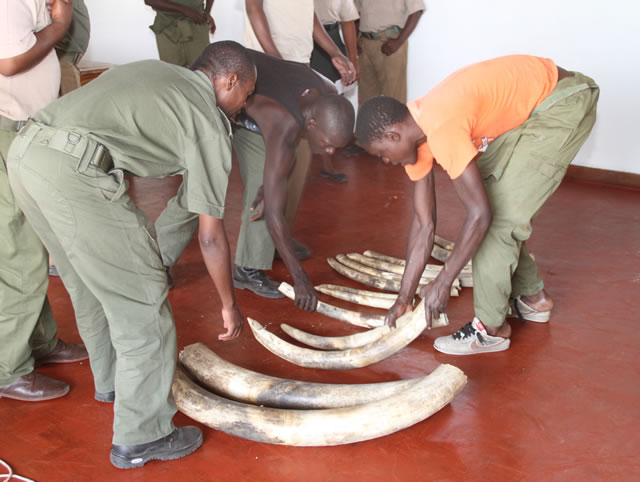

Prosper Ndlovu and Mashudu Netsianda Senior Reporters
ELEVEN more elephants have been killed by poachers at the Hwange National Park in a fresh case of cyanide poisoning bringing to 106 the number of jumbos killed so far.Senior officials from the Zimbabwe Parks and Wildlife Management Authority yesterday said fresh poaching activities have been detected at Chezhou area in Hwange District under Chief Nekatambe with 11 elephants and eight vultures having succumbed to cyanide poisoning so far.
In an interview at the Hwange National Park’s Main Camp, Zimbabwe Parks and Wildlife Management Authority regional manager, Mr Arthur Musakwa, said two suspects linked to the incident have been arrested and 13 tusks recovered.
“The poachers have pounced again at the game park killing 11 elephants and eight vultures. This time the incident happened at Chezhou area under Chief Nekatambe,” said Mr Musakwa.
He said the two suspects who were arrested on Sunday night were still under police custody.
“We also recovered 13 elephant tusks and from our preliminary investigations, it looks like the poachers used the same method of poisoning the animals just like what they did in Tsholotsho, when they poisoned water points,” said Mr Musakwa.
He said on detecting the incident, rangers from the parks followed the foot prints of the poachers and found them at their home in Chezhou where the tusks were also kept.
“Our rangers picked up the spoor from the scene and tracked the poachers and found them at their homes where they conducted a search and recovered about 200 granules of cyanide. We have since engaged the Environmental Management Agency (EMA) experts to examine the chemical,” he said.
The news crew was taken to one of the rooms at the game park where the recovered ivory is kept.
“We are continuing with investigations and the suspects are assisting us. This is a new way of poaching whereby poachers use cyanide instead of rifles as was the case in the past,” said Mr Musakwa.
He said the authority was in the process of recruiting more personnel to increase its surveillance. The merciless killing of elephants and other wildlife species at the park has made headlines across the globe with leaders from all over the country condemning the practice.
Soon after its detection, the Government reacted swiftly and appointed an eight-member ministerial taskforce team led by the Minister of Environment, Water and Climate, Cde Saviour Kasukuwere, to investigate the issue and take appropriate measures.
The Government has also indicated that it was considering deploying soldiers to beef up security at the park. Rehabilitation efforts to detoxicate the affected areas are also underway as the Government seeks to ensure that poisoning does not affect human beings and livestock.
In Tsholotsho, villagers admitted that they poisoned elephants using cyanide and said some of them still had the chemical. They said they were working with syndicates who were buying the tusks.
Meanwhile, the deputy officer commanding police in Matabeleland North, Assistant Commissioner Musarashana Mabunda, said they have intensified the ongoing anti-poaching operation.
He said two of the suspects linked to the killings are still on the run.
“We have launched a manhunt for two suspects who are behind the poisoning of the elephants and our teams on the ground from police and Parks and Wildlife Management Authority officers, have intensified patrols,” said Asst Comm Mabunda.
EMA provincial manager for Matabeleland North Mrs Chipo Mpofu-Zuze said they deployed a team to the sites of poisoning.
“We have sent our team to the area where new carcasses of elephants were found and they will be working with police and officials from the parks. As EMA, our role is to supervise and give technical advice in as far as detoxification is concerned,” she said.



 Online Reporter