Online Reporter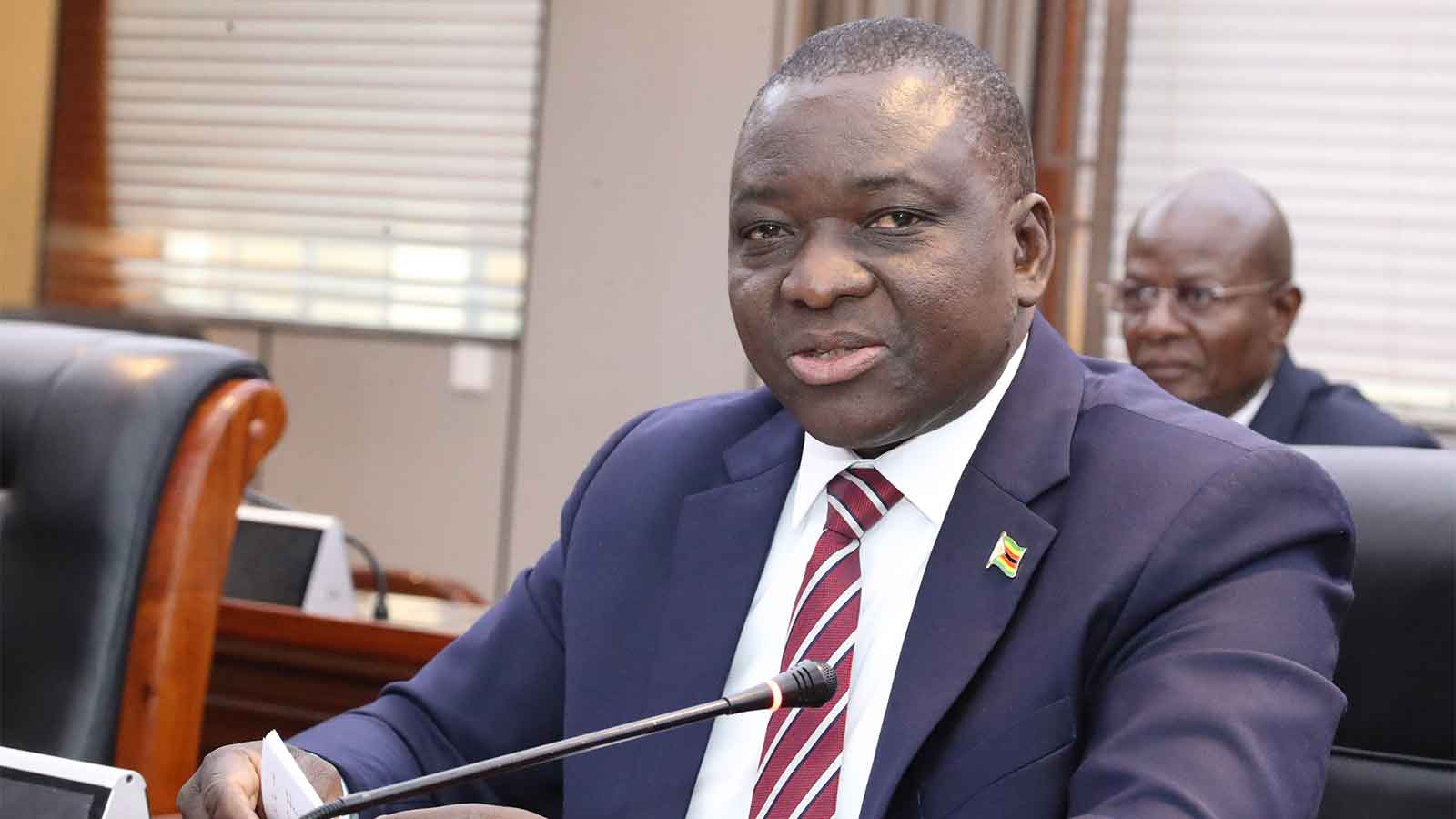
We publish here the 24th post Cabinet media briefing presented by Information, Publicity and Broadcasting Services Minister, Dr Zhemu Soda, in Harare yesterday.
Cabinet received an Update Report on the Repatriation and Reintegration of Zimbabwean Nationals returning from the Republic of South Africa, which was presented by the Minister of Local Government and Public Works, as the Chairperson of the Cabinet Committee on Environment, Emergency Preparedness and Disaster Management.
The nation is being informed that the repatriation of Zimbabweans returning from South Africa is ongoing with Government and its partners continuing to support a safe, orderly and dignified return for the nationals.
As at July 18, 2026, a total of 33 855 returnees had been repatriated through Government arrangements, while an estimated 74 511 had self-repatriated, bringing the total number of returnees to over 108 000.
Additionally, a cumulative 791 self-repatriations have been recorded through Botswana entry points, namely: Plumtree, Mphoengs, Maitengwe and Mlambapele.
The nation is being informed that to date, a total of 416 bus-trips have been undertaken to facilitate transportation of returnees from the Beitbridge Repatriation Centre.
The Beitbridge Reception Centre Clinic continues to provide comprehensive healthcare, having attended to 1 474 returnees for various medical needs.
It is observed that to date, Harare Metropolitan Province has received the highest number of returnees, followed by Manicaland, Midlands and Bulawayo Provinces, respectively.
Government has adopted a three-pronged reintegration approach prioritising social, economic and cultural reintegration to support sustainable reintegration of returnees into their communities.
To this end, the Skills Registration Process is ongoing with a total of 15 065 returnees having been registered across 52 identified occupations.
The majority of skills are related to domestic work, bricklaying and farming.
Government Security Arms continue to strengthen screening and surveillance including for all foreigners passing through the country’s entry points.
2.0 UPDATE REPORTS ON PREPARATIONS FOR THE 2026 HEROES DAY COMMEMORATIONS AND DEFENCE FORCES DAY CELEBRATIONS
Cabinet received Update Reports regarding Preparations for the 2026 Heroes Day Commemorations and the Defence Forces Day Celebrations to be held on August 10 and 11, 2026, respectively.
The nation is informed that preparations for the holding of the two events is at an advanced stage.
2.1 Heroes Day Commemorations
Concerning Heroes Day Commemorations, the nation is being informed that the main event will be held at the National Heroes Acre, with gatherings at each of the 10 Provincial Heroes Acres and 60 District Heroes Acres. The theme for the Commemorations is “LEST WE FORGET.”
The public is being informed that logistical and administrative preparations are ongoing at the various levels of Government in order to ensure successful commemorations in honour of the gallant sons and daughters who selflessly gave their lives to liberate Zimbabwe.
A fleet of 162 buses will be deployed across the country to assist in transporting relatives of heroes and heroines to attend the event at the respective shrines.
All citizens are, therefore, invited to join His Excellency the President Mnangagwa and the entire nation to commemorate the 2026 Heroes Day.
2.2 Defence Forces Day Celebrations
The 2026 Defence Forces Day Celebrations will be held on August 11th, 2026 at Rufaro Stadium for the main event, and at each of the country’s provincial centres, under the theme: “ZDF: Guaranteeing Peace and Stability for the Attainment of Vision 2030”.
As per tradition, ZDF will undertake a programme on the Community Assistance Week from July 27th to 31st, 2026.
During the period, projects which were completed in collaboration with partners will be handed over to beneficiaries.
The projects include the following: Nikita Mangena Clinic in Mwenezi District, Masvingo Province; Wunga Clinic in Beitbridge District, Matabeleland South Province; the Civil Registry Office in Buhera District, Manicaland Province; and Hallingbury Primary School ECD and ICT Complex in Mabelreign, Harare Metropolitan Province.
The major highlights of the Defence Forces Day Celebrations programme will include the Key Note Address by the Guest of Honour, His Excellency the President Mnangagwa; a Military Parade mounted by the Zimbabwe Defence Forces; and a variety of entertainment acts encompassing Military Displays, and performances by artists like Sulumani Chimbetu; Kona Ngale; Jah Prayzah and Air Power Ban, among others.
The programme will conclude with a soccer match between the Zimbabwe Defence Forces Select Team and the Namibian Defence Forces Select Team.
3.0 UPDATE ON THE 2025/2026 SUMMER CROPS MARKETING AND 2026 WINTER PLAN
Cabinet noted and approved the Update on the 2025/2026 Summer Crops Marketing and 2026 Winter Plan as presented by the Minister of Agriculture, Mechanisation and Water Resources Development, Honourable Dr Anxious Jongwe Masuka.
The Update Report shows outcomes of estimated crop, livestock and fisheries production for the 2025/2026 summer season as per the following highlights:
- i) Strategic Grain Stocks at the Grain Marketing Board are currently 227 338 tonnes comprising maize, traditional grains and wheat;
- ii) GMB deliveries are 139 percent above last year, with ARDA contributing 89.95 percent of the grain deliveries;
iii) Regarding payment for 2025/2026 deliveries, payments of US$ 19 482 652,48 and ZiG 135 179 969,79 have been made, leaving an outstanding balance of ZiG 81,424 million and US$7,419 million.
GMB holds 70 015.011 tonnes of third-party grain stocks since the completion of the Artificial Intelligence-powered silos and subsequent offering of commercial storage services directly or through the Warehouse Receipt System. The total maize area planted increased from 1 813 974 hectares in 2025 to 1 963 292 hectares in the 2025/2026 season representing an 8,23 percent increase, while total production also increased from 2 293 556 tonnes to 2 685 021 tonnes, giving an overall growth of 17,1 percent.
Pertaining to tobacco, a total of 354 million kilogrammes had been sold as at 16 July 2026 at an average price of US$2,49/kg. Cumulative tobacco exports amounted to 121,8 million kilogrammes valued at US$723,5 million, with an average export price of US$5,94/kg.
The Winter wheat area planted is 106 percent of the targeted area, compared to 101 percent of the targeted area planted at the same time in 2025.
ARDA has planted 65 585 hectares, surpassing the initial target of 65 000 hectares by 0,09 percent.
4.0 DEVELOPMENTS IN AGRICULTURE: 1980-2025
Cabinet considered and noted the progress in Agriculture from 1980-2025 as reported by the Minister of Agriculture, Mechanisation and Water Resources Development, Honourable Masuka.
Since Independence in 1980, Zimbabwe’s agricultural sector has undergone profound transformation from a productive commercial powerhouse (1980-1995), to a sector marked by volatility and structural disruption (1995-2013), recovery and resilience-building (2013-2016), and growth (2017 to date).
The sector employs 70 percent of the population, and remains the bedrock of Zimbabwe’s economy.
The implementation of the Agriculture, Food Systems and Rural Transformation Strategy 1(AFSRTS 1: 2020-2025) has seen Zimbabwe’s agriculture sector recording significant growth.
Strategic novel interventions implemented by the Second Republic include:
- a) the Pfumvudza/Intwasa conservation agriculture model, targeting 100 percent adoption by 2026;
- b) the Accelerated Irrigation Rehabilitation and Development Plan;
- c) the National Enhanced Agriculture Productivity Scheme replacing Command Agriculture;
- d) a Refined Presidential Inputs Programme;
- e) the Farm Title Deeds Programme (2024) providing bankable title deeds to A1 and A2 farmers;
- f) a compensation framework for former farm owners, (2020);
- g) the Agriculture, Food Systems and Rural Transformation Strategy 2;
- h) structured market liberalisation to crowd in private sector financing;
- i) accelerated mechanisation, through which the operational tractor fleet grew from 4 466 in 2015 to 16 350 in 2025;
- j) strategic grain storage expansion through constructing Artificial Intelligence (AI) Powered Silos;
- k) attention to livestock diseases, pastures and genetics; and
- l) expansion of the Irrigation area from 171 000 hectares in 2020 to 258 773 hectares in 2026, reflecting a 521 percent increase in 5 years, compared to 150 000 ha in 1980 to 171 000 ha in 2020, reflecting a 14 percent increase in 40 years.
Maize remains the cornerstone of national food security with production yields under Pfumvudza/Intwasa being higher than recorded under the conventional practice.
The 2025 wheat season represents the highest wheat output and the largest GMB procurement volume in Zimbabwe’s history.
The Second Republic has deliberately shifted from soyabean as an oil seed crop to a feed crop in order to release more land for maize, while promoting the use of sunflower and cotton as oil seed crops.
Soya bean has 18 percent crude protein compared to Sunflower’s 30 percent.
Tobacco production increased from 48,8 million kilogrammes in 2008 to 354,9 kilogrammes in 2025.
The transformation was driven by smallholder farmers after the Land Reform Programme and contract farming arrangements.
The national herd declined from a peak of 6,2 million in 1991 to a low of 4,1 million cattle in 1994 before recovering to 5,7 million in 2025.
Government interventions averted mass cattle deaths.
Milk production increased from just 70 million litres to 152 million litres in 2025, with 122 million litres being from commercial production. Broiler production has increased threefold to 160 million, while egg production has increased to over 100 million dozens.
Due to climate change, Zimbabwe is predicted to become drier in the decades ahead, with conditions manifesting as shortened rainfall seasons, uneven rainfall distribution, heightened temperatures and increased pest and diseases pressure.
Farmers are, therefore, encouraged to practice smart agriculture interventions (Pfumvudza/Intwasa and irrigation) according to their agro-ecological zones.
5.0 UPDATE ON PREPARATIONS FOR THE COMMISSIONING OF THE JOSIAH MAGAMA TONGOGARA MONUMENT AND HEALTH CENTRE IN MOZAMBIQUE
Cabinet noted an Update Report on Preparations for the Commissioning of the Josiah Magama Tongogara Monument and Health Centre in Massinga District of Nyambane Province, in Mozambique.
The late General Josiah Magama Tongogara perished in a road traffic accident at Magacala Village in Massinga District on 26th December, 1979 while travelling from Maputo to Chimoio.
The construction of the Monument and the Health Centre are part of continuing efforts to recognise and immortalise the immense contribution of the late General.
The nation is being informed that construction at the Centre has since been completed, including an Outpatient Block; three Staff Quarters and a Maternity Block which were constructed by the Government of Zimbabwe, while the Government of Mozambique constructed an Administration Block; a Waiting Mothers’ Shelter; and a Laundry Facility.
The Project is ready for commissioning, and the amenities are expected to transform the livelihoods of the local Mozambican communities which assisted during Zimbabwe’s War of Liberation, through access to a modern health facility.
6.0 REPORT ON THE UNILATERAL ZERO-TARIFF PREFERENTIAL MARKET ACCESS BY THE PEOPLE’S REPUBLIC OF CHINA
Cabinet considered and noted the Report on the Unilateral Zero-Tariff Preferential Market Access offered by the People’s Republic of China as presented by the Minister of Foreign Affairs and International Trade, Honourable Amon Murwira.
During the 2024 Forum on China-Africa Co-operation, the People’s Republic of China announced a unilateral Zero-Tariff Preferential Market Access for African countries, namely the Pre-Early Harvest Initiative.
Under this arrangement, effective May 1, 2026, qualifying Zimbabwean products can enter the Chinese Market duty-free under 8 949 tariff lines for a period of two years ending on 30 April, 2028.
In response, Zimbabwe has fulfilled the administrative requirements necessary to participate in this arrangement.
Already, ZimTrade has been designated to issue Certificates of Origin, while ZIMRA verifies compliance with the Rules of Origin.
In view of the 2-year lapse, African countries have to negotiate for longer-term partnership agreements that will offer similar or near similar benefits with the People’s Republic of China.
Zimbabwe has started internal processes as a preparatory stage for negotiations with China when the Pre-Early Harvest initiative expires in April 2028.
Upon successful conclusion of negotiations, Zimbabwe will secure continued preferential Market Access beyond April 2028, create greater certainty for exporters and investors, expand market access for new agricultural and value-added products, and strengthen its position on the Chinese market.
7.0 REPORT ON VICE PRESIDENT DR MOHADI’S VISIT TO THE 2026 INTERNATIONAL ART EXHIBITION VENICE BIENNALE: 13-17 JULY 2026: VENICE, ITALY
Cabinet noted the Report on Vice President Mohadi’s visit to the 2026 International Art Exhibition, Venice Biennale in Italy from 13 to 17 July 2026.
The visit provided an opportunity to promote Zimbabwe’s cultural diplomacy and engage the diplomatic Mission accredited to Italy on trade, investment and key bilateral issues aimed at further strengthening relations between Zimbabwe and Italy.
The Biennale has evolved into a well-organised global cultural industry and one of Italy’s premier tourist attractions, generating substantial economic benefits in the services sector.
The event demonstrated how investment in culture can stimulate tourism, create employment and contribute meaningfully to national economic development.
8.0 MEMORANDUM OF UNDERSTANDING BETWEEN THE REPUBLIC OF ZIMBABWE AND THE REPUBLIC OF SOUTH AFRICA ON BILATERAL COOPERATION IN THE FIELDS OF WOMEN EMPOWERMENT AND GENDER EQUALITY
Cabinet considered and approved the Memorandum of Understanding between the Republic of Zimbabwe and the Republic of South Africa on Bilateral Cooperation in the fields of Women Empowerment and Gender Equality as presented by the Acting Minister of Justice, Legal and Parliamentary Affairs, Honourable Kazembe Kazembe.
The Republic of Zimbabwe and the Republic of South Africa share a common historical, social and economic fabric.
The Memorandum of Understanding provides a binding or guiding framework to consolidate, develop and structure sustainable collaboration on gender equality and women empowerment.
By formalising cooperation with South Africa, Zimbabwe stands to gain access to best practices in mechanisms for gender-based violence prevention and response, domestic financing, gender accountability systems, financing for women-owned small and medium enterprises, and technology transfer for women in key economic sectors.