

 admin
admin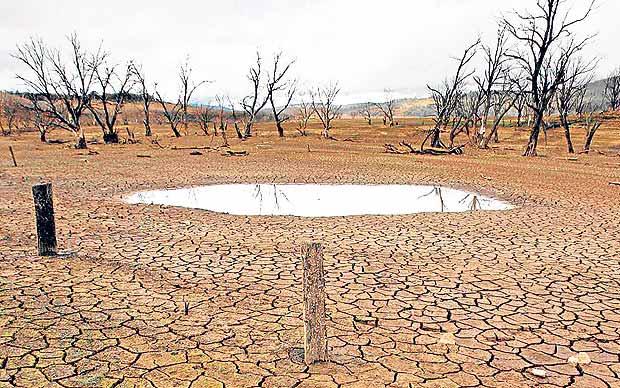
Golden Sibanda Senior Business Reporter
AN estimated 1,5 million people in Zimbabwe may be food insecure following last year’s drought with fears food prices are already rising early into the 2015 /16 agriculture season, the Food and Agriculture Organisation says.
Poor rains across the country saw over half the expected harvest last season lost and this has left over a million of people requiring food assistance in the next months and put a strain on the most vulnerable, as prices rise.
Zimbabwe needs to import over 700 000 tonnes of cereals to cover the deficit and FAO estimates that about 1,5 million Zimbabweans may be food insecure at the peak of the lean season due to poor rains last season.
FAO yesterday said it is working with Government to support resilience-building approaches among vulnerable groups.
Thirty four irrigation schemes in drought prone districts are being rehabilitated. As many as 127 000 smallholder farmers are receiving support to adopt climate smart technologies and increase access to rural finance.
In the livestock sector, FAO is providing support to 40 000 smallholder households to engage in commercial livestock production. It is also responding to foot- and-mouth disease outbreak in parts of the country where 5,4 million doses of vaccines are still required.
FAO said that it has also prepared a drought mitigation programme, pointing out though that there is a financial gap of $32 million, to support livestock and crop farmers with stock feed and seeds respectively, in the most affected parts of the country.
The World Food Programme is working with the Government and partners to assist some 400 000 of the most vulnerable people, scaling up to reach 850 000 people at the height of the lean season. Assistance will be given in the form of food and cash transfers.
FAO, a United Nations Agency, said it continues to support adoption of climate smart technologies for both livestock and crop production systems in the country and region, as a way to promote sustainable production and increased resilience among communities.
WFP, another United Nations agency, has started cash- and food-for-work projects whereby rural communities work on the refurbishment or construction of schemes such as water management systems, tree planting and terracing to prevent soil erosion.
FAO and WFP, together with other stakeholders, will consolidate efforts to help governments improve food price monitoring in their countries,” FAO said.
Early indications point at market prices beginning to soar earlier than is normally the case.
Such a development early in the agriculture season is likely to cause further hardship for the poorest households, the agency added.
FAO chairman Dr Chimimba David Phiri said there was need to link agriculture and social protection in the fight to break down rural poverty. He said the current situation is a result of a poor rainfall season, which contributed to a decline in cereal production in the country.
Dr Phiri made the remarks while addressing delegates during commemoration of the World Food Day observed under the theme “Social Protection and Agriculture: Breaking the Cycle of Rural poverty, held at Gwebi College, 27 km out of Harare.
“We are all well aware of the challenges relating to food insecurity, hunger and malnutrition. The 2015 ZimVAC report estimates that 1,5 million people in the country will be food insecure during the peak of the lean season (January to March 2016),” he said.
Apart from Zimbabwe, other countries with immediate food insecurity include Malawi, and Madagascar which all suffered severe crop failure due to extended dry spells last season.
Malawi suffered the double effect of drought and extensive flooding and, in Madagascar, the devastating effects of strong tropical storms).
There are also concerns about growing food insecurity in Lesotho and southern parts of Angola and Mozambique. Botswana and Namibia also suffered from extensive drought earlier this year.



 Online Reporter