Online Reporter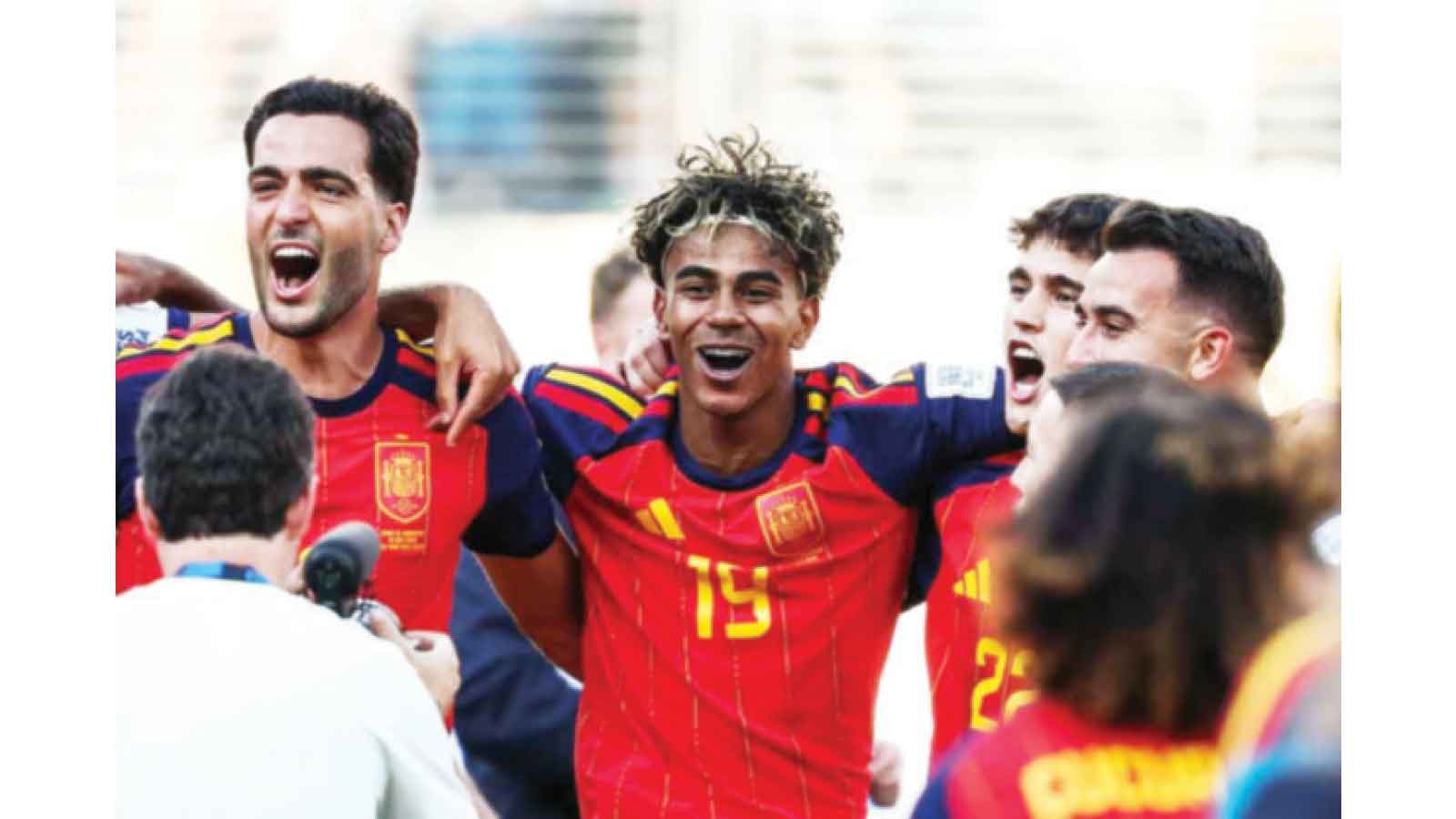
SPAIN have done it again.
After being crowned European champions two years ago in Berlin, La Roja are now world champions having beaten Argentina 1-0 in the FIFA World Cup final in New Jersey on Sunday.
They achieved the same feat back in 2010, two years after winning Euro 2008.
Spain’s latest success continues their remarkable dominance in the men’s and women’s game.
They are the first nation to be men’s and women’s World Cup winners at the same time — La Roja overcoming England in the Women’s World Cup final in Sydney in 2023.
That’s not all. The men won the Nations League in 2023 and gold at the 2024 Olympics, while the wom-en won the Nations League in both 2024 and 2025.
In fact, in the last five years, Spain have now won an astonishing 16 world and European titles from Under-17 to senior level.
“It is a dominance,” Spanish football expert Guillem Balague told BBC Sport.
“It’s like the perfect storm. Culturally, we do things a certain way. Everybody believes in it. The important thing is that we don’t stop.
“It’s another Everest because the men won the World Cup in 2010 two years after winning the Euros. Now we’ve done it again.”
When Spain appointed Luis de la Fuente as head coach in December 2022, few expected him to deliver the Nations League (2023), European Championship (2024) and World Cup (2026) in so short a time frame.
Spain had just been knocked out of the World Cup by Morocco in the last 16 in Qatar and the federation needed a replacement after Luis Enrique left his role.
“They went with this guy (De La Fuente) who understood the style and the system,” added Balague.
“It was a very risky decision — I don’t think anyone thought he would be so successful.”
It appeared risky because De La Fuente took charge of Spain, who have won three of the past five men’s European Championships — (2008, 2012, 2024) — without having managed a big club.
After retiring as a player in 1994, De La Fuente spent 15 years in different roles with a succession of different clubs, including managing in the lower Spanish leagues, youth roles and assistant coach positions — before he took charge of Spain’s youth teams.
“De la Fuente knew most of these players from the academies and they are growing as a team,” former Spain midfielder Juan Mata told BBC Sport.
“This is not only a team for the present, but also a team for the future.”
Since being appointed senior boss after stints in charge of the Under-19s, Under-21s and at Olympic level, De La Fuente has implemented a culture of respect for their rivals, for the process and preaching patience and calmness.
“Most of you are younger than me and you need to respect experience,” the 65-year-old told journalists at his pre-match news conference in New York on Friday.
“Once we finished the game, there were footballers who said ‘coach, now what else is there to win as we have won everything in all the categories’.
“We came to the conclusion that what remains is the next match in September because this team are relentless.”
The success of the national teams and Spanish coaches has spilled over to club football.
Despite Pep Guardiola’s decision to leave Manchester City after 10 trophy-packed years, at least a quarter of the managers who start the 2026-27 English Premier League season are Spanish.
Spain are now unbeaten in their last 38 matches in all competitions, the longest ever run by any European or South American team in history.
Meanwhile, the women’s game in Spain has thrived in the last decade and is also starting to reel in big successes in the high-pressure games.
The country’s victory over England three years ago in the Women’s World Cup final came in just their third appearance at the tournament, having made their debut in 2015.
Spain’s women then followed that up by winning back-to-back Nations Leagues in 2024 and 2025.
“The changes in women’s football in Spain have been especially significant,” former player Maria Garrido, who is now a journalist, told BBC Sport in 2024.
“Ten years ago, when I played for FC Barcelona, there was no La Masia (the famed academy at Barcelona) for girls. We covered our own transport costs, our parents brought us to training, and we didn’t earn any money.
“But in the last five years, the situation has improved dramatically. There has been a substantial push to promote women’s football, including the creation of more youth categories, better facilities and conditions, and the establishment of a dedicated football academy for girls.
“This transformation has not only revolutionised the sport but also elevated the respect for women’s football in Spain.” — BBC Sport