Online Reporter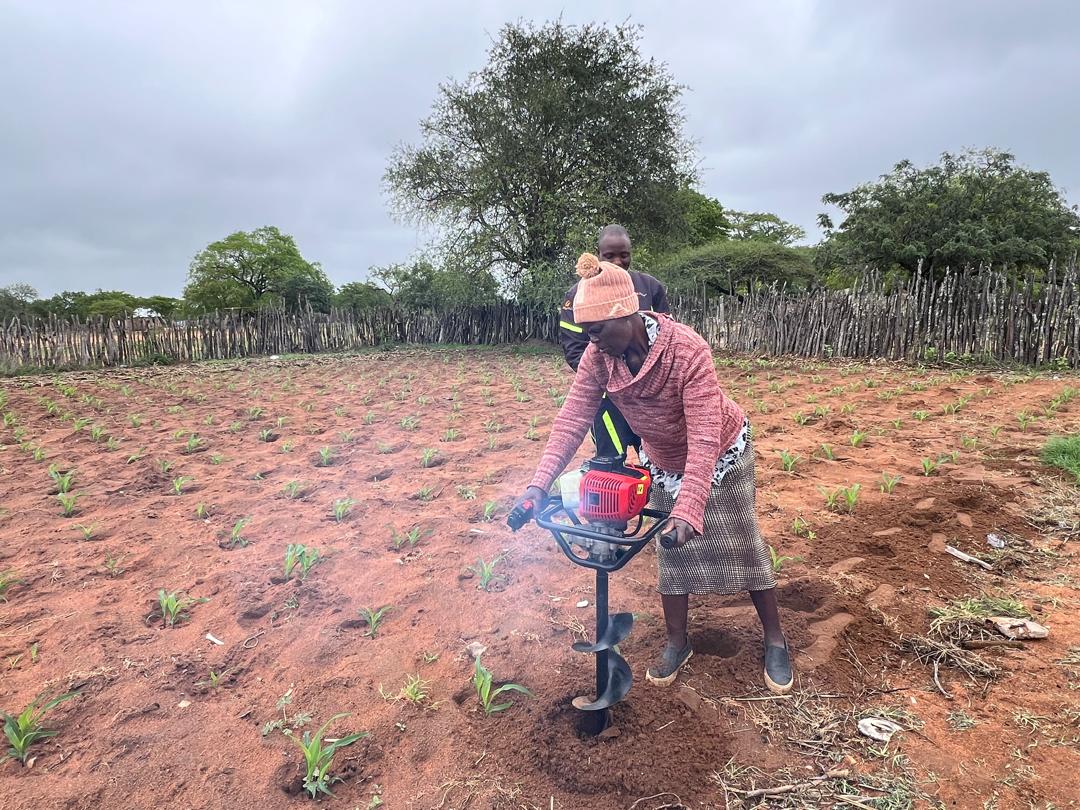
Sukuwenkosi Dube-Matutu,[email protected]
172 farmers from 15 groups in Gwanda district have received soil augers under the Humanitarian Drought Response Programme, a joint initiative by Government and development partner Welt Hunger Hilfe (WHH).
The farmers contributed 50 percent of the cost of the soil augers, while the project covered the remainder.
Farmers enrolled in the Pfumvudza/Intwasa programme have expressed concerns over the physically demanding nature of digging holes for fertilizer application and planting.
Elderly villagers and those in poor health particularly struggle with the hard labour involved.
While some farmers are willing to adopt the climate-smart model, participation remains limited due to the strenuous work required. In response, Government has begun mechanising the Pfumvudza/Intwasa programme by introducing equipment like soil augers and tractors.
Matabeleland South provincial Agricultural and Rural Development Advisory Services (AARDS) director Mrs Shupikai Sibanda encouraged farmers to embrace mechanisation. “Where farmers cannot afford to buy the machinery, they can come together and mobilise resources to buy the equipment, which they can share,” she said.
Several companies now produce and sell hand-operated, petrol-powered earth augers, priced between US$135 and US$250 depending on size. A soil auger can dig holes for a standard Pfumvudza/Intwasa plot in less than an hour, compared to three days of manual labour.
“This is a worthy investment for every farmer who is enrolled under the Pfumvudza/Intwasa programme, not just the elderly or the not-so-physically-strong. The cost is competitive if we consider the work that the machine does. A soil auger holes out a standard Pfumvudza/Intwasa plot in less than an hour yet manual holing of the same size of land would take three days or even five.
“Wider adoption of the soil auger will ease the physical burden on farmers. It enhances their efficiency and saves time,” Mrs Sibanda added.
She further urged communities to embrace government support programmes designed to cushion farmers against the effects of climate change, stressing the need to depart from traditional farming methods given prevailing weather conditions.
@DubeMatutu