Theseus Mauruki Shambare
Features Writer
FOR 18 years, Martha Muzwandavaka lived with questions that distance could not answer.
Where were her sons? Were they alive?
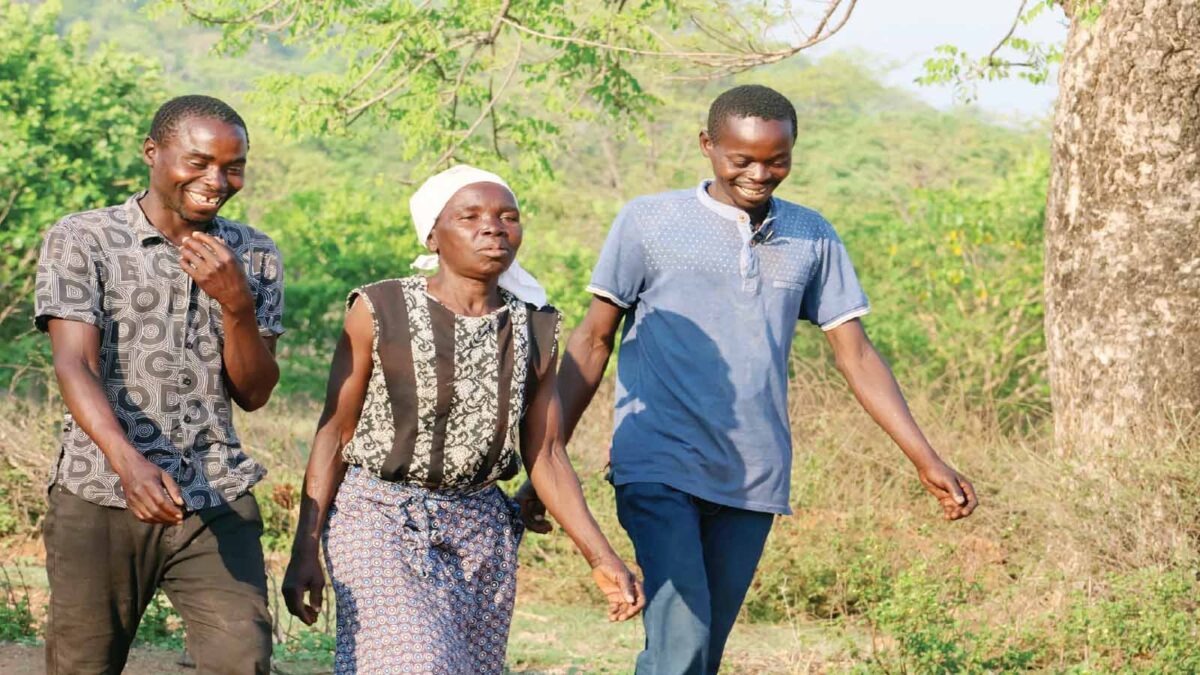
Today, under the scorching sun in Matsilele village, Zaka, Muzwandavaka, 63, is back in the fields with Golden, 38, and Kumbirai Muchimbiri, 40.
They are digging holes and preparing Pfumvudza plots for the coming cropping season.
In drought-prone Zaka, Masvingo province, each hole is an effort to conserve moisture.
For Muzwandavaka, the work means more: the men beside her are the sons she feared she might never see again.
In 2008, Golden and Kumbirai left home for South Africa, joining thousands of Zimbabweans who crossed the border in search of employment amid the economic hardships of the time.
As fate would have it, the occasional communication between a mother and her sons eventually gave way to silence.
Muzwandavaka was left relying on rumours and reports from people who claimed to have seen her sons in South Africa.
“I got their contacts and we spoke, but at some point, their phones were no longer reachable.
“I would hear from neighbours’ children who said they had seen them in South Africa, but I never knew where exactly they were,” she said.
Sleepless nights drove Muzwandavaka to seek spiritual guidance at the Zion Christian Church.
Some messages she received through consultations, which she described as “raviro”, deepened her distress.
“I would have sleepless nights thinking why God had given me such a curse,” she said.
Her greatest fear was of dying without ever seeing her sons again.
“The worst thing I thought would happen was that they would return and hear that their mother had died of stress.”
A journey that became a disappearance
Golden was only 19 years old when he left Zimbabwe.
He had been preparing for his Ordinary Level examinations, but the money his mother gave him for the Zimbabwe School Examinations Council (Zimsec) registration fees became part of his fare to South Africa.
He moved between Rustenburg, Giyani and Thohoyandou, taking casual jobs before honing his skills in construction.
“I was enjoying life. I would go out and have fun, and sometimes I would not think about calling home.
“I also lost phones along the way and communication eventually stopped,” he said.
Golden married a South African woman and they had a daughter, but the relationship ended when the child was three months old.
The girl, now in Grade Four, was eventually brought to Zimbabwe by her aunt and raised by Muzwandavaka.
She raised her granddaughter while worrying about her sons.
The separation affected another generation: a girl growing up largely without her father.
For Muzwandavaka, the return of her sons was a relief she had long feared might never come.
“I was happy when they came back. I had waited for this day for a long time.”
Coming home
The brothers returned in July this year at the height of anti-immigrant sentiment and protests in parts of South Africa, which heightened fears among migrant communities.
For Golden, the changing environment, together with encouragement from his wife, who is expecting, forced him to make the decision to come back home.
“I was surprised that my mother welcomed me after all those years. I had stayed away for so long without communicating, and I did not know what to expect when I came back,” he said.
Muzwandavaka had hoped for their return, while Golden feared the silence had affected their relationship.
As dusk settled over Matsilele village, news of the brothers’ return finally reached their mother.
Her nephew, Godfrey, who was at his homestead in the mountainous part of the village, spotted the two men arriving and immediately called her.
His voice, softened by the distance, echoed across the homestead as Muzwandavaka emerged from her hut to receive the unexpected news.
After 18 years of unanswered questions, Golden and Kumbirai were finally home. For the mother, the moment was overwhelming.
The uncertainty that had defined nearly two decades of her life was giving way to the joy of seeing her sons again.
Golden plans to use the skills he acquired in South Africa in Zimbabwe
With work limited in Matsilele, he will help on the family farm before seeking opportunities near Masvingo.
He must also rebuild his relationship with his daughter.
Kumbirai is grateful to have found his parents alive, although returning has not changed the circumstances that drove him across the border.
“Although I have nothing to give them from South Africa, what I now value is life. I am happy that I have returned and found my parents alive,” he said.
He hopes to establish his own enterprise by next year.
They have returned without the wealth their departure might have promised, but with skills and an opportunity to rebuild relationships.
Bringing families together
At Jerera Growth Point in Zaka, the Zimbabwe Red Cross Society (ZRCS) operates a Humanitarian Service Point under its Restoring Family Links programme.
The service offers free phone calls, internet access, phone charging, family tracing services and emotional support.
ZRCS volunteer Desmond Mupinga said the programme uses a wider humanitarian network and provides a safe, confidential environment.
“Migration should not mean losing contact with one’s family forever.
“People should be able to move in search of opportunities while retaining the possibility of reconnecting with those they leave behind,” he said.
It also uses Trace the Face, a photo-based search platform, and the RedSafe application, which offers geolocation, messaging and secure document storage.
The work also includes guidance and emotional support, he said.
“For us, success is seeing families reconnect.
“It is about restoring hope and helping people regain contact with those they thought they might never see again,” he said.
Golden and Kumbirai’s father had reported the separation and provided information that could assist tracing.
The case was handled through the Red Cross’ Restoring Family Links network, which works across borders to help people separated by migration and other humanitarian circumstances re-establish contact with relatives.
Golden said the Government and ZRCS helped facilitate free transport for the brothers from South Africa to their rural home.
Red Cross volunteers also visited the family to verify the reunion.
Since the recent disturbances in South Africa, which triggered the repatriation of many Zimbabweans, 11 143 people have accessed services at the Beitbridge Humanitarian Service Point (HSP) and reception centre.
Of these, 4 790 were male and 6 353 female.
The assistance is being provided under the Population Movement project, funded through the Disaster Response Emergency Fund (DREF) of the International Federation of Red Cross and Red Crescent Societies (IFRC), with support from the Finnish Red Cross through its Crisis Modifier mechanism.
A future being prepared in the fields
Back in Matsilele, the family faces another uncertainty.
High temperatures and erratic rainfall make farming in Zaka a constant test of resilience.
Pfumvudza’s prepared planting stations help smallholders make better use of limited land and moisture.
For the family, preparing plots is more than seasonal work: it is a shared responsibility absent for much of their lives apart.
The family plans to cultivate six Pfumvudza plots, allocating one to maize, two to sorghum, two to groundnuts and one to Bambara nuts.
The diversified crop mix is intended to strengthen household food security while spreading the risks associated with increasingly erratic rainfall.
Using manure and conservation agriculture techniques, the family hopes to improve soil fertility, conserve moisture and maximise production despite the dry conditions in Zaka.
Previous poor rainfall seasons have affected their harvests, leaving the household increasingly dependent on careful land preparation and conservation farming techniques to maximise production.
Golden hopes his construction skills will eventually provide an income, while Kumbirai is working towards establishing an enterprise.
Muzwandavaka wants her sons to find work, support their children and rebuild their lives at home.
The years apart cannot be restored and the daughter cannot recover the childhood she missed.
The brothers cannot simply resume life as the young men who left in 2008.
Yet, under the scorching Zaka sun, something that was once uncertain has become possible again.
Muzwandavaka is no longer waiting for news from across the Limpopo. Her sons are beside her, digging into the same soil, preparing for the same season and confronting the same uncertain rains.
The ground remains dry. The future is not guaranteed. But after 18 years of unanswered questions, the family is once again facing it together.