admin
admin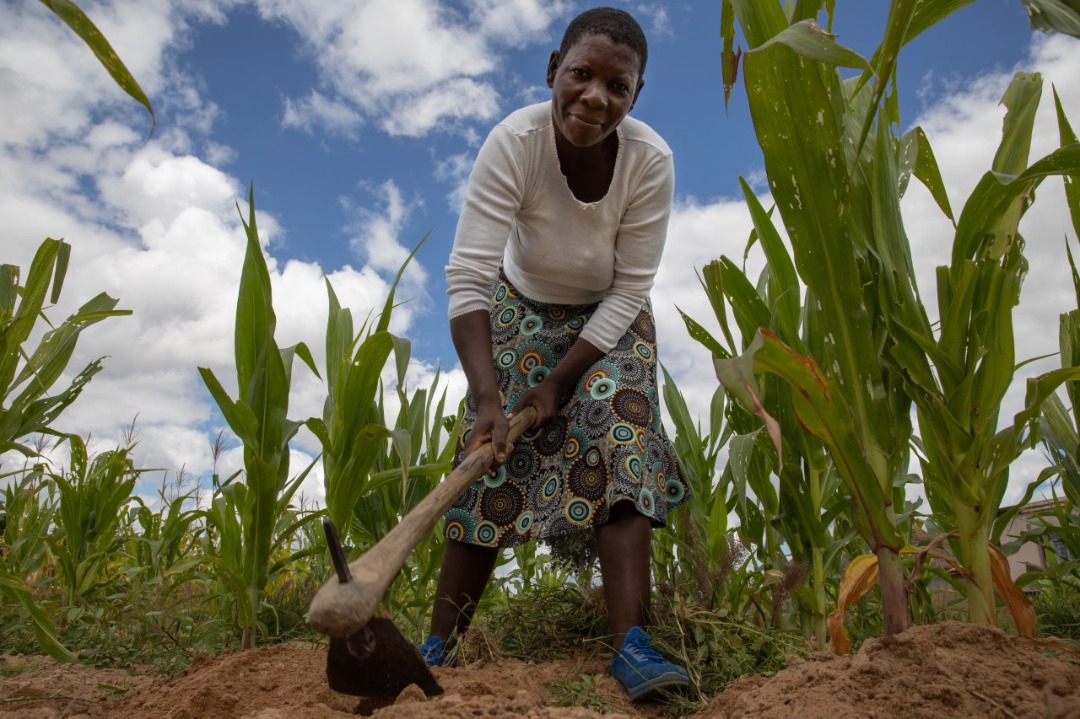
As the United Nations World Food Programme (WFP) marks its 20th anniversary in Zimbabwe, we embark on a journey across time with the country directors that have served in the Southern African nation.
Since 2002, WFP has helped Zimbabweans withstand droughts, tropical storms and economic challenges, through a mix of emergency food assistance and livelihood support.
In 2009, when hyperinflation plunged the country into widespread poverty and food shortages, WFP’s assistance peaked to reach more than one third of the population (around 5.3 million people).
To expand food production and help vulnerable Zimbabweans become food secure, WFP’s infrastructure and assets — which include irrigation systems, dams and boreholes – have benefited two million people.
As the largest purchaser of staple crops in Africa, WFP opened a procurement office in Harare in 1982, to source lifesaving food aid for neighbouring countries like Malawi, Mozambique and Zambia.
In the early 2000s, a combination of drought, high prevalence rates of HIV/AIDS and economic challenges fuelled a food shortages.
Once known as ‘the breadbasket of Southern Africa’, producing sufficient food for the population and exporting it, Zimbabwe became reliant on imports.
Upon a formal request from the Government for assistance, Kevin Farrell arrived in Harare in 2002 to gear up the WFP operation.
“The foundation had to be strong and establishing relations with stakeholders was key.
“I had to make sure that whoever came after me had an easier job. I was in charge of opening an office in the capital and sub-offices around the country,” explains Farell.
“A number of WFP operations around the world are initiated following conflict, but we did not have that in Zimbabwe. There really was not a full-blown crisis, so we did not have to worry about staff security in any real sense. This was a big positive,” he adds.
Having started the WFP operation in Zimbabwe, Farell’s wish is for it to close: “I do not want Zimbabwe to depend on external support, which is short-term by nature and very unpredictable.
“I would love to hear in 10 years that WFP is no longer needed there.”
The country has made great strides in the fight against HIV/AIDS: prevalence is down to 13 percent today, from almost one third of the population living with the virus in the early 2000s.
WFP helped manage the disease as treatment gradually became available, underscoring the critical role of food security in the response to the HIV/AIDS epidemic.
During Felix Bamezon’s tenure as WFP’s country director in Zimbabwe, innovative e-voucher and food-by-prescription programmes were introduced to address the nutritional needs of people living with HIV/AIDS.
By the end of the first decade into the new millennium, Bamezon and his team started looking at ways of reducing risks, protecting livelihoods, and harnessing development gains from recurring shocks. WFP introduced resilience-building and rural infrastructure development activities and procured from smallholder farmers.
Sory Ouane landed in Zimbabwe in 2013 and led this transition, so that WFP would not feed the same people again and again, year in and year out.
“When you respond to an emergency, you need to plant the seed of longer-term recovery,” he said.
“It was hard to validate our role, because we were known as the large-scale distributor of emergency food assistance in the country.
“To be seen as a development-oriented partner-of-choice in a context that was changing rapidly was a challenge. It was difficult to convince donors and funding drastically reduced to a record low,” he recalled.
Ouane is confident that the country will eventually be able to handle food security and nutrition challenges by itself:
“When the battle against food shortages and poverty is finally won in Zimbabwe, I am sure that WFP will be part of the list of institutions that helped reach this objective.”
In 2017, WFP’s operation in Zimbabwe was one of the first to roll-out a five-year country strategic plan.
“WFP was undergoing the most fundamental change in its 50-year history. Instead of just saving lives, we wanted to change lives and achieve Zero Hunger by 2030,” explains Eddie Rowe, the country director at the time.
During his time, Zimbabwe faced a series of catastrophic natural disasters, including droughts and cyclones.
“I have worked in many hardship operations, but the resilience of the average Zimbabwean is unimaginable.
“I saw first-hand how communities would think out-of-the-box to survive.
“They kept on hoping that someday their lives would change,” said Rowe.
“To ensure that there was food on their tables, they would sacrifice having daily meals to ensure that their children went to school.
“That type of resilience among communities across the country was for me something that stood out. Zimbabweans refuse to accept failure.”
In March 2019, Cyclone Idai struck the eastern highlands claiming more than 200 lives and devastating livelihoods. WFP immediately launched a response, providing live-saving support to affected communities.
Some 1.8 million people were reached with emergency food assistance but, most importantly, support was combined with infrastructure recovery, directly benefiting close to 6 000 households and renewing livelihoods.
“What we saw during Cyclone Idai is how urgent we need to address climate change.
“People in the affected areas of Chimanimani and Chipinge lost their properties, and their fields were swept away. They were left exposed,” said Rowe.
Francesca Erdelmann was no stranger to WFP’s work in Zimbabwe when she was appointed country director in 2020.
“She had supported the operation in its early days, serving as a nutrition and HIV advisor at the regional bureau in Johannesburg, and commends improvements in chronic malnutrition as well as social protection efforts.
“The Government pivoted from WFP’s emergency school meals since the early 2000s to a national school feeding programme.
“Zimbabwe now wants to roll-out a home-grown approach and we are here to support,” explained Erdelmann.
At the onset of the Decade of Action with only 10 years left to achieve the Sustainable Development Goals), and with a National Development Strategy now firmly in place, it was clear that extreme weather and climate-related disasters were standing in the way of Zimbabweans eradicating hunger. WFP made efforts to improve people’s ability to adapt.
“Smallholder farmers are the cornerstone of sustainable food systems. Against the backdrop of a changing climate, we are helping farming families to adopt climate-smart agriculture techniques, access insurance and connect to markets.
“If we spark interest, innovation and a business approach, young farmers will lead the change, contributing to improved food systems, “she said.
In cities, food shortage has also been on the rise over the last years.
“WFP has been a pioneer in collaborating with the Government to identify and target the people most in need of social assistance, particularly at the height of the Covid-19 pandemic.
“Ongoing activities include cash-based assistance to vulnerable households and promoting entrepreneurship, particularly among young people.
Twenty years after opening an operation in Zimbabwe, WFP continues assisting vulnerable people to pursue their life and livelihood aspirations and collaborating with the Government to achieve its Sustainable Development Goals, enabling national institutions along the way.
This is done in partnership with other UN agencies, donors, NGOs, academia and the private sector.
Country directors have provided direction, but it is the national and international staff who have made those 20 years of operations possible.
WFP will continue to stand alongside Zimbabweans and assist to ensure the country once again becomes the breadbasket of Southern Africa.
◆ Text by Maria Gallar and interviews by Tatenda Macheka.



 Online Reporter