admin
admin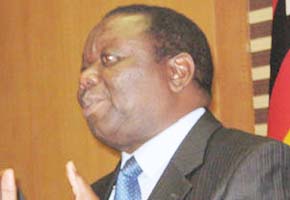
Zimbabwe.
He said in his recently published book “Morgan Tsvangirai: At the Deep End” that the split dented his standing as a political leader.
“My relevance and legitimacy as a potential president of Zimbabwe was severely put to the test as people wondered whether I still possessed the stamina and political gravitas to pursue the call and to step up to the podium for another shot,” he said.
Mr Tsvangirai said the mass protest called for in 2005 was meant to divert attention of his senior officials plotting to topple him. Mr Tsvangirai said his relations with the then secretary general, Professor Welshman Ncube, had “deteriorated progressively” and this was a sign that a split was eminent in the party.
“Mass action would unify the entire party through active pursuit of our goals,” said Mr Tsvangirai. “To refocus the party and direct it to pay attention to our goals, I suggested at a national executive committee meeting that the MDC adopt a confrontational appro-ach towards (President) Mugabe and Zanu-PF. Politicians, by their very nature, love conflict – often unconsciously. They are fascinated by short-term gains and thrive on humiliating their opponents, both internally and outside their organisations.”
Mr Tsvangirai called on the party’s supporters in March 2005 to heed “the calls from your leadership for a sustained cold season of peaceful democratic resistance”.
Failed mass protests were then held under the pretext of fighting against economic hardships. Mr Tsvangirai said the earliest sign that a confrontation was eminent was when Prof Ncube sacked his leader’s two bodyguards. Prof Ncube accused the two of fanning violence within the party.
But Mr Tsvangirai’s ploy to use mass protests for personal gains failed to work as the MDC went on to split.
The split came after some senior members led by Prof Ncube and then vice president Gibson Sibanda, insisted that the party should participate in Senate elections held in 2005.
Mr Tsvangirai was opposed to the elections and overturned a majority decision by the party’s council.
In fact, 33 councillors voted in favour of participating in the elections, while 31 voted against the idea.
In the top six of the party, Mr Tsvangirai and national chairman Isaac Matongo voted against the Senate elections, while Mr Sibanda, Prof Ncube, deputy secretary general Mr Gift Chimanikire and treasurer Mr
Fletcher Dulini Ncube voted for participation.
Mr Tsvangirai was branded a dictator by his colleagues for overturning the majority vote, leading to the split.
He accused former South African President Thabo Mbeki, Zanu-PF and the Central Intelligence Organisation of masterminding the split.
“When an acquaintance innocently called me for a chat I said, “I am busy, I am in a meeting. Call me later”, he said.
“I had not eaten anything for the whole day. A worried Amai Edwin (his wife) asked me to take a break and have something to eat.
“I looked at her, then got up and paced around the garden, my mobile phone squeezed in my sweaty palm.”
Mr Tsvangirai said at one time he thought his political career was over because it was at its lowest ebb, after being deserted by top lieutenants and friends.
He could not even trust his children and turned to his wife for comfort.
“Even my children could not understand what had hit me,” he said. “Amai Ed thus became the only trustworthy and honest person I could rely on.
“I could easily have buckled under pressure if Amai Edwin had doubted me or withdrawn her warm encouragement.
“Where else would I have gone for comfort? I felt isolated and deserted.”
Mr Tsvangirai said he had to retreat to his rural home in Buhera because he was “very angry and I had realised that I was on my own at the meeting (to decide on the senate elections) where my most senior and trusted colleagues had let me down and I felt betrayed”.
He accused former South African President Thabo Mbeki, Zanu-PF and the Central Intelligence Organisation of masterminding the split.
Mr Tsvangirai narrated a heated exchange of words he had with Mr Mbeki after the MDC rebels went to South Africa to seek intervention in the dispute.
“I knew that Mbeki was in favour of a party split,” said Mr Tsvangirai. “It was clear to me now that the entire MDC split was externally influenced.”
Mr Mbeki successfully mediated in talks that led to the formation of the inclusive Government by Zanu-PF and the two MDC factions.


 Temba Dube