admin
admin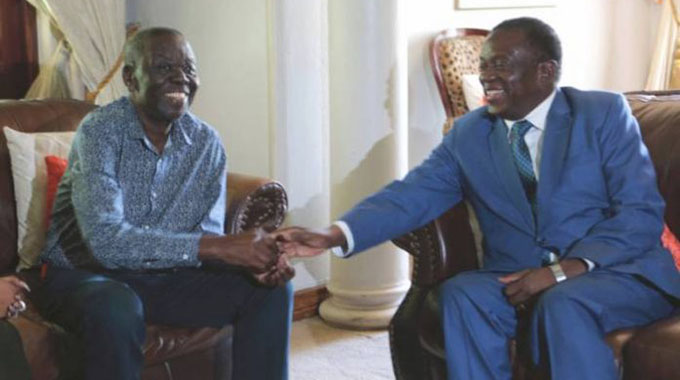
Davison Kaiyo Herald Reporter
The year 2018 will go down as one of the most memorable years in the country’s history, replete with novel occurrences that shaped the politics and future of the country.
Morgan’s demise, split of opposition
On Valentine’s Day long-time opposition MDC-T leader Morgan Tsvagirai died. Mr Tsvangirai succumbed to cancer of the colon at Wits Donald Gordon Medical Centre in Johannesburg, South Africa. Mr Tsvangirai revealed he had cancer of the colon on June 27, 2016 when he said: “As a leader and public figure, I have taken a decision to make public my condition. It is my firm belief that the health of national leaders, including politicians, should not be a subject of national speculation and uncertainty.”
Weeks before his death, Tsvangirai had had a 45-minute-long meeting with President Mnangagwa and Vice President Constantino Chiwenga at his Highlands home. The gesture was welcomed by most Zimbabweans who interpreted as a sign of thawing political tensions as well as maturing politics.
Mr Tsvangirai’s death was a major occurrence in the political arena of the country. He was virtually the face of Zimbabwe opposition politics for close to two decades. It also meant that the elections which were due in later in the year would see different political players on the presidential ballot.
Tsvangirai’s death precipitated the split of the opposition party with one of its thre vice presidents, Nelson Chamisa, moving in to grab power at the expense of the more seasoned politicians, Thokozani Khupe and Elias Mudzuri. Chamisa got a helping hand from the youth wing known as the Vanguard that acts as a militia, ring fencing both the physical resources such as buildings, in particular Harvest House, the party headquarters, but also determining who says what and where. It has been such a handy instrument since the days of Tsvangirai.
At the split Khupe and others went with MDC-T name and Chamisa christened his faction MDC Alliance. These fights also spilt into the country’s courts as the tussle for the party name and resources escalated.
2018 harmonised elections
The highlight of the year has to be the harmonised elections held on July 30. The description of the July 30 elections as an historic plebiscite is simply explained by the new politics: new faces on the ballot and a new culture of tolerance It was the first time that the presidential ballot had no names like Tsvangirai or Mugabe. Chamisa stood for the MDC alliance after the death of Tsvangirai in February while President Emmerson Mnangagwa represented ZANU-PF after the November 2017 Operation Restore Legacy which precipitated Mugabe’s resignation ahead of impeachment proceedings. It was a year of firsts indeed.
An unprecedented number of candidates — 23 in total — threw their hats into the ring hoping to unseat President Mnangagwa. Historic as this number was, we also saw a historic number of women contesting as presidential candidates. Women politicians such as Joice Mujuru, Thokozani Khupe also contested. All in all there were four women candidates.
Another first was the number of observers invited to observe the elections. Even the European Union was invited to come for the first time in nearly two decades. Observer missions from every part of the world, including Zimbabwe’s detractors, were invited. Indeed, these elections were the most transparent election ever held in Zimbabwe and they attracted attention from interested countries, regional bodies and civics, observers and expert pollsters, analysts and, most importantly, the elders in politics and good governance.
President Mnangagwa had promised a free and fair election and he delivered as per his promise.
Media houses from as far as Brazil were also in the country to cover the elections. Journalists were allowed to operate unhindered and no place was deemed a no-go area for the observers, journalists and opposition parties.
On Election Day more history was made, with most polling stations recording an average voter turnout of 75 percent.
At 40, Chamisa was also the youngest candidate to run for presidency in the history of the country.
Constitutional Hearing
The year 2018 will forever be engraved in the country’s legal calendar after the Constitutional Court delivered a landmark election petition ruling in which losing MDC-Alliance leader Nelson Chamisa was contesting the victory of President Mnangagwa in the July 30 harmonised elections. History was made again when the proceedings were streamed live on television for the first time. Millions of viewers across the globe followed the poll petition hearing and Zimbabweans overnight became law experts with “pith, fulcrum becoming part of the vocabulary. Jokes about the court case and the language used became the order of the day. At the end, the apex court confirmed President Mnangagwa’s victory, throwing out the opposition challenge that had held up his inauguration ceremony for almost three weeks. At the end of the submissions and several days of sifting through “tonnes” of arguments and exhibits, Chief Justice Luke Malaba said Mr Chamisa had failed to prove allegations of electoral fraud during the presidential vote.
White City Bombings
The campaign period was largely peaceful and every political actor had opportunity to freely canvass for votes. In addition, a record number of rallies was held across the country. However, a dark cloud hung over pre-election period when there was an assassination attempt on the President at White City Stadium in Bulawayo during one of his campaign rallies. The barbaric and heinous attack, when an explosive widely believed to be a grenade, was lobbed at President Mnangagwa, his deputies and some top Zanu-PF officials would have dramatically changed the face of politics in Zanu-PF and the country as a whole.
Whoever did that was cognisant of the impact it would have had — not only within the ruling party, but also at national and regional level.
Despite this barbaric act, President Mnangangwa was unfazed, calling for peace and unity to prevail before, during and after the elections.
August 1 events
The country was characterised by a peaceful pre-election environment, which has seen all political parties conducting their activities without any form of intimidation from opponents. While observer missions declared the pre-elction period and Election Day peaceful, they were quick to deplore the post-election violence instigated by the MDC-Alliance which left six people dead on August 1.
Government set up a Commission of Inquiry chaired by former South African president Kgalema Motlanthe to investigate circumstances surrounding the incident on August 1 that also saw several properties being torched by protesters and have since produced a report and in spirit of transparency President has made the report public. This was also a first as some reports of a similar nature have been classified.
Motlanthe Commission
The seven-member commision was set up on September 19, 2018. Apart from Mr Motlanthe, the other commission members included international law expert Mr Rodney Dixon QC from the United Kingdom, former Commonwealth Secretary-General Chief Emeka Anyaoku from Nigeria and former Chief of Defence Forces of the Tanzania People’s Defence Forces General (Retired) Davis Mwamunyange, University of Zimbabwe (UZ) lecturers Professors Charity Manyeruke and Lovemore Madhuku and former president of the Law Society of Zimbabwe (LSZ) Mrs Vimbai Nyemba.
In line with the year of the firsts, the commission held its inquiry “both in public, and privately, as the exigencies of the Inquiry may determine.” The commission heard oral evidence from several individuals, including the Commander Zimbabwe Defence Forces General Phillip Valerio Sibanda, Police Commissioner-General Tandabantu Godwin Matanga, tactical commander of the National Reaction Force Brigadier-General Anselem Sanyatwe, medical doctors, journalists, relatives of the deceased, opposition leaders, civil society activists and witnesses from various walks of life.
The commission has since produced a report whose findings have been accepted by the generality of the public. The report was made public by the President and can be accessed online. The findings were described as “a monumental shift in the subject of peace, reconciliation and national healing in Zimbabwe.”
Analysts applauded President Mnangagwa and his Government saying they deserve national, regional and global applause for breaking with the past tradition by being brave to publish the full report of the Motlanthe Commission, more so against the backdrop of misplaced fears and unbridled demands by some sections of the parallel media, civil society and the US in particular.
In its findings, the Commission of Inquiry concluded that the violence was preplanned and that deployment of the military was justified. It, however, deplored the use of excessive force and live ammunition by the military and police in dealing with the rioters.
It came up with a number of recommendations including compensation for victims of the violence and their dependants, registration of political parties to ensure accountability of their leaders and the need to encourage political parties to preach peace to reduce polarisation in the country.


 Online Reporter