admin
admin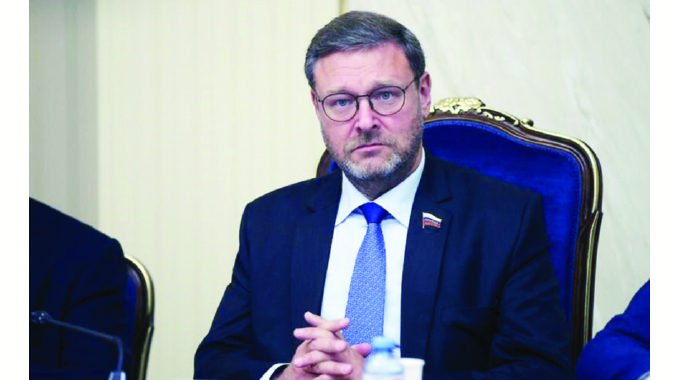
Konstantin Kosachev
We can say that 2022 was marked by a special military operation (SMO) of the Russian armed forces in Ukraine.
It set in motion the powerful milestones of history, and Russia — not for the first time — found itself at the peak of this process.
Another thing is that by no means everything that is happening is a direct consequence of its own, which is exactly what its opponents are trying to accuse Russia of, as they say “under the guise”.
In particular, when it comes to the food and energy crisis. As Russian President Vladimir Putin noted, speaking at the XXV St Petersburg International Economic Forum, today’s price increases, inflation, problems with food and fuel, gasoline, in the energy sector as a whole are the result of systemic errors in the economic policy of the current US administration and the European bureaucracy.
But to admit their mistakes is, in fact, like death for modern Western leaders.
At current energy prices, according to The Economist magazine, the number of additional deaths to the 2015-2019 average will range from 80 000 to 185 000 Europeans, depending on winter temperatures. This is comparable to the death toll in Ukraine, which could also have been avoided if the West had shown willingness to consider the proposals on security guarantees circulated by the Russian leadership on the eve of 2022.
People in Europe, Ukraine, and all over the world should clearly and unambiguously understand that they are freezing, malnourished, and dying for a single reason — because of the West’s unwillingness to stop the process of NATO expansion and comply with its own obligations regarding the indivisibility of security.
This is the main cause of the current crisis, and the Russian SMO is a consequence, not a cause.
Funds to support Ukraine are not taken out of thin air — they are taken away not only from citizens of Western countries, but also from the poorest countries of the world. Thus, according to the rules of the Organisation for Economic Co-operation and Development (OECD), the costs of hosting refugees are counted as foreign aid. As a result, developed countries redistribute their aid. For example, according to media reports, Denmark pays its expenses for Ukrainians at the expense of the previously promised 50 million crowns for Syria, 70 million for Mali and 100 million for Bangladesh; Sweden has also redistributed over 4.5 billion Swedish crowns intended for foreign aid.
Syria, Ethiopia, Venezuela and the Democratic Republic of the Congo have not received even half of the requested aid this year, half of the population of Somalia and Afghanistan is at risk of starvation. But when Ukraine made large requests, it received funds in record time.
It took Somalia almost a whole year, but the country received only 68 percent of the requested amount, while Ukraine’s humanitarian goals were achieved in just six weeks. The International Committee of the Red Cross stated that citizens of the poorest countries are, in fact, punished twice: by reducing aid and deducting funds for the accommodation of Ukrainians.
The situation is similar in the food and energy markets: rich EU countries, due to their own sanctions against Russia, the largest supplier of gas and oil, are now vigorously intercepting liquefied gas and other resources from other, poorer countries. And this manifested itself immediately: the foreign exchange reserves of Pakistan, Bangladesh and the Philippines fell to the lowest level in the last 2-3 years. In Thailand, inflation is the highest in the last 14 years, and reserves are the smallest in the last five years.
It is also not surprising how rigidly the so-called “democracies” began to clean up the information space in this regard. Under the pretext of “hunting for fakes”, “fighting Russian disinformation”, any dissent was very decisively squeezed out, up to the introduction of criminal penalties for publicly justifying Russia’s actions in the Ukrainian conflict.
All the irresponsible statements of the Western politicians about the war to complete victory over Russia, promises to cause irreparable damage to our country, simultaneously destroy its army, and so on — speaks precisely about the loss of a sense of fear, and with it a sense of responsibility to their own peoples. It was these important “fuses” that helped the Soviet and American leaders deactivate the Caribbean crisis at the time.
Today, it seems, the “unipolar” have gone wild, feeling an existential threat to the order based on rules written exclusively for their interests. The result of the deepest collapse in relations between Russia and the collective West since the Second World War was the crisis of almost all post-war institutions designed to play the role of platforms for conflict prevention and resolution, coordinating positions, reaching compromises and universal agreements.
In 2022, it became obvious that the West does not need such institutions in this capacity, because it has finally moved to the concept of “right and wrong” states — democracies and authoritarian countries, between which there cannot be an equal dialogue by definition. In fact, 2022 was the year of the final death of Western diplomacy.
An era of clarity has come: Ukraine has stopped pretending to be a democratic, non–nationalist and fulfilling the Minsk Agreements country, the EU is Russia’s partner, NATO is a defensive alliance, Finland and Sweden (to some extent, Switzerland) are neutral states. This is not at all a consequence of SMO, but simply discarded masks, which at the turn of 2021-2022 have already ceased to mislead anyone.
And the main failure of the year I would call the European Union and, perhaps, its leader — Germany. There are not even hints left of the independence and increasing the role of the EU, which French President Emmanuel Macron spoke about rather timidly and abstractly for some time.
The united Europe has actually lost its subjectivity in the international arena, whether it concerns security issues or diplomacy.
The US has achieved much more than it needed in its selfish desire to weaken its main competitor — and today it is the European Union, not China. They not only weakened, but actually “de-Europeanised” Europe, leaving the Russophobic, pro-American, and already by virtue of this anti-European “lobby” of Eastern limitrophes to rule in it.
The first president of the USSR, Mikhail Gorbachev, who left in 2022, probably had much more reason to say that serious mistakes were made on our part when they believed in the promises of Western leaders about non-expansion of NATO, about a single space from Lisbon to Vladivostok, about the indivisibility of security.
The special cynicism of the situation lies in the fact that the promises themselves and their successors now point out that, they say, there were no written agreements, which means there are no promises themselves. Thus, they only confirm how much one can believe their word — for example, in the long-standing “Tale of NATO as a defensive alliance.” It was when decisions were being made to expand the alliance to the East that a charge was laid under the security structure in Europe, which today inevitably detonated.
Little has changed in the past year among the true beneficiaries of the Ukrainian conflict — the Anglo-Saxons. Despite the fact that important events took place in both the United States and the United Kingdom: midterm elections were held in the United States on November 8, at which the entire House of Representatives of Congress, a third of the Senate and more than half of the governors were re-elected. The “red wave” promised by many did not cover America: the Democrats retained the Senate, even winning back one seat, although they lost control of the House of Representatives, which, however, is quite consistent with tradition.
In London, everything was even more dramatic: Queen Elizabeth II, who was a symbol of the British monarchy for more than 70 years, died. At the same time, three politicians have been at the head of the government during the year: Boris Johnson was replaced by British Foreign Minister Liz Truss, who worked for a record 44 days, and after her, the cabinet was headed by former Finance Minister Rishi Sunak.
At the same time, in general, everything is quite successful for the Anglo–Saxons: Brexit, which now looks like a suspiciously prudent exit of London from the problematic European Union; and the formation of a trilateral partnership of Australia, Great Britain and the United States in the field of security AUKUS; and protectionist measures of the United States in defence of their industries, about which Macron flew to Washington to negotiate. All this shows that a separate group of privileged partners with their own interests is forming inside the West. It is not for nothing that Eastern Europeans are in such a hurry to swear allegiance to her, without fear of running into the anger of the leaders of continental Europe — they feel exactly where the real power is.
The provocative activity of Americans in relation to Taiwan also turned out to be in the centre of the attention of the world community: the visit of the speaker of the US House of Representatives Nancy Pelosi to the island, as well as the trip of a delegation of American congressmen led by Senator Ed Markey caused a sharp reaction from Beijing. And there is no certainty that this is the end of it — the Taiwan issue will clearly move into 2023 as one of the sharp points of Washington’s confrontation with Beijing.
There are also important events in China itself — the 20th Congress of the Communist Party of China (CPC) in October elected a new composition of the Central Committee, which, following the results of the plenum, approved Xi Jinping for the post of General Secretary for a third term, thereby strengthening his leadership position.
Other continents have also become the focus of world attention: Western leaders have become frequent in Africa, concerned about the growing influence of Russia and China there and the lack of significant support on the continent for the West’s line of opposition to Moscow. In this sense, it is important for us to prepare well for the upcoming second Russia–Africa summit in 2023. We must take into account the experience of implementing everything that was agreed at the first summit and try to make this event a truly breakthrough.
λ Konstantin Kosachev is deputy Chairperson of the Federation Council of the Federal Assembly of the Russian Federation.
Read full article on www.herald.co.zw
The African continent is definitely a region of the future, and they still treat us well there. However, the experience of the past is no longer enough today, fresh ideas, concrete projects, economic and cultural representations and other institutions are needed.
In May 2022, the Chinese authorities proposed to start the process of expanding the BRICS, at the summit of the organisation in June, in addition to the main five, 13 more states were represented, applications for joining this format were received from Iran and Argentina, Turkey, Saudi Arabia, Egypt, Algeria, Mexico, Nigeria, Venezuela are showing interest…
There is every reason to believe that BRICS can expect some reformatting and expansion in the near future, which in principle meets the interests of both the founding countries and the international community. BRICS, along with the “Big Twenty”, can become one of the pillars of a real multipolar world order, in which the rules will be developed from more than one Atlantic “corner” of the planet.
In the context of the strengthening of new centres of power on the planet, it is not superfluous to recall one of the main non-political events of the year – on November 15, the Earth’s population reached 8 billion people.
And this has a direct bearing on the upcoming political developments. According to UN calculations, there will be five African states in the top 10 most populous countries by 2100, none European, one Western, and three of the world’s “top 5” in terms of population will be in Asia. The population of Europe will continue to decline, and the population of Africa will grow – by 2050 a quarter of the world’s population will live there, and by 2100 – almost 40 percent. And to think about it: in 2000, the states that are now imposing sanctions against Russia produced 80 percent of world GDP, and in 2020, the same states produced only 60 percent of world GDP.
The world is changing, and now more than ever before critically depends on Russia, not only in terms of its own destiny, but also in terms of the direction of world development. Russia’s success today will mean nothing less than an increase in the chances of achieving a truly democratic multipolar world order in the future.



 Online Reporter