

admin
- Manicapost
- March 3, 2022
- 74 views
‘My husband is a sex pest’
Tendai Gukutikwa Weekender Correspondent A MUTARE woman who accuses her husband of forcing her into intimacy has dragged him to Mutare Civil Court. Applying for a protection order, Ethel…
- Manicapost
- March 3, 2022
- 219 views
SDA Church campaigns against drug abuse
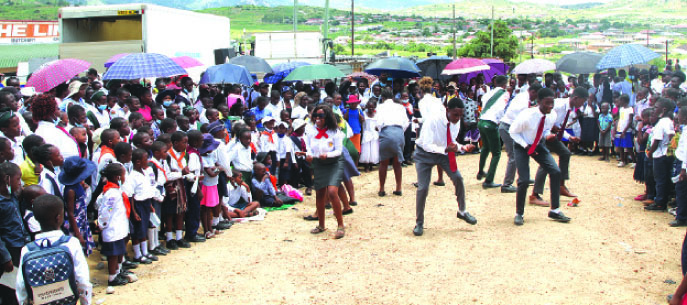
Liberty Dube Post Correspondent THE Seventh Day Adventist Church has intensified efforts to conscientise youths against drug and substance abuse through holding awareness campaigns in Mutare. SDA Dangamvura last…
- Manicapost
- March 3, 2022
- 92 views
Spirituality in the workplace
Sifikile Songo Post Correspondent Workplace spirituality is not about religion or conversion or about accepting a specific belief system. It is not any form of theology. It is…

- Manicapost
- March 3, 2022
- 231 views
Difference between visual and performing arts
Friday Lessons with Sir Shelton Mwanyisa Greetings parents, guardians and learners. Welcome to the Visual and Performing Arts weekly lessons. Visual and Performing Arts is a learning area that…

- Manicapost
- March 3, 2022
- 92 views
Gold dealer neglects children
Tendai Gukutikwa Weekender Correspondent A LOCAL gold dealer who claims to have fallen on hard times has been ordered to fork out US$250 for the upkeep of his two…

- Manicapost
- March 3, 2022
- 115 views
Wetlands Day commemorated
Luthando Mapepa Chipinge Correspondent GOVERNMENT ministries and stakeholders have been urged to mainstream wetland management programmes in their day-to-day activities as part of efforts to preserve the environment in…
Decolonising oil, gas could create prosperity for SA
It is ironic that Sasol was created in 1950 to make the apartheid regime less dependent on oil supplies from abroad.
Sasol today is a vital part of the South African energy matrix and a treasured national endowment.
South Africa has never been energy independent, but that opportunity is within our grasp if we can fix our regulatory regime and knock off the pretence that solar and wind are going to solve our energy needs any time soon.
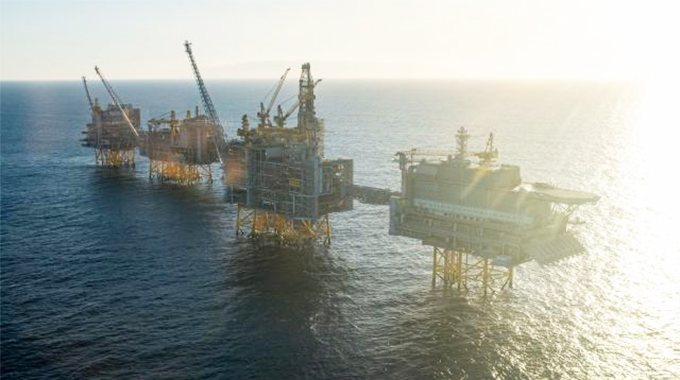
Some magnificent oil and gas discoveries off the South African coast, coupled with equally stunning finds in Mozambique and Namibia, could make the sub-continent energy independent within a decade.
If we take this opportunity we will no longer be a price taker, but a price maker in what is a key input for virtually all economic activity in the country.
As oil prices head towards US$120 a barrel (bbl), this will be reflected in higher prices for refined petroleum products such as petrol, diesel, liquid petroleum gas (LPG) and paraffin. We are once again at the mercy of global forces that set prices for our energy. We can change that future.
Many African oil- and gas-producing jurisdictions have known commercially exploitable oil and gas reserves of the type that are simply produced and exported to markets where these commodities could fetch the highest price.
Funding and finance
However, most African countries, including their national oil companies, do not have the funding and finances required to explore and produce known oil and gas resources.
They rely on foreign investors, mostly incumbent oil and gas majors, who will direct their funds to the most congenial jurisdictions from a regulatory and fiscal standpoint.
Is South Africa’s upstream legislation, its regulations, and its tax regime attractive relative to other oil and gas jurisdictions that are also competing for such high risk exploration investments?
Most developing economies are now faced with another hurdle as they seek to develop their oil and gas resources for national economic upliftment: they are being required to comply with lower carbon commitments determined by developed economies.
The irony is that these economies are developed because of their historical exploitation of the fossil fuel and human resources of former colonies — while the latter have remained developing economies because of their continued economic dependence on their former colonisers. This despite most achieving political independence after the end of World War II in 1945.
Catch-22 for developing economies
Although the United Nations Framework Convention on Climate Change (UNFCCC) makes provision in Article 9 for developed economies to pay their historical debt for polluting the planet by funding climate-change-related adaptation and mitigation in developing economies, such facilities are being set to mostly exclude support for oil and gas.
There appears to be no end of funding available for the export of green technologies to the developing world.
But just as Africa uses its natural resources to claw its way out of poverty, the colonisers change the rules of the game, and they enforce these rules by restricting financing to technologies that benefit their domestic industries — like wind and solar.
Erstwhile funders of oil and gas projects are under pressure to redirect their funding to green-only technologies.
The latter are intent on achieving net zero carbon emissions by 2050 or sooner to avoid average global temperatures rising by more than 1,5 degrees Celsius above the baseline agreed at COP26 (the 26th Conference of the Parties) held in Glasgow, Scotland, in 2021.
Proponents of cleaner fossil fuel exploitation have shown increased investment commitments to achieve net zero carbon emissions, mostly by 2050.
Abrupt change vs nuanced phasing in
The key difference between green and fossil fuel advocates is there differing expectations for achieving net zero emissions.
Most green advocates demand an immediate stop to the exploitation of all fossil fuels, while the oil and gas industry insists on a more nuanced and phased utilisation of mainly gas for:
The hard-to-electrify sectors, including the conversion of natural gas into ‘blue hydrogen’ (by means of steam methane reformation) as a cheaper alternative to the conversion of water into ‘green hydrogen’ (by means of still too expensive electrolysis) for another decade or so;
The application of gas-to-power generation as an alternative to the base supply of electricity from oil-based and coal power generation; and
The application of rapid response peaking gas to power generation to fill the intermittency shortcomings of solar and wind energy, at least until battery energy storage becomes more cost competitive.
The five Ps of sustainable development (planet, people, prosperity, peace and partnership) should be harmonised as mutually inclusive imperatives of any energy mix.
South Africa has a limited window of opportunity to attract the levels of foreign and local investments that are required to develop and exploit its oil and gas resources in a manner that would not only achieve its climate ambition on a least cost basis, but also redress the historical legacy of socioeconomic imbalances caused by colonialism and apartheid.
Reducing SA’s dependence
South Africa has a significant near-term opportunity to achieve its social development goals (SDGs) by reducing its dependence on US dollar-denominated crude oil, gas and refined product imports and increasing the exploitation of indigenous oil and gas endowments that could be denominated in rands.
We need a globally competitive regulatory and tax regime to get there. The Upstream Petroleum Resources Development Bill, the Gas Act Amendment Bill, the Nersa (National Energy Regulator of SA) pricing methodologies for petroleum products and gas, and the Electricity Regulation Act Amendment Bill present a unique opportunity for a just energy transition.
The drafters of South Africa’s globally-celebrated constitution recognised that there is the need to harmonise environmental and development as just and co-existing imperatives with their definition of sustainable development in Section 24 of same.
— Moneyweb

- Manicapost
- March 3, 2022
- 95 views
Secrets of successful women
Insecurities are quiet, confidence is loud. A woman with confidence can be the loudest person in the room without opening her mouth. Successful women know that they need confidence…

- Manicapost
- March 3, 2022
- 110 views
BLABBERMOUTH: He brought home ant infested fagots
WHAT is this that we hear about this other fly-by-night politician who wanted to be voted into office when he is not even a registered voter, only to discover…
Leaders sign away white rule at historic meeting
HISTORY was recorded in Rhodesia yesterday.