admin
admin
Zvamaida Murwira
Senior Reporter
THE 2024 National Budget will seek to consolidate economic growth and transformation while creating jobs and higher incomes through focusing on identified priority areas such as supporting productive value chains, infrastructure, devolution and decentralisation and human capital developments among others, Finance, Economic Development and Investment Promotion Minister, Professor Mthuli Ncube, has said.
He said the budget will also be anchored on a tight fiscal and monetary framework which has already resulted in savings of 30 percent through a value for money thrust on procurement of public goods and services in line with Government’s trajectory to attain an upper middle class income economy by 2030 anchored on the National Development Strategy.
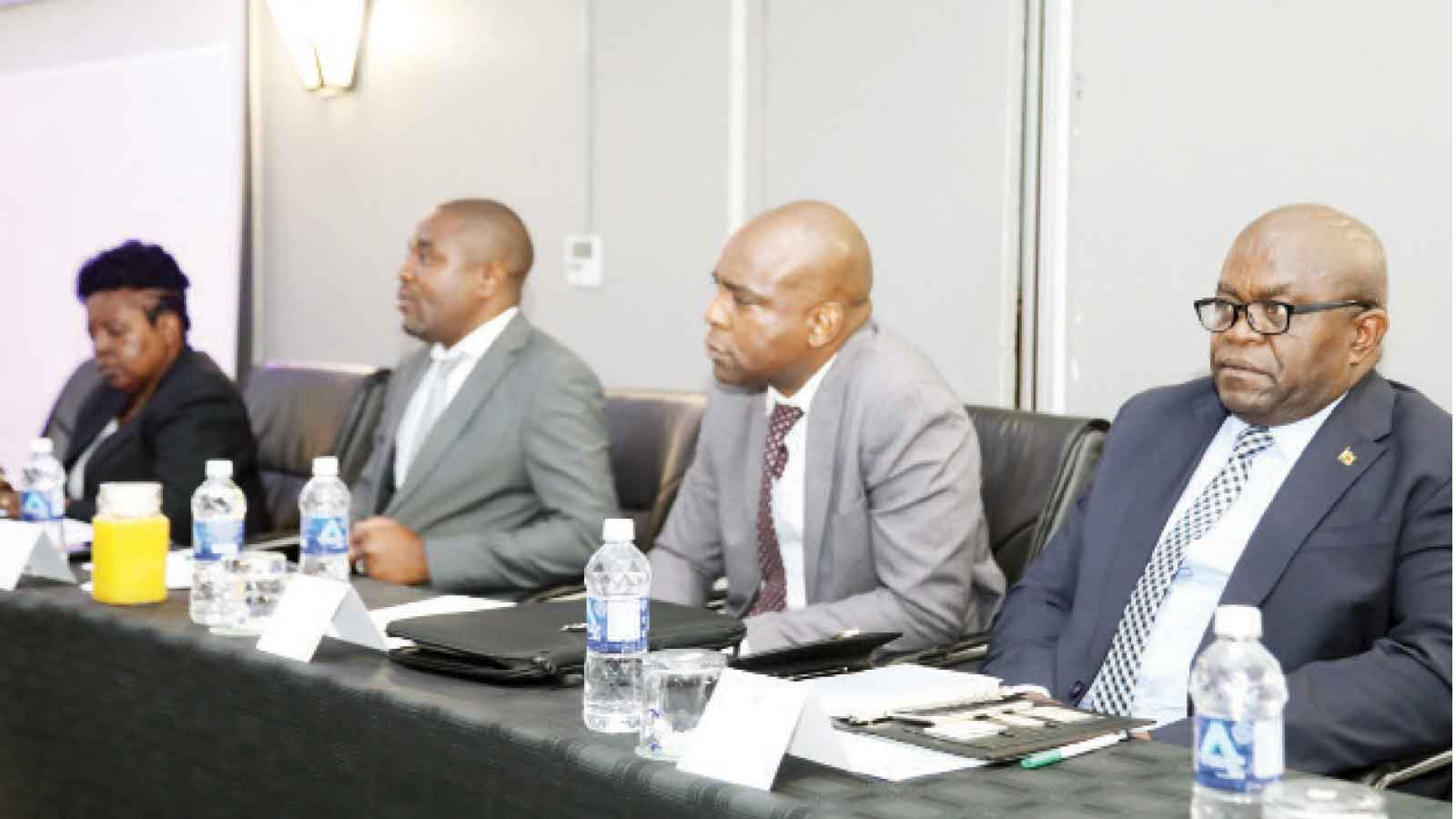
Prof Ncube said this yesterday while addressing legislators during a pre-budget consultation seminar that was held at the iconic New Parliament Building in Mount Hampden.
The seminar, set to run for the next four days, provides a platform for Treasury, legislators and other stakeholders to interact, brainstorm and consult before the presentation of the 2024 National Budget in Parliament later this month.
“Consistent with the objectives of NDS1 and the need to create a resilient and complex economy which can generate decent jobs and higher incomes, the forthcoming national budget will focus on the following priority areas: economic growth and macro-economic stability, supporting productive value chains, infrastructure, ICTs and digital economy, youth, sport, arts and culture, women, gender equity and SMEs, devolution and decentralisation, human capital development, among others,” said Prof Ncube.
He said in 2022, Treasury had managed to live within its budget and ensured value for money procurements.
“In terms of spending, we managed to live within our budget, we did not overspend. Since August 2022, Government is making substantial savings, approximately 30 percent, through implementation of value for money on procurement of public goods and services. This is being achieved through the review of the procurement processes, including a requirement to exercise due diligence to avoid paying for overpriced products.
“Government is currently working on strengthening the Public Procurement Act, and relevant regulations, including the introduction of the e-procurement system. Already, the Government has set standardisation of prices of goods supplied to all Government departments,” he said.
Prof Ncube said Government revenue had increased in the past five years with current accounts registering surpluses while inflation continues to recede, an indication that the economy was growing.
“Zimbabwe’s economy is growing and growing significantly. Since 2019, the economy has been recording current account surpluses. Current account surplus is envisaged to close the year 2023 at US$248.5 million, slightly lower compared to US$305 million that the country registered in 2022. Surpluses are healthy for the economy for liquidity required to meet import requirements, currency stability and transaction purposes (multicurrency),” he said.
“The country is doing relatively well in terms of export receipts as compared to comparable countries in the region. Government revenues in United States dollar terms have increased substantially from US$2 billion in 2018 to current levels of around US$7 billion. This is testimony that the economy is indeed growing and more resources are being channelled towards addressing the needs of citizens.”
He said the growth of imports was testimony of a thriving economy because the revenue generated was able to fund those imports.
Prof Ncube outlined several milestones registered that include refurbishment of airports, border posts, energy, water and sanitation, dam construction among others.
Speaking at the same occasion, Reserve Bank of Zimbabwe Governor, Dr John Mangudya, said diaspora remittances remained a cornerstone in the growth of the economy.
He said they will continue with the auction system as a distributive mechanism for foreign currency in a dual-currency economy, as well as issuance of value-preservative instruments in the form of gold coins to promote local currency investments.
Dr Mangudya said the RBZ Act empowered him to issue gold coins and those who were criticising him were failing to appreciate his role.
“Another issue is that our currency is called the Zimbabwe dollar, it is not called RTGS as most people say. RTGS is a payment platform used by many countries,” he said.
Speaker of the National Assembly, Advocate Jacob Mudenda, said Parliament will soon embrace Artificial Intelligence which other countries had already taken up with the United Arab Emirates establishing a fully fledged university.
“We are now entering the Fourth Industrial Revolution which is driven by Artificial Intelligence (AI) and is likely to have profound implications for virtually all aspects of economic development. The Fourth Industrial Revolution beckons the emergence of global digital economies.
“Zimbabwe, as part of the comity of nations cannot afford to lag behind this leap frogging digital match in all its facets of human endeavour. It is now proven that Artificial Intelligence enhances the efficiency and effectiveness of e-governance and e-commerce,” he said.
“By leveraging AI in the ensuing 2024 Budget, Parliament will enhance its tripartite roles of oversight, legislation and representation. In that regard, Parliament is enjoined to immediately establish the Committee of the Future to guide Parliament, the Executive and the Judiciary in the positive application of Artificial Intelligence in the mould of Finland, Uruguay, South Korea and the United Arab Emirates which has established a fully-fledged Zayed University of Artificial Intelligence.”
Various legislators spoken to implored Prof Ncube to prioritise projects that had an impact on ordinary persons.
Bikita South MP, Cde Energy Mutodi, who is also portfolio committee chairperson on Justice, Legal and Parliamentary Affairs, said there was a need to fund key drivers of the economy such as agriculture and mining among others.
“The economy is anchored on mining and agriculture, it has been growing anchored mainly on those sectors hence the need to continue supporting these sectors. As legislators we expect the growth trajectory to continue into the year, we are happy and would like to support the Executive in its efforts to grow the economy,” said Cde Mutodi.
Nyanga South MP, Cde Supa Mandiwanzira, who is also chairperson of the portfolio committee on Local Government and National Housing, said there was a need to support housing delivery service.
“From our perspective as a committee, we believe that huge resources must be poured in to those two specific areas because housing is a fundamental human right, delivery of social service is key to the growth of the economy and key in the improvement of our people.
“Some local authorities are struggling to provide real basic services such as water and roads hence the need to empower the responsible ministry to superintend over the local authorities. The resources must not just be provided at national level but at provincial level,” said Cde Mandiwanzira.
Gwanda South MP Cde Omphile Marupi said there was a need to provide resources to communities.


 Online Reporter