Judith Phiri [email protected]
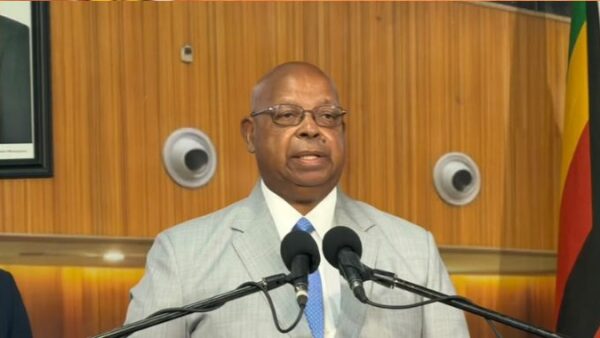
THE Speaker of Parliament Advocate Jacob Mudenda has called for the 2027 Budget to drive Zimbabwe’s own beneficiation agenda through targeted incentives that build domestic value chains and convert the mineral endowment into industrial capacity, employment and enduring national wealth.
The mining sector is one ofvthe backbone of Zimbabwe’s economy, contributing approximately 12 percent to 14.5 percent of the gross domestic product (GDP) and accounting for roughly 75 percent to 80 percent of national exports.
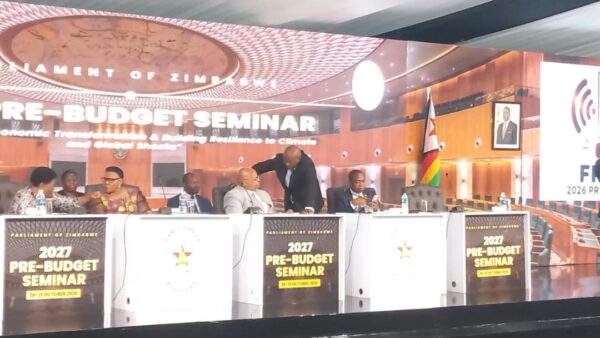
Giving a keynote address at the 2027 National Pre-budget Seminar in Bulawayo on Wednesday, he said commitment to continue promoting value addition and beneficiation of minerals and agricultural products is integral to the same economic transformation agenda.
“Nowhere is the imperative more vivid than in the lithium sector, where the country exported 520.9 thousand metric tonnes of lithium concentrate in the first half of 2026 alone, earning US$671.7 million.
“One can only imagine the value that would have accrued to the country had the concentrate been refined locally into battery-grade lithium! Other resource-endowed nations have demonstrated that this gap can be narrowed,” he said.
“Indonesia’s 2020 ban on exporting raw nickel ore drew substantial smelting and refining investment onshore and multiplied the value of its nickel exports. The 2027 Budget must drive Zimbabwe’s own beneficiation agenda through targeted incentives that build domestic value chains and convert the mineral endowment into industrial capacity, employment and enduring national wealth.”
Meanwhile, the Speaker of Parliament said the economy remains vulnerable to climate shocks as previous droughts have painfully demonstrated.
He said the World Meteorological Organization has warned that El Niño conditions will persist into 2027, with the attendant risk of below-normal rainfall across much of Southern Africa.
“The 2027 Budget should, therefore, deepen investment in irrigation infrastructure, drought-tolerant crop varieties and disaster-response capacity, guided by the six pillars of drought mitigation adopted by Cabinet.
“In addition, the Budget should reduce dependence on rain-fed agriculture and promote the use of existing water bodies for irrigation and agro-industrialisation to achieve food sovereignty,” he added.
“That is why the Dam-As-An-Economy concept has to be embraced unequivocally, fully operationalised and given a dedicated budget line. Every major dam must become an economic ecosystem sustaining irrigation, aquaculture, tourism, renewable energy, agro-processing and rural industrialisation.”
He questioned on what should be done to unlock the full productive potential of Tugwi-Mukosi, the country’s largest inland dam and other major dams.
Advocate Mudenda said this was the pertinent question that must be put to the Executive and the 2027 Budget should answer it with funded projects and implementation timelines.
He added: “Concomitantly, the Budget should provide adequately funded and responsive social safety nets to cushion vulnerable households against climate-induced food insecurity and loss of livelihoods, especially in the rural hinterland.”
The Speaker of Parliament said the climate-resilience agenda needs to be complemented by a deliberate commitment to gender equality and inclusion.
He said the Budget must enhance gender equality and insist that every Ministry demonstrates, in its estimates, how women, the youth, persons with disabilities and other vulnerable groups will benefit.
Advocate Mudenda said: “Even the most visionary budget is rendered impotent if appropriated resources are not released timeously and utilised effectively. The chasm between allocation and utilisation is where developmental aspirations quite often perish and it remains the Achilles’ heel of the entire budgetary process.”
He said while Parliament may allocate with the noblest intentions, Treasury has, in some instances, failed to release appropriated funds on time, rendering those allocations ineffective as they fall short of the appropriated allocations.