admin
admin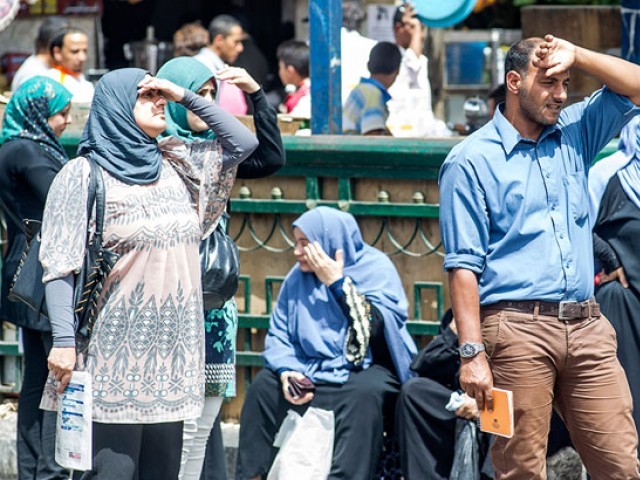
Cairo — Twenty-one people have died and 66 others were hospitalised with exhaustion as soaring temperatures and high humidity hit Cairo and other parts of Egypt, the health ministry said yesterday. The victims, who all died on Sunday, succumbed as temperatures soared as high as 47°C in conditions made less bearable by elevated humidity levels.
Fifteen people died in Cairo, four in the Delta province of Qalibiya and two in Upper Egypt’s Qena province, the ministry said in a statement. Those who died, including seven women, were all aged over 60.
Sixty-six people were admitted to hospital after suffering from exhaustion, including 37 who are still under observation, it added.
“There is a big rise in temperature compared with previous years. But the problem is the humidity which is affecting people more,” said ministry spokesperson Hossam Abdel Ghaffar.
“Long exposure under the sun is a killer.”
Meteorological officials confirmed that temperatures in the capital and some parts of the country were higher then average.
“The temperature is higher by 4 to 5°C than what is usually seen, and the humidity is very high this month,” Waheed Soudi, head of analysis in the Egyptian Meteorological Authority told AFP.
“The peak temperature in the shade was 38°Cin Cairo on Sunday, which means it was 47°C under the sun or in places with bad ventilation.”
Although it is not uncommon to see summer temperatures in the high 30s throughout Egypt, it is rare for humidity levels to remain elevated during excessively hot weather.
Meanwhile, Three police were wounded yesterday when a bomb exploded under a traffic sentry post near a Cairo court house, security sources said, in the latest in a series of attacks to hit the Egyptian capital.
The explosion occurred in the affluent north-eastern Heliopolis district, they said.
Egyptian authorities have pledged to end a wave of Islamist militant violence that has swept across the country, but sporadic attacks on high-profile locations in the city and elsewhere have continued. No one claimed immediate responsibility for Monday’s bomb, in which a health ministry spokesman confirmed three people were wounded.
A two-year-old insurgency centred on the Sinai Peninsula has killed hundreds of soldiers and police since the army ousted president Mohammed Morsi after mass protests against his rule in 2013.
Sinai Province, which has pledged allegiance to the militant Islamic State movement that has taken over swathes of Iraq and Syria, is the most active group.
The violence is undermining efforts by the Egyptian government to revive investment and foreign tourism crucial to the economy and stability of the Arab world’s most populous country.
While the insurgency is concentrated in the Peninsula, which lies between Israel, Gaza and the Suez Canal, violence has also hit the capital.
Egypt’s top public prosecutor was killed by a car bomb attack on his convoy in late June, the most senior state official to die at the hands of militants in two years.
Attacks have also targeted some of Egypt’s tourism sites, including the Karnak temple in Luxor.— AFP.-Reuters.


 Online Reporter