Online Reporter
Stanford Chiwanga, [email protected]
HIGHLANDERS has always thrived on passion. It is woven into the fabric of the club, carried in the voices of its supporters, and stamped into every player who wears the famous black-and-white stripes. Yet passion, when not properly managed, can quickly turn into pressure. In today’s social media era that pressure has found a new, immediate, and volatile outlet.
Mongameli “Smaller” Tshuma’s response to angry Highlanders supporters on the club’s official Facebook page, following his missed chance against Ngezi Platinum, is a perfect example of this shifting dynamic. It highlights exactly why clubs, players, and fans alike must rethink how they engage with one another.
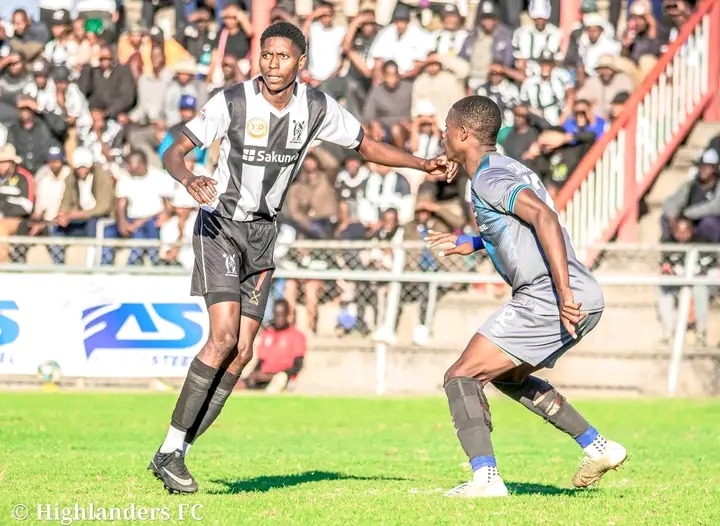
After the match, Tshuma took to social media with a heartfelt but arguably misguided message:
“Hie everyone I wanna say I’m sorry about today I apologise to you all will try my best next time tell a Bosso fan that umfana uyaxolisa, it was a bad day. I will try my best next time, namuhla kwalile.”
At face value, the message seems humble, even admirable. It reflects a young player acknowledging disappointment, recognising the heavy expectations placed upon him, and attempting to mend relations with frustrated supporters. In an era where footballers are often criticised for being detached or indifferent, such an apology could be viewed as refreshing honesty.
But in reality, this was the wrong move.
Football is built on moments. Moments of brilliance and moments of failure. Tshuma’s miss against Ngezi Platinum was one such moment that defined the outcome of the game. Yet, missed chances are an intrinsic part of football; they are not acts of misconduct. A player does not need to apologise for missing a chance.
Strikers at the highest level miss opportunities every week. Midfield creators misplace passes. Defenders make errors. If players were to apologise for every failed attempt, they would spend more time issuing public statements than playing football.
Tshuma’s game, in particular, is built on risk. He is a player who thrives on doing the unexpected: the difficult touch, the audacious attempt, the imaginative finish that others would not even see, let alone attempt. That kind of football carries an unavoidable cost: inconsistency. That inconsistency is not a flaw; it is the very essence of a creative player.
By apologising for his miss, Tshuma inadvertently shifts the narrative. Instead of reinforcing confidence in his style of play, he suggests that failure is unacceptable, even when it arises from ambition. This creates a dangerous psychological loop. If Tshuma feels compelled to apologise every time his creativity does not come off, he risks becoming cautious. He may begin to second-guess himself, choosing the safer option instead of the bold one. Over time, this erodes the exact qualities that make him valuable.
Creative players must be allowed to fail. In fact, they must fail often. It is through these failures that moments of magic are born. The same instinct that produces a missed chance today is the instinct that will produce a winning goal tomorrow.
While Tshuma’s message was apologetic rather than confrontational, engaging directly with angry supporters rarely works in a player’s favour. Fans operate on emotion. After a match, especially one where chances were squandered, frustration is at its peak. Responding in that moment is like stepping into a storm. No matter how calm your intentions, you cannot control the elements.
A player’s job is to perform on the pitch, not to win arguments or seek validation online. By addressing the criticism immediately and directly, ‘Smaller’ places himself in a vulnerable position. If he has another difficult game, the cycle will repeat. Expectations will rise, scrutiny will intensify, and the pressure to respond will grow. He risks apologising for the rest of his career at Highlanders. He must resist the temptation to consume social media commentary, because the same fans who praise him today will quickly turn against him when he falls short.
Perhaps the most telling aspect of this situation is not Tshuma’s apology itself, but what it reveals about the structures around him. This is where Highlanders must take responsibility. Professional football clubs across the world invest heavily in media training. Players are taught when to speak, what to say, and – crucially – when to remain silent. They are guided on how to handle criticism, maintain confidence, and protect their mental well-being. Tshuma’s raw response suggests a total lack of such guidance.
An experienced media officer or mentor would have advised him to stay calm and avoid engaging with supporters straight after the match, when emotions were high. He would have been reminded not to personalise a team result, and instead let his performance in the next game do the talking. Without this guidance, young players are left to navigate the wolves of social media alone.
There is a clear distinction between performance and conduct in football. A player can and should apologise for actions like receiving a reckless red card, showing indiscipline, or behaving unprofessionally off the pitch. These are matters that fall outside the normal flow of the game. Missing a chance, however, is simply football. Effort should never require an apology.
Continues on www.chronicle.co.zw
Tshuma put himself in a scoring position, which in itself reflects quality and intent.
This does not mean Tshuma is beyond criticism. Far from it. He must reflect on the moment, carefully analyse his decision-making, and learn to be more clinical or selfless when the situation calls for it. But that process should take place internally – within the dressing room and through personal reflection. Public apologies do not drive improvement; disciplined, consistent work does.
Highlanders, as a club, must recognise the importance of protecting their players mentally and professionally. Supporters, too, should remember that players are human beings dealing with immense pressure. Passion must remain the driving force behind the club, but it should never be allowed to consume the individuals who represent it.
For Tshuma, the way forward is clear. He must return to what makes him special: taking risks, trusting his instinct, and embracing the unpredictable nature of his game. When he inevitably produces his next moment of brilliance, the same supporters who criticised him will celebrate him. That is the natural rhythm of football.
His apology was well-intentioned but misplaced. Football does not demand perfection. It demands courage. Tshuma’s courage lies in attempting the extraordinary, even at the risk of failure. That is not something to apologise for. It is something to protect, nurture, and ultimately celebrate.