Online Reporter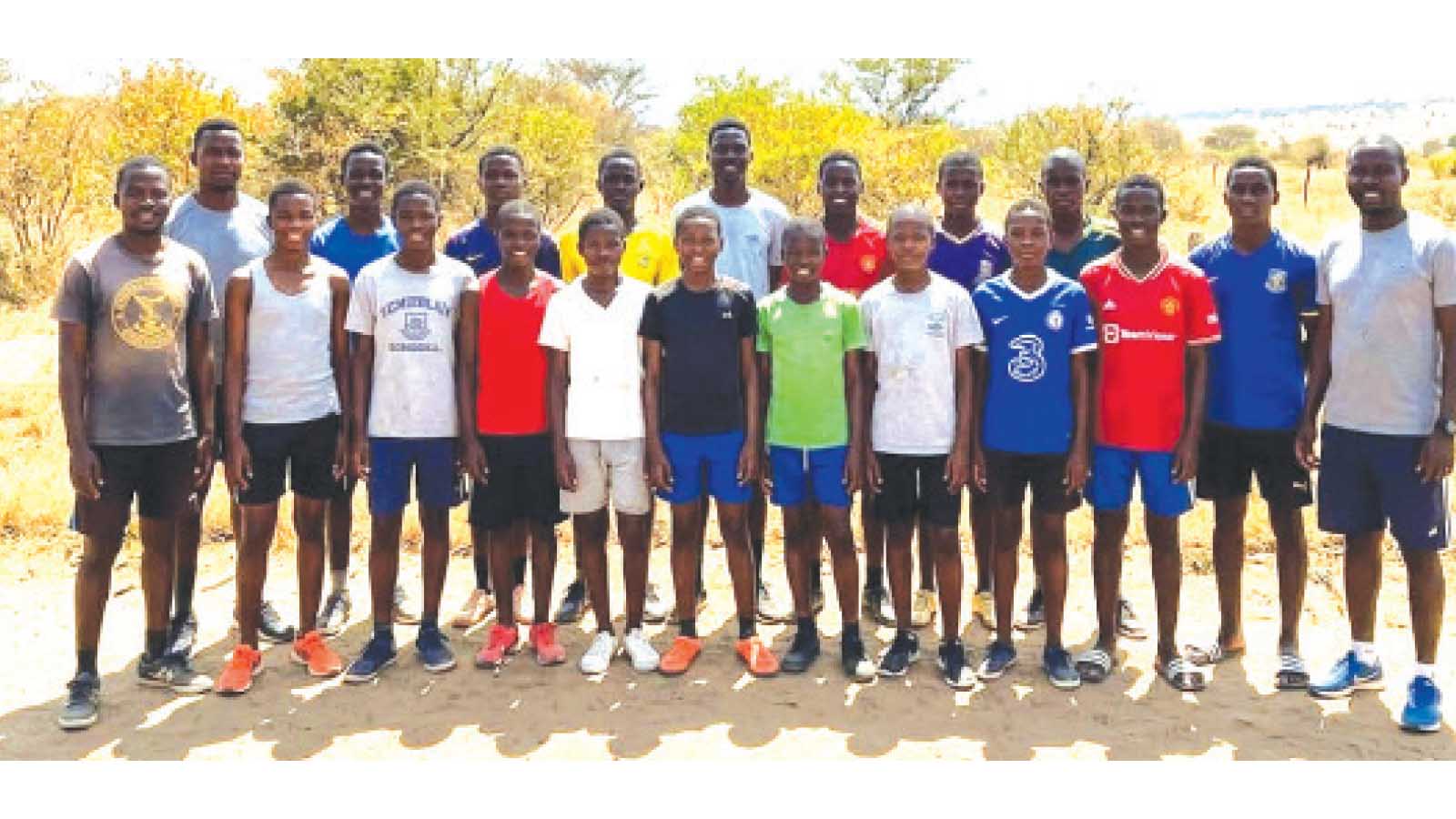
Latwell Nyangu
Twenty-three-year-old Keith Nyereyemhuka has officially launched Dumball Sport, which he invented two years ago.
The sport has now spread to more than eight communities, starting with Chitungwiza, stretching to Bulawayo.
Keith feels grateful for the achievement and the impact he is putting to the communities.
“I feel grateful, man, not the ‘clout’ kind of grateful. The deep kind.
“The kind where you walk through Chitungwiza and see eight clubs training on a patch of dirt that had nothing two years ago, and your chest gets tight.
“We started with an idea and second-hand whistles, and today we have 30-plus locally created clubs across eight cities.
“That means something, and it means the idea had legs.
“I also feel pressure, real pressure, because when Ma’am Kashesha calls me at 9 pm saying, “we need to arrange more games for our community, and there will be a need for more equipment.
“I feel the weight, and when Mr Sithole tells me a boy who was in gangs now runs midfield Senior Whites, I feel responsible.
“This stopped being my sport the day the first community picked it up,” he said.
He said, the sport was not born in the boardroom.
“It was born from frustration, and I would watch young people in the ghetto with insane energy, insane creativity, but no lane.
“Football was full, Basketball needed courts, and everything ‘imported’ felt far.
“So, I asked, ‘What if Zimbabwe had its own game? Something built for our spaces, our numbers, our realities.
“Something where a kid who struggles academically can still be a star. Something where the mentally challenged aren’t spectators, they are teammates.
“The launch wasn’t big lights or TV cameras, but it was 24 youth in every city and one ball, and me shouting the first rules under the hot sun like in Chitungwiza.
“We were laughed at, “Another street game.” But we kept showing up.
“Then Beatrice called. Then Bulawayo with three clubs, then Kwekwe. Each new city felt like confirmation: this isn’t just my dream.
“It’s our need.”
According to Keith, he is seeing the influence among the young people.
“I am seeing kids who never finished school now studying the game, learning strategy, and learning discipline.
“Dumball forces you to think. 2000-580 scorelines like Senior Whites vs Senior Blues don’t happen by luck. That’s hours of planning, communication, and teamwork.
“I am seeing gang energy convert to team energy. Same aggression, but now it’s channeled. “Instead of ‘my turf vs your turf’ with knives, it’s ‘my club vs your club’ with a whistle.
“I am seeing inclusion happen for real. When a mentally challenged youth scores and the whole team lifts him, the whole township sees it.
“That changes how we treat each other,” he added.
Today, the sport has reached eight cities locally, with more than 30 clubs created, each managing at least 24 players.
“Chitungwiza is the heartbeat right now with over eight local clubs active, led by community builders like Mr Sithole and Ma’am Kashesha, who are turning open spaces into training grounds.
“Their clubs don’t just play, they organise, mentor, and keep youth off the streets.
“Silence Chitapa is also heading a local club as he is a prominent figure within the Dumball ecosystem.
“Emerging clubs in Epworth and Beatrice, where youth are carving pitches out of bare land.
“Three clubs already running in Bulawayo.
“New formations in Mbare, Dzivarasekwa, and Kwekwe, as word travels through WhatsApp groups and Sunday church meetings.
“The community games are heating up. More cities are tuning in. More youth are showing up with worn-out takkies and unbreakable spirit.
“The sport is designed for inclusivity, youth, adults, women, men, and yes, the mentally challenged, all have a place on the pitch.
“No one is too different to participate. In a country where marginalised groups are often sidelined, Dumball says, “You are on the team.”
Dumball was invented by Zimbabwe’s polymath inventor, Keith, with the aim of creating one of the country’s first-ever original homegrown sports.
Keith said the next step is to make sure Dumball gets certified as an Association to enter schools and universities.