Online Reporter
Zvamaida Murwira
Senior Reporter
THE ongoing Government regulatory reform thrust — a comprehensive review of fees, permits and licences — is strategically designed to dismantle bureaucratic red tape and create a seamless pathway for investment into Zimbabwe, President Mnangagwa has said.
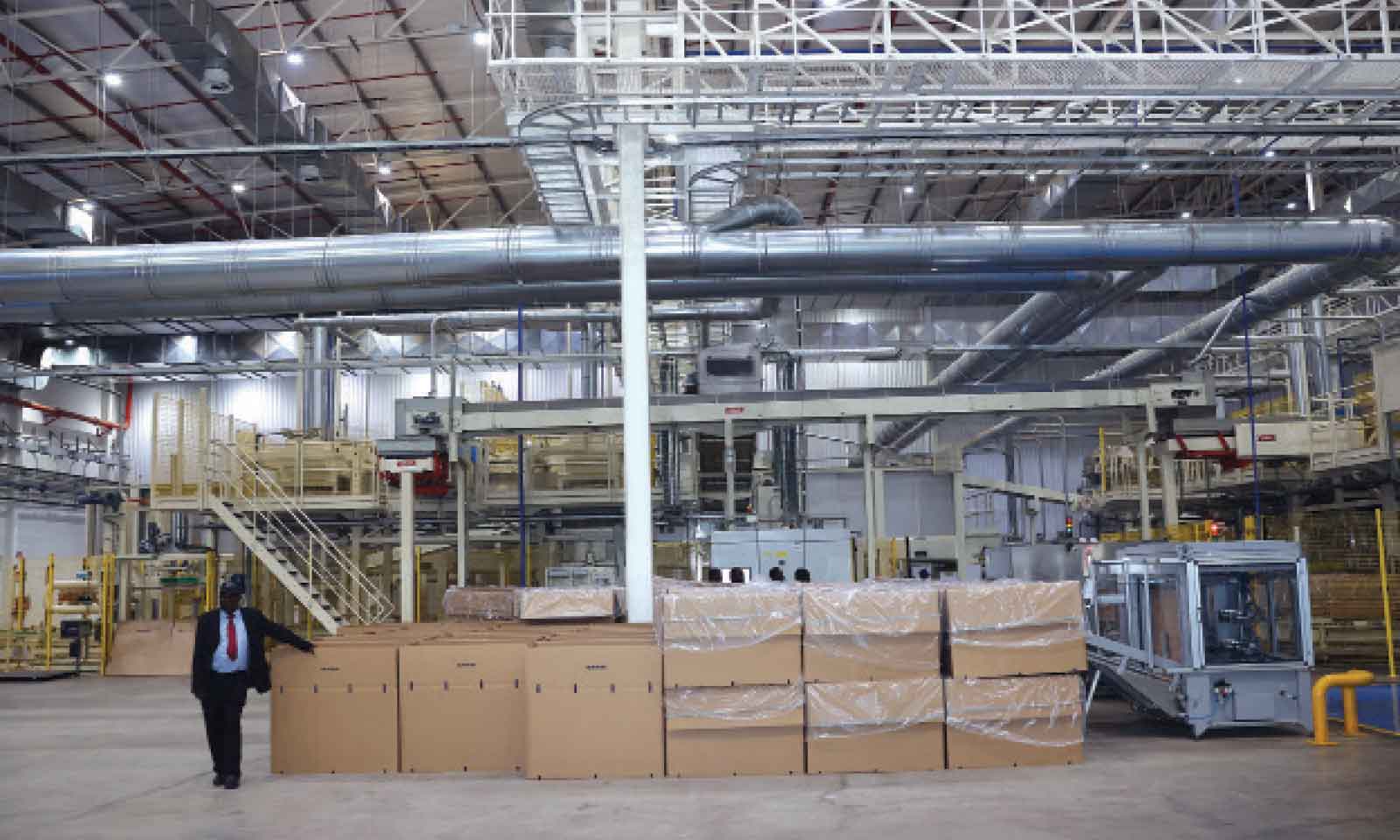
He made the remarks yesterday while delivering the keynote address at Cut Rag Processors, where he commissioned a state-of-the-art tobacco processing plant valued at US$100 million.
“My Government continues to accelerate the Ease of Doing Business reforms, which target 12 sectors. To date, tremendous progress has been registered in sectors such as agriculture, transport, tourism and most recently the wholesale and retail subsectors. Numerous licences, permits, levies and fees, as well as the multiple regulatory requirements, have been reviewed and streamlined. The requisite Statutory Instruments and statutes are accordingly being amended,” said President Mnangagwa.
The President said his administration, through the ongoing regulatory reform agenda, was determined to ensure that no investment was hindered by bureaucratic red tape.
“We are entrenching a business operating environment that is consistently predictable and transparent, where enterprise and innovation are rewarded, and industry thrives.”
To that end, the President said a second Government economic blueprint, National Development Strategy 2 (NDS2), will soon be unveiled.
“To bolster this thrust, the National Development Strategy 2, will soon be launched as yet another building block to our country’s continuing economic growth and transformation agenda. This will be augmented by the Zimbabwe National Industrial Development Policy 2, designed to accelerate industrialisation and modernisation, while also aiding the diversification of domestic production and productivity,” said President Mnangagwa.
“In this regard, my Government is advancing a comprehensive local content strategy that clearly articulates our commitment to accelerating localisation, value addition and the beneficiation of our products. These policy frameworks, among other critical enablers, should ensure that more of Zimbabwe’s wealth is created and retained within our borders.”
He said as the country prepares to transition towards the implementation of NDS2, appropriate enablers, including the rehabilitation and expansion of key projects in areas such as energy, water, transport and ICT infrastructure, remained Government priority areas.
“To this end, my Government, adopted the Zimbabwe National Artificial Intelligence Strategy to harness the benefits of emerging technologies. Digital infrastructure is, therefore, being expanded to support e-commerce, automation and smart manufacturing. Our holistic and integrated approach will ensure that Zimbabwe’s industrial base is anchored by robust and efficient infrastructure,” said President Mnangagwa.
“Equally important will be the harnessing of digital transformation to scale up industrial efficiency through the Internet of Things, intelligent manufacturing, big data and augmented analytics.”
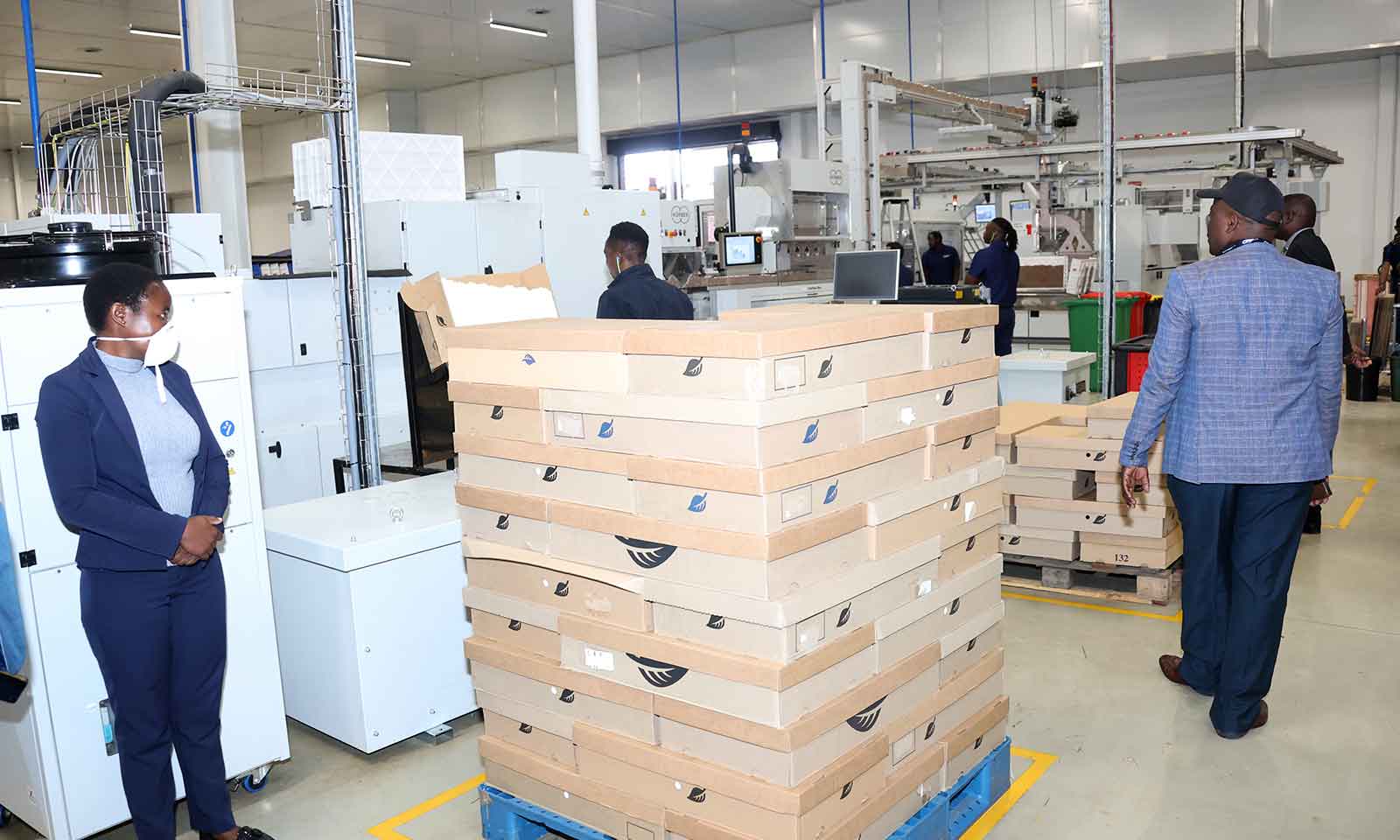
The use of such advanced manufacturing technologies, he said, must herald the necessary paradigm shift from traditional manufacturing models.
“However, as we scale up industrialisation, I challenge industry players to be informed by our national interests and shared desire to improve the quality of life for all our people, no matter where they live. In our respective business and company strategies, across all sectors, let us be conscious of the need to ensure that no one and no place must be left behind,” he said.
Turning to the plant, President Mnangagwa said its establishment showed the resurgence of the industrial sector.
“This occasion demonstrates Zimbabwe’s ongoing industrial resurgence and testament that ‘Zimbabwe is Open for Business’, anchored by private sector-led growth. Under my leadership, Government has placed industrialisation, modernisation, value addition and export-led growth at the core of our national development agenda and the quest to achieve Vision 2030,” he said.
“We continue to recognise that the private sector, factories, farmers, innovators and entrepreneurs must play their critical role with regard to expanded value chains, job creation and the overall industrialisation and modernisation of our motherland, Zimbabwe.”
He noted that it was pleasing that the commissioning was occurring following the country’s unprecedented successes in the agricultural sector, with record tobacco production of 355 million kilogrammes in 2025 valued at US$1,2 billion.
“As a result, Zimbabwe now ranks sixth globally in tobacco production. Over and above these milestones, the industry sustains more than 160 000 households, empowering rural communities and uplifting the livelihoods of many across the nation,” he said.
“I call upon stakeholders to continue investing in value addition and beneficiation, while also promoting sustainable and climate-smart farming, as well as developing innovative local financing mechanisms.”
He applauded Cut Rag Processors, for heeding his call to advance value addition and beneficiation of tobacco.
“This enterprise gives a glimpse into the immense potential of our manufacturing industry. It is further commendable that since its establishment in the year 2000, as Zimbabwe’s first independent cut rag and cigarette manufacturing facility, Cut Rag Processors Private Limited, has grown to become one of the leaders in innovation and production excellence.
This multi-million-dollar investment by Cut Rag Processors reflects the growing confidence which the private sector continues to place in Zimbabwe’s economic transformation agenda, under the Second Republic,” he said.
President Mnangagwa noted that the deployment of modern technologies to enhance the country’s modernisation and industrialisation journey was important, and the unveiling of the state-of-the-art plant would go a long way towards the efficient processing of cut rag and increasing the overall annual production levels of cigarettes.
“This remarkable capacity of the plant is set to consolidate Zimbabwe’s self-sufficiency in tobacco manufacturing and as an emerging exporter of high-value, finished tobacco products, I commend Cut Rag Processors for its commitment to innovation and sustainability. The use of energy sources such as wood blocks from timber waste is a model for responsible production, which is now the global norm. Well done,” he said.
The event was attended by Vice President Dr Constantino Chiwenga, Cabinet ministers, legislators, captains of industry and senior Government officials.