Chronicle Editor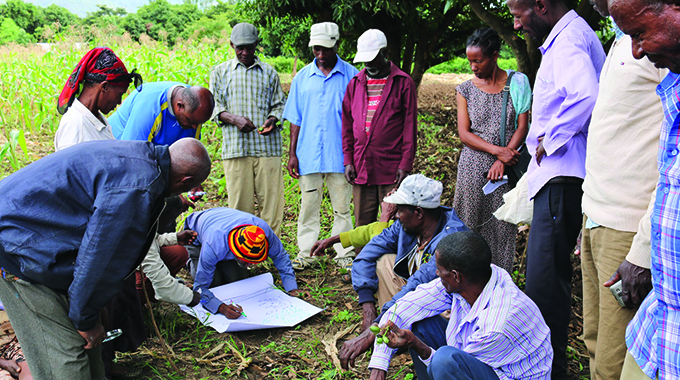
Sukulwenkosi Dube-Matutu, [email protected]
MORE than 300 farmer field schools have been established in Matabeleland South province in the past three years as part of the Government-led Enhanced Resilience for Vulnerable Households in Zimbabwe (ERVHIZ) programme.
This programme, with help from the European Union, aims to help farmers adopt best practices to mitigate the effects of climate change.
Six districts in the province, including Beitbridge, Bulilima, Gwanda, Insiza, Mangwe and Matobo, have benefited from 157 crop farmer field schools, 93 livestock farmer field schools and 75 agro-pastoral field schools.
The ERVHIZ programme, which started in November 2021, seeks to increase the resilience of rural households to food crises and climate change. The adoption of climate-smart agriculture technologies, post-harvest management practices, improved pasture and grazing management and livestock marketing has significantly improved in the province.
According to a summary report on the programme, 3 821 farmers have benefited from the crop field schools, with 447 lead farmers and community-based facilitators participating in the programme.
On the other hand, 2 059 livestock farmers and 272 lead farmers and community-based facilitators have participated in the livestock farmer field schools. With the help of the programme, farmers also received crop input support for the farming season and training in post-harvest technologies.
About 30 000 farmers across the province received sorghum, 30 000 received cowpeas, while 1 200 received basal and top dressing fertiliser.
Under the programme, 176 extension workers, 550 community-based facilitators and 778 lead farmers were trained in post-harvest technologies.
Thirty groups with a total of 519 farmers each accessed multi-crop threshers. This helped ensure the adoption of improved post-harvest management practices. Upon receiving the equipment, farmers were trained on the use and maintenance of the threshers.
The programme also targeted promoting agro-ecological dryland crop production, improved pasture and grazing management and mainstreaming gender issues through the gender action learning system (GALS).
The ultimate goal of the programme is to contribute to the well-being of households in vulnerable situations in the face of climate and economic-induced shocks, while also increasing the resilience of rural households to food crises and climate change.
Each farmer field school has between 10 to 30 members. This group-based learning process includes experimental learning activities that help farmers understand the ecology of their farming practices.
Through these activities, farmers can make their own locally specific decisions about farming management practices, which represents a radical departure from earlier agricultural extension programmes that provided generalised recommendations formulated by specialists from outside the community.



 Online Reporter