Online Reporter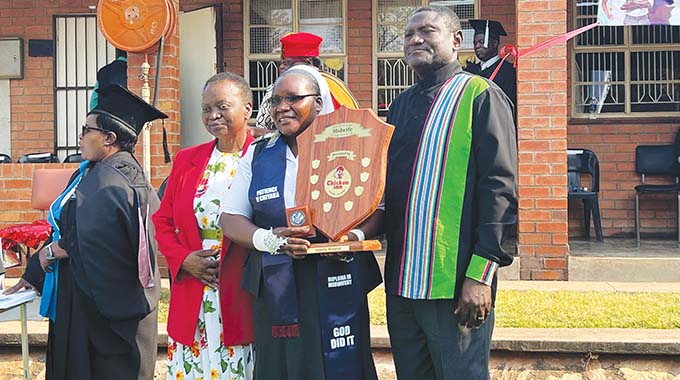
Sukulwenkosi Dube-Matutu, [email protected]
A TOTAL 326 health workers graduated from the Gwanda Provincial Hospital’s multidisciplinary training school yesterday with health authorities expressing optimism that the new development will help ease critical staffing shortages across the province’s health facilities.
Speaking during the graduation ceremony yesterday, Matabeleland South Provincial Medical Director, Dr Andrew Muza, said the province is grappling with a 12,5 percent vacancy rate, with most gaps being in nursing.
“We have about 4 000 vacant health care posts in the province and most are nurses. This is a big event for us as it helps to address the problem of the shortage of health personnel in our health facilities,” he said.
“This is a big event for us as it helps to address the problem of the shortage of health personnel in our health facilities. We continue to construct health facilities, but as long as we don’t produce human capital, then the health sector will not fully serve its purpose of ensuring effective health service delivery.”
Dr Muza noted that 12 new health care centres are currently under construction in Bulilima District, but staffing remains a major hurdle.
He said while the graduation was a milestone, challenges such as a shortage of tutors, limited operational budgets, inadequate learning space and student accommodation continue to affect training capacity.
“We have been turning away many potential students because of limited space, yet the demand is very high. We need to work on strengthening human capital development if the province is to achieve quality and accessible health care for all,” he said.
This year’s graduation, the first since 2018, produced 178 general nurses, 75 environmental health technicians and 73 midwives.
Senior tutor Ms Idzai Matsheza said the cohorts performed exceptionally well, with most recording a 100 percent pass rate.
Minister of State for Matabeleland South Provincial Affairs and Devolution, Albert Nguluvhe, who was guest of honour, said the Government is expanding health training institutions in the province to close staffing gaps.
He said staff development will help address challenges such as the high maternal deaths in the province, which stood at 39/100 000 live births, and institutional maternal deaths in 2025.
Minister Nguluvhe said the province is also battling a high perinatal mortality rate, high HIV prevalence compared to other provinces, low sanitation coverage, among more challenges.
He said the Government, through the Health Services Commission, launched the Health Workforce Strategy (2023–2030), which seeks to double the health workforce by 2030.
“One of the strategies to address challenges faced in the health care sector is to increase the enrolment of student nurses, environmental health technicians and other health staff,” said Minister Nguluvhe.
Gwanda multidisciplinary school has a capacity of 100 students.
“It is commendable that you have increased your intake over the years in line with the expansion policy. This graduation will go a long way to ease some of the staff shortages that the health sector is facing in the country and particularly in Matabeleland South province,” said the minister.
He noted that the graduation came at a time when a sector-wide job evaluation exercise was recently concluded by the Health Services Commission.
Minister Nguluvhe said the Government remains committed to improving working conditions in the public service in line with the National Development Strategy 1 and Vision 2030.
He said while Gwanda Provincial Hospital multidisciplinary training school is a national training institution, there is a need for the institution to prioritise local applicants in line with the Government recruitment policy.
Minister Nguluvhe said initiatives such as the reopening of Tshelanyemba Primary Care Nursing Training School and plans to open a nurse training school in Maphisa next year are part of broader efforts to build human capital in line with Vision 2030.
He also highlighted ongoing infrastructure upgrades under the Presidential Hospital Refurbishment Programme, saying these investments, coupled with a stronger workforce, will transform the health sector. — @DubeMatutu