malvernmugadzikwa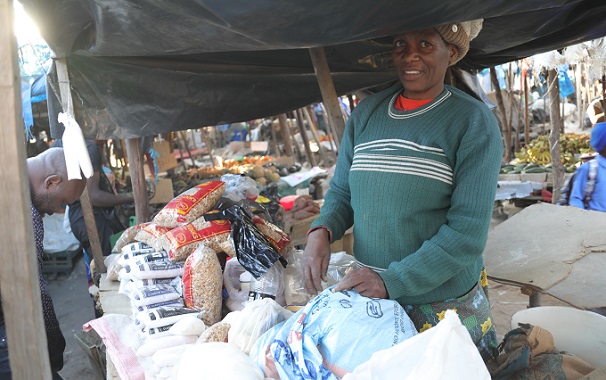
Tendai Chara
FORGET about the usual dollar for two, or more, deals that consumers usually bargain for at most vegetable and food market stalls countrywide.
At the PaJambanja people’s market in Chitungwiza, and elsewhere in Harare’s high-density suburbs and beyond, on-the-go consumers can buy maize meal, cooking oil, salt, vegetables, sugar and other items in very small and unusual packs.
The total bill for all the above items can be as low as US$2 and enough to cover a “decent” meal.
Buying foodstuffs in small portions was prevalent during the days when black market dealers were creating artificial shortages and overpricing essential goods. During this dark period, many Zimbabweans relied on the informal market for basic goods.

As a result of the unavailability and high prices of basic goods, many households were forced to resort to buying small foodstuff packs, better known as tsaona.
Tsaona loosely translates to emergency.
However, the situation has changed due to improved supplies in formal retail outlets. The black market for food has, since the advent of the Second Republic, been dying a natural death.

Old habits die hard
From a small budget of about US$10 or less, one can now buy a reasonable grocery in any retail outlet, which includes salt, sugar, mealie meal/rice, spaghetti/macaroni and cooking oil.
But despite the availability of affordable basic goods in formal markets, it appears a curious breed of consumers are finding tsaona packs convenient.
For such customers, who do not eat home meals on a daily basis, bulk goods can easily go to waste. They find on-the-go food packs enough and reasonable.

This was revealed in a recent visit to the PaJambanja market. Most consumers can arguably afford to buy goods in “normal” quantities, but a good number still buy foodstuffs in very small quantities.
Moses Mupiro, a vendor at the market, said it has become a “habit and lifestyle” for some of the people to buy foodstuffs in small quantities.
“We have this woman who always buys cooked beans. She argues that it is cheaper to buy already cooked beans from the market than to buy and cook. She argues that by buying cooked beans from this market, she saves both time and money, perhaps electricity or gas,” said Mupiro.
Aptly named PaJambanja, which means chaos, consumers can get anything and everything in the quantities they need at this marketplace.
Bloggers have often poked fun at the dealings at this infamous Chitungwiza market, with a number of exaggerated skits on such deals going viral on social media.

One such skit suggests a person can start a day with nothing but a thermos of boiled water.
A visit to the market will give one access to tea leaves, a sprinkle of sugar, a dollop of powdered milk, a slice or two of bread and an egg, or a small portion of boiled beans or potatoes to complete the breakfast menu.
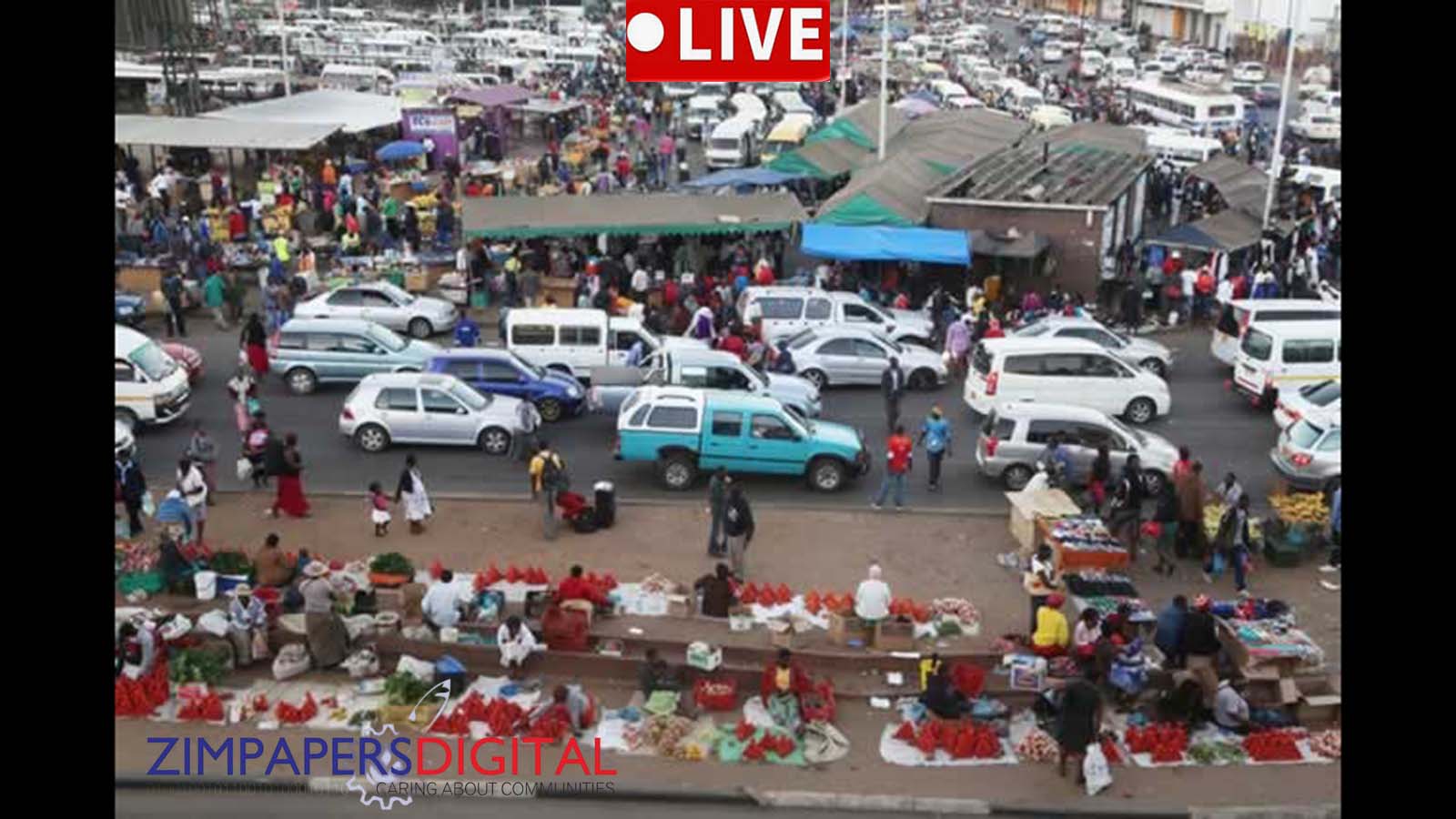
When The Sunday Mail Society visited PaJambanja last week, the place was a hive of activity, with money and basic goods exchanging hands.

Some of the consumers were buying a few cups of maize meal, small repackaged bottles of cooking oil and even boiled sugar beans.
Pieces of meat were also on offer, so were small repackaged packs of tea leaves and spices, among other basic commodities.
For meat, consumers were spoilt for choice, with chicken, beef and pork cuts being readily available at any cost. Chicken skin, heads and feet were also being sold in unbelievably cheap budget packs.
At this informal market, one can buy meat for as little as US50 cents.

Apart from maize meal, meat and other foodstuffs, cheap fresh vegetables, fruits, cosmetics and plastic wares are also readily available at the market. Fruits, such as oranges and avocados, were being sold for as little as ZiG2 each.
The fruits were, however, not as fresh as they should be.
Convenience
Contrary to the belief that those who buy foodstuffs in small portions are poor and cannot pay for the normal packs, some of the people who frequent PaJambanja can actually afford to buy from established supermarkets.
Mildred Moyana, another vendor at PaJambanja, said the majority of the people who buy foodstuffs in small quantities are bachelors.
“Some of these people find it convenient to buy small and already cooked foodstuffs. They can afford to buy in bulk but their bachelor lifestyle forces them to frequent this place,” she said.

Repackaged items are also readily available at other popular marketplaces scattered across different towns and cities. They include Chigovanyika in Chitungwiza; Majubheki in Mbare; and an area known as Speed in Katanga, Norton.
At Chigovanyika, the vendors mostly sell repackaged roller meal and different kinds of meat.
Apart from Chitungwiza and Mbare, Domboshava and Epworth are other areas where this trend is evident.
Concern
Concerns have, however, been raised over the quality of products sold at such informal markets.
In 2020, a dog meat racket was unravelled in Kuwadzana Extension, Harare, as unscrupulous people preyed on the residents’ desire for cheap meat.
The dog meat was passed off as goat or buck meat.
“I am suspicious of the origins of the meat that is being sold here. Some of the meat is from chickens that would have succumbed to diseases.
“This meat is not safe for human consumption,” said Admire Murombo, a vendor at Chigovanyika.
Wallace Nhimbe, a health and environmental practitioner, said people buying uninspected foodstuffs are risking their lives.
“Uninspected foodstuffs might contain harmful bacteria, parasites and viruses. Numerous diseases such as diarrhoea and even cancers are associated with unsafe foods,” he said.
Chitungwiza Municipality public relations officer Tafadzwa Kachiko said the council was working around the clock to curb the vending of uninspected foodstuffs on the streets.
“Our department of health is working day and night, as we seek to bring sanity to the area. The biggest challenge that we are facing is that the vendors who are selling such foodstuffs are even operating at night.
“There is need for us to strengthen our enforcement teams so as to effectively deal with the menace,” said Kachiko.
National Consumer Protection Commission chairperson Dr Mthokozisi Nkosi urged consumers to think twice before buying foodstuffs from unauthorised dealers.
“As a consumer watchdog, we are very much worried about this widespread behaviour. We do not expect consumers to risk their lives for the sake of saving money. Consumers must exercise due diligence and buy from authorised dealers,” said Dr Nkosi.


 Online Reporter