admin
admin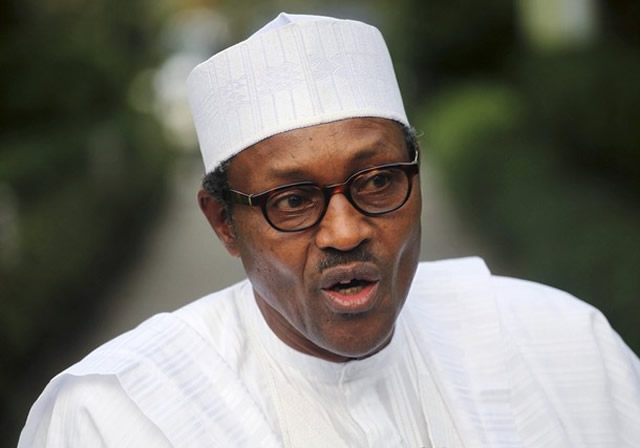
Kano – At least 49 people were killed and dozens injured when twin blasts struck a market in the northeast Nigerian city of Gombe on Thursday, rescue workers said.
The first explosion took place outside a packed footwear shop around 16:20 GMT, followed by a second explosion just minutes later, said Badamasi Amin, a local trader who counted at least three bodies.
He said the area at the time was crowded with customers doing some last-minute shopping on the eve of the Eid festival marking the end of the Muslim fasting month of Ramadan.
“I was about 70 metres from the scene when the first blast hit,” Amin said.
“I and many other people rushed to assist the victims. While we were trying to attend to the wounded, another blast happened outside a china shop just opposite the footwear shop,” he said, adding that he himself was “drenched in blood” from moving dead bodies.
Ali Nasiru, another trader, said he saw “people lying lifeless on the ground”.
“Traders and shoppers helped in evacuating the victims to the hospital,” he said.
“In all, we have 49 dead and 71 injured,” a top rescue official said, asking not to be named.
He warned that the toll could climb further as some of the wounded “are in a critical condition”. “The victims include many women and children,” he said.
There was no immediate claim of responsibility for the blasts but a market, bus station and stadium in the city of Gombe, the capital of Gombe state, have all in recent months been targeted by bomb and suicide attacks.
In February, Boko Haram Islamists claimed responsibility for an attack on Gombe during which hundreds of insurgents, armed with heavy weapons, invaded the city for a few hours.
Gombe state neighbours the states of Borno, Yobo and Adamawa, which have been most affected by the Boko Haram insurgency that has killed more than 15,000 people in Nigeria since 2009.
There has been a spike in attacks by Boko Haram after a four-nation coalition of Nigeria, Niger, Chad and Cameroon pushed out the militants from captured territory earlier this year.
The violence has intensified since Nigerian President Muhammadu Buhari took power one and a half months ago and vowed to crush the group, something his predecessor had also made a priority but failed to do. Buhari, in an Eid message, pledged to Press on with efforts to quash the militants.
“I was very aware of your high expectations when I assumed office and I reassure you, my fellow citizens, that since my inauguration . . . I have been working with utmost dedication to meticulously plan and tackle the many national challenges which we identified and promised to resolve,” he said.
“To succeed however, I need your continued support, understanding and patience.”
Buhari, a former military man, this week sacked his entire defence top brass in the wake of criticism over the military command’s poor handling of the six-year Boko Haram insurgency.
Meanwhile, Buhari has approved the dissolution of the governing boards of a number of federal agencies and institutions with immediate effect, his spokesman said on Thursday.
It was not immediately clear which bodies were affected by the move. Until the boards are reconstituted, chief executives of the affected bodies will “refer all matters requiring the attention of their boards to the president” through senior civil servants, said Buhari’s spokesman Femi Adesina.
Buhari, who is yet to appoint ministers, was sworn in as president of Africa’s most populous country on May 29 after being elected on an anti-corruption ticket.
Last month the president dissolved the board of the state-owned oil company. On Monday he replaced his defence chiefs as part of an attempt to step up the campaign against Boko Haram.
Buhari is due to meet Barack Obama on Monday in Washington, where they are set to discuss the fight against terrorism and boost damaged bilateral relations.
Facing an uptick in violence from the jihadist group Boko Haram, Buhari – who came to power in late May — is expected to push for US help to tackle the insurgency and also improve trade, particularly in oil.
Top of the agenda “will be measures to strengthen and intensify bilateral and international cooperation against terrorism in Nigeria and west Africa”, said a statement from the Nigerian presidency.
Relations between the two countries dipped late last year, under the regime of former Nigerian president Goodluck Jonathan, after Abuja considered US aid to fight Boko Haram insufficient.
The west African nation decided to halt a US training programme for an army battalion which would have developed into a unit to take on the militants.— AP


 derick.khumalo