

 dyton mupawaenda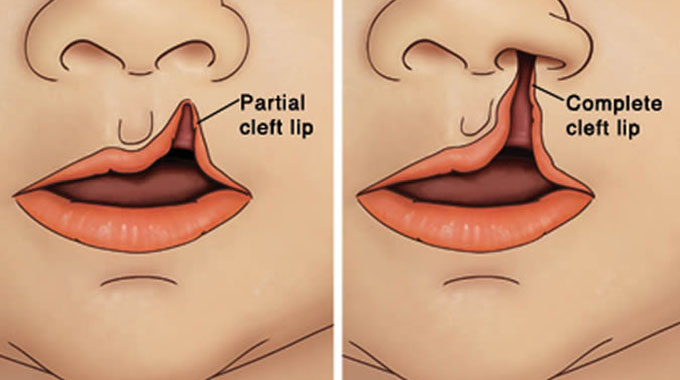
Mutsawashe Mashandure and Gloria Muruva
AT least 50 children will this week benefit from a free cleft lip surgical camp at Sally Mugabe Central Hospital in Harare in line with the Government’s vision 2030 of leaving no one and no place behind.
The cleft lip camp, which is being rolled out by the Ministry of Health and Child Care with support from the Global Cleft and Cranio-Facial Organisation, is targeting children between the ages of three to nine months.
The screening process was conducted yesterday while operations are expected to start today and run until Saturday.
Cleft lip surgery is a procedure to restore normal appearance and function to the upper lip. Cleft lip surgery is usually recommended at three to four months of age. In most cases, the tissue in the area around the cleft is rearranged to close the opening.
In an interview, head of specialist services at Providence Health Dr Paidamoyo Ndudzo-Gurupira said the camp was aimed at helping children born with cleft lips and reducing the waiting list for the operations.
“We are here today as local doctors to help children who have deformations and are born with cleft lips. Today we are targeting to screen more than 100 children, and we want 50 for surgery. This is our second time to do the cleft lip surgery. In July, we did 25 and this time we are fighting to get to 50,” she said.
Dr Ndudzo-Gurupira said the children had to go under general anaesthesia.
“The children have to go under general anaesthetic before they go into theatre, but that does not mean everyone will go to theatre. There are some surgeons who have to look to see if the children qualify for surgery,” she said.
Factors that disqualified some of the children from going to theatre included flu and children with other underlying medical conditions.
Dr Ndudzo-Gurupira said the camp also provided counselling services for the mothers of children with cleft lips as the babies with the condition experienced many difficulties.
“Babies born with a cleft lip or cleft palate may have difficulties eating (both from the breast and a bottle). They may also have trouble speaking, and they often have fluid behind their eardrum that can affect hearing. Depending on the case, some also have issues with their teeth,” she added.
“A cleft lip can be treated if it goes under surgery. It is a quick fix that brings about changes in their lives. It’s something that can be easily sorted out, but unfortunately, most people are out of reach, mostly because of a lack of knowledge or the cost.”
Parents of the children who were undergoing screening expressed their gratitude for the opportunity to have the operation free of charge.
Ms Barbra Mahunze from Shamva applauded the initiative that she was granted last year when her child, who had both cleft lip and cleft palate, got the first operation.
“My daughter had both conditions of cleft lip and palate. I did not have the money required for her to get the operations done and my relatives did not even bother to offer help.
“I was very happy when I heard about this programme last year and my baby underwent the first surgery. She is now 11-months-old and does not eat any solid foods. I am hoping she will be able to get her second operation to fix the palate,” she said.
Ms Nyasha Chiroodza from Stoneridge in Harare shared some of the challenges that her child faced.
“My baby had a cleft lip and cleft palate, and I had no knowledge about the condition until I saw the poster on WhatsApp. I had to follow up at the hospital. My daughter faced isolation from the community because of her condition. Her first surgery was in July last year when she got her lip fixed. Today I came again for the palate surgery, but unfortunately she cannot be operated on because her weight is below the required weight for a child to undergo surgery,” she said.
A 33-year-old man with a cleft lip, who preferred to remain anonymous, said he had survived with the condition for too long and had faced a lot of stigma and discrimination in his community.
“Living with this condition has been a challenge because I was isolated by people around me. I could not go to work or socialise with others in the community.
“No one wanted to have anything to do with me so I have lived a very lonely life. I never got the operation as a child because my parents never got to know that this condition could be fixed and I also never got the information until now. I am hoping that I will get the surgery today,” he said.


 Peter Tanyanyiwa
 Online Reporter