

 admin
admin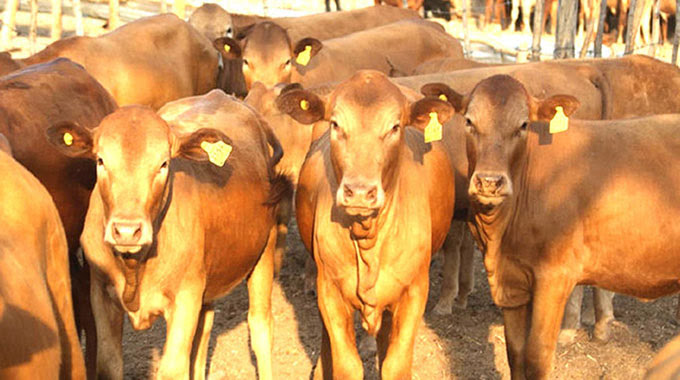
Precious Manomano Herald Reporter
The Government has put rigorous programmes to improve livestock production and achieve a 6 million cattle head count as the country moves towards import substitution while resuscitating the beef export market.
The initiatives by the Second Republic are set to address the various aspects of the herd such as genetic improvement, disease resilience, and feed availability.
A report on crop, Livestock and Fisheries Assessment on 2020/23 summer season (Pre-harvest)released by Ministry of Lands, Agriculture, Fisheries, Water and Rural Development, the national beef cattle herd had a growth of 2 percent in 2022, increasing from 5 509 983 in 2021 to 5 642 400 in 2022.
The positive growth is attributed to a fairly good season for livestock and a reduction in mortalities, especially due to tick-borne increases.
Most farmers that were affected by theileriosis especially in Mashonaland East and Mashonaland West are also in a herd rebuilding drive since the disease is now under control in the provinces.
The report also indicates that cattle mortality decreased by 3 percent from 9 percent in 2021 to 6 percent in 2022. Different animal diseases were the major causes of beef cattle mortalities accounting for 83 percent of deaths from sampled beef cattle owners.
The decreased cattle mortalities are attributed to improved animal health management especially control of tick borne diseases in hot spot areas with improved dipping regime and introduction of the intensive 5-5-4 dipping cycle.
Regular cattle dipping has greatly reduced the number of tick-borne diseases especially theileriosis (January disease).Small ruminant dipping is not a common practice by many farmers.
The general condition of livestock is fair to good across the country.
Small ruminants, that is, sheep and goats are in a good condition whilst beef cattle are in a fair to good body condition.
Dry season (protein and mineral) supplementation is generally not practiced by most farmers resulting in animals losing condition in critical periods of the year (dry season) especially in the smallholder farming sectors where animals mainly survive on low quality grasses and crop residues.
“The grazing condition in terms of quality is generally good due to rains received since the beginning of the rainy season.
“However, more rains are required for most wards in Masvingo and Matabeleland south provinces since the grazing quality is poor to fair. Most grass and browse species are highly palatable and have resulted in the improved livestock (cattle, sheep, goats, and donkeys) condition across the country,” said the ministry.
The good rainy season so far has resulted in increased river flow rates and increased water levels and reservoirs.
Total dairy herd continued in a positive trend recording an 11,3 percent growth from 47 845 in 2021 to 53 250 dairy animals in 2022.
This has resulted in a steady increase in annual milk production.
The milking herd grew to 35 100 cows (milking and dry cows) producing 91,4 million litres of milk number of registered dairy entities increased from 238 in 2021 to 244 in 2022.
The report also states that poorly constructed small ruminant housing have become muddy as a result of incessant rains being experienced.
The poor conditions are mainly affecting kids and lambs which mainly succumb to pneumonia and foot rot than older sheep and goats
“While the overall body condition of small ruminants is good across the country due to availability of good graze and browse, most farmers are not practicing routine management practices such as dosing, vaccination and castration.
“Tail docking practice is also not being routinely practiced by sheep farmers,” said the ministry.
Zimbabwe Commercial Farmers Union president Dr Shadreck Makombe said the livestock condition has improved significantly and pastures were available.
“We are urging farmers to increase dipping at intervals and also to use tick grease. The other challenge with livestock is that it can also be affected by foot rot. We urge farmers to be vigilant,” he said.
Zimbabwe Indigenous Women Farmers Association Trust president Mrs Depinah Nkomo said farmers should add salt to cattle’s feed to improve nutritional value.



 Online Reporter