Online Reporter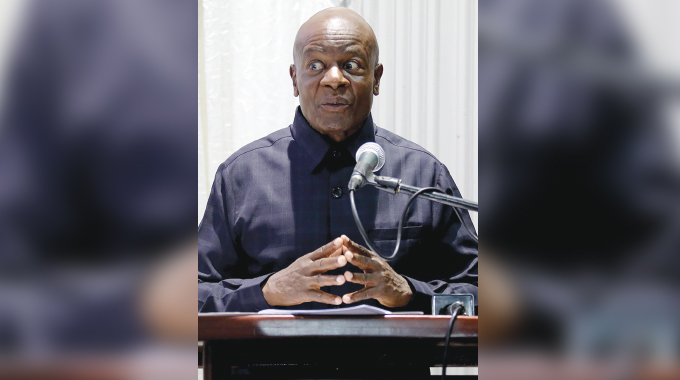
Remember Deketeke, Harare Bureau
THE internal process for the approval of local authority masterplans across the country is now at an advanced stage, with at least 70 out of 90 masterplans already submitted to the Ministry of Local Government and Public Works and awaiting final clearance from the Attorney-General’s Office.
This was revealed by Minister of Local Government and Public Works, Honourable Daniel Garwe, in an interview yesterday.
He said the approval of master plans was a two-progged process involving both his office and the Attorney-General’s offices before the documents are gazetted.
“Out of all the 90 local authorities, 70 have already submitted their masterplans, which I believe are ready for approval from both my office and the Attorney-General’s Office,” said Minister Garwe.
“By early next year, we expect these to be fully approved.”
President Mnangagwa has directed all local authorities to have master plans as the Second Republic moves to curb the sprouting of chaotic and haphazard settlements.
President Mnangagwa’s directive was contained in the blueprint for local authorities dubbed: “Call to action — No compromise to service delivery”, which spells out that planning issues are a must for all councils.

The Minister said that masterplan approval involves a thorough legal and technical process to ensure that development plans are both compliant with existing laws and aligned with the national vision for orderly urban growth.
He said the Government was encouraged by the positive response from most local authorities following the call to action on masterplan preparation, which was designed to modernise urban development and guide infrastructure investment.
“We only had 90 local authorities participating because Mutare and Bulawayo had already completed and approved their master plans before the call to action was adopted,” he said.
Minister Garwe said the remaining 20 local authorities were finalising corrections and adjustments, mainly related to boundary alignments and infrastructure considerations.
“The 20 remaining master plans are mostly affected by boundary issues. For example, in the case of Gweru Urban and Vungu Rural, there was an overlap of boundaries which is now being rectified,” he said.
“Kwekwe City also had to review its plan because some of the areas identified for expansion were above underground tunnels, which posed safety concerns. They have since been advised to extend to areas that are safe and sustainable.”
He said the master plans were a vital planning tool that ensures orderly development and prevents haphazard settlement patterns, adding that the Government will not approve any new developments that fall outside properly designated zones.
Minister Garwe emphasised that the master plans will help local authorities attract investment by providing clear land-use frameworks, guiding infrastructure rollout and promoting sustainable urbanisation.
The Government has been pushing for the adoption of comprehensive master plans in all local authorities as part of the National Development Strategy 1 (NDS1), which seeks to transform Zimbabwe into an upper-middle-income economy by 2030.
Once approved and gazetted, the master plans will serve as blueprints for local development, defining how towns and cities expand in line with national planning and environmental standards.
A masterplan is an overall land use planning document, which constitutes policies and strategies regarding how land should be used and how developments should occur, looking at future water supplies, road networks, housing provision, environmental management and transport. Details are filled in with the appropriate local plans.
The master plan contains aerial photos, illustrations, maps, reports and statistical information to support the planning vision.