Chronicle Editor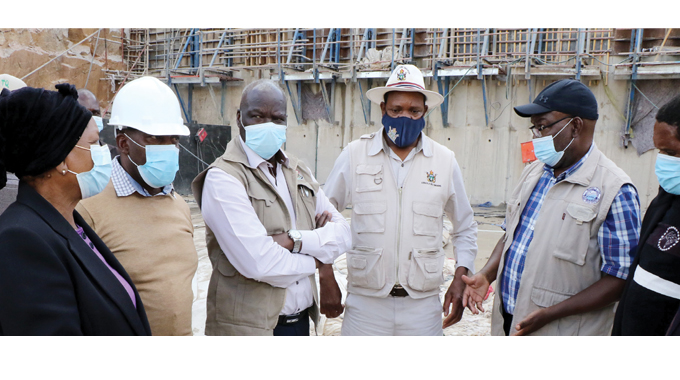
Nqobile Tshili, Chronicle Reporter
GOVERNMENT will build modern homes with access to social amenities for more than 700 homesteads that will be affected by the construction of Lake Gwayi-Shangani and conveyance of water to Bulawayo.
Construction of modern homes will accelerate attainment of an upper middle-income economy as envisioned by President Mnangagwa.
Communities living along the Gwayi-Shangani-Bulawayo pipeline will be affected, hence the need for relocation.
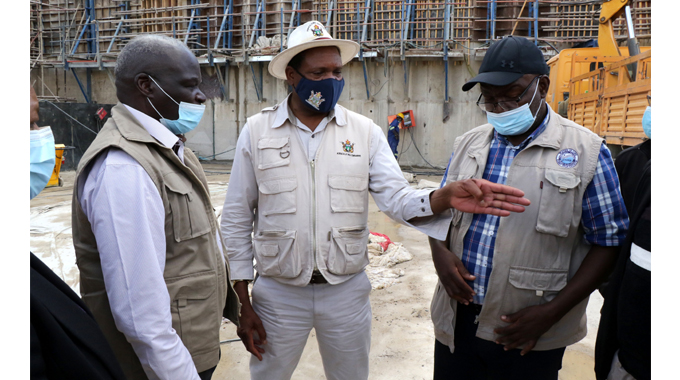
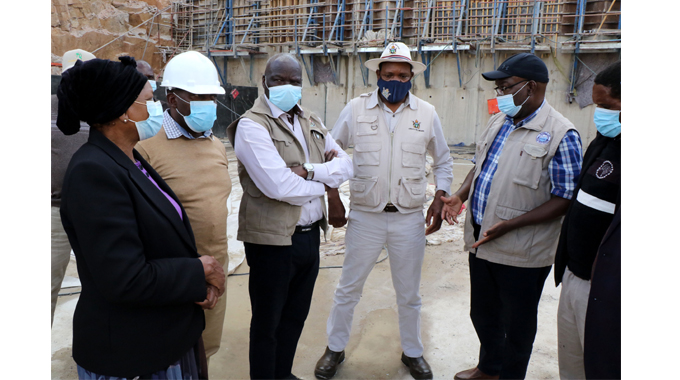
This was revealed by Lands, Agriculture, Fisheries, Water and Rural Development Minister Dr Anxious Masuka in an interview following an inter-ministerial meeting held at a Hwange lodge before a tour of the Lake Gwayi-Shangani construction site.
He said Government has adopted a preliminary relocation masterplan for communities that will be affected by the massive transformational project.
Dr Masuka said the relocation masterplan is subject to fine-tuning upon further consultations with affected communities.
Last Friday’s meeting brought under one roof various ministries and ministers to deliberate on the progress made in the construction of Lake Gwayi-Shangani and how it will impact communities.
The construction of Lake Gwayi-Shangani and the laying of a 245KM Gwayi-Shangani-Bulawayo pipeline is expected to have a far-reaching impact on the region as it will spur rural industrialisation through irrigation projects.
At least 10 000 hectares of land has been identified for irrigation projects, while a 10MW hydro-electric plant will be built at the lake.
The plant will be incorporated into the national grid, while bringing water to Bulawayo will result in the city’s supply dams in Matabeleland South being weaned off for other developmental projects.
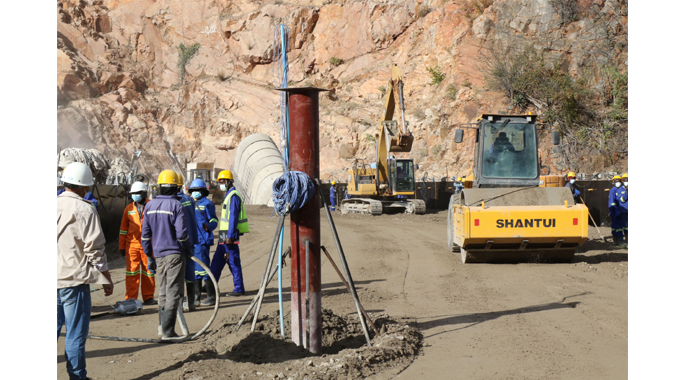
A quarry plant and steel processing firm that have been established at Lake Gwayi-Shangani are expected to continue operating beyond construction of the dam project.
Dr Masuka said Government will build better houses for communities that will be affected by the National Matabeleland Zambezi Water Project (NMZWP) to bring water to Bulawayo.
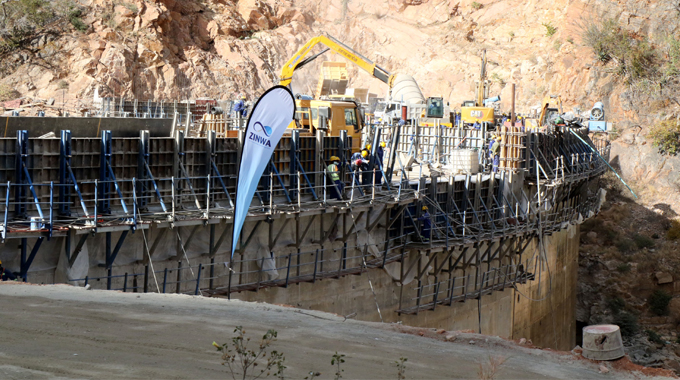
The project mooted over a century ago is becoming a reality under President Mnangagwa’s administration, but even better, it will also ensure that Matabeleland contributes to the country’s food security.
“We also looked at the relocation and re-organisation of the 734 homesteads that will be affected and we agreed that a masterplan must inform that, but guided by the President’s Vision 2030. So, we are not going to evaluate houses and pay compensation, but we are building modern houses with rural service centres with all amenities required for these communities to reach Vision 2030,” said Dr Masuka.
He said the relocation and re-organisation plan should be inclusive and informed by consultations.
“The relocation masterplan entails now that we have accepted the preliminary reports of the officials. Now, they have to go to the communities led by their chiefs, village heads and headman and everyone.
A participatory approach, to say the President’s vision of a prosperous and empowered upper middle-income economy, leaving no one and no place behind entails better households and better amenities for these villagers. Government is not paying them compensation for the houses that they have lost. It is building anew; it’s building forward,” he said.
Dr Masuka said commercial and communal irrigation programmes that will contribute to food self-sufficiency have been identified along the path of the Gwayi-Shangani-Bulawayo pipeline.
“We then looked at the irrigation side of things and we have identified seven 200-hectare models for the Vision 2030 accelerator, this being community irrigation schemes in addition to 8 000 hectares for commercial irrigation. We have also said all the five districts along the conveyance route of the pipeline to Bulawayo are going to benefit from these irrigation schemes,” said Dr Masuka.
Hwange, Lupane, Umguza, Binga and Bubi districts are the districts expected to benefit from the project. – @nqotshili


 Online Reporter