

 admin
admin
Whinsley Masara Chronicle Reporter
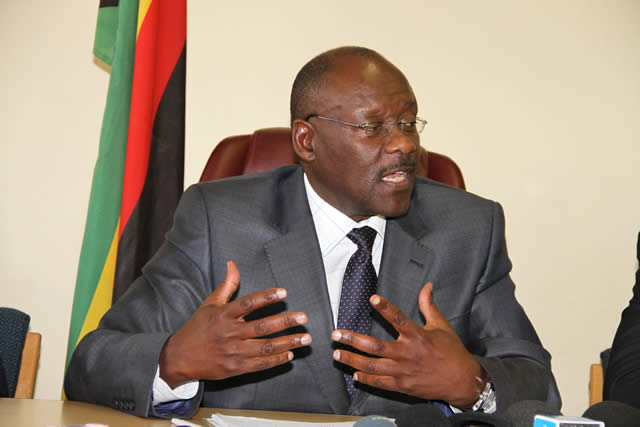
ALMOST $8 million has been set aside for a mass immunisation programme for all children between nine months and 15 years to eradicate measles and rubella in the country. The Minister of Health and Child Care Dr David Parirenyatwa said the vaccination campaign, which commences on September 28 and ends on October 2 throughout the country, would also target pregnant women as a way to reduce birth defects and Congenital Rubella Syndrome (CSR).
The minister said the government and its partners as well as the Global Alliance for Vaccines Initiatives (GAVI) would fund the exercise. Dr Parirenyatwa said childhood immunisation is one of the key pillars for child survival. He said Zimbabwe has seen a considerable increase in vaccination coverage from 28 percent in 1980 to the present 80 percent.
The Minister said Zimbabwe last experienced positive cases of measles in 2010 while the first rubella outbreak was in 2014, with about 1,024 cases being recorded. “Children in Zimbabwe have always been vaccinated against measles and rubella is a new type of outbreak which is rapidly increasing in our country. Rubella has teratogenic effects of the virus which result in a number of birth defects,” said Dr Parirenyatwa.
“Ninety-nine percent of infants born with defects contract the virus from their mothers who were infected with rubella in the first 10 weeks of pregnancy. However, I highly urge pregnant mothers to be patient and stand in the queues for vaccination.” He said the immunisation campaign would also see Vitamin A supplements being administered to all children aged between six and 59 months, while those who may have missed any of their routine vaccination doses would be catered for.
UNICEF Acting representative in Zimbabwe Dr Jane Muita said the immunisation programme underlines Zimbabwe’s determination to reduce child deaths. “Contrary to what we often read in the press, Zimbabwe has made progress in reducing child mortality. Yes, child deaths still remain quite high; yes, Zimbabwe will not be able to meet the MDG targets on child mortality reduction, and yes, the health system still faces numerous challenges, but the fact is that there are fewer children dying today than were dying in the immediate past (pre-2009),” she said.
Dr Muita said since 2009, Zimbabwe has not recorded any major disease outbreak. “We attribute this to the tremendous effort that has gone into getting the health system back up and running again.
“At the heart of this recovery has been an effort to equip the immunisation programme with adequate vaccines, vaccine materials and cold chain equipment. Without a strong immunisation programme, children die of diseases that can easily be prevented — diseases like measles, rubella, pneumonia, diarrhoea, and others,” she said.


 derick.khumalo
 Online Reporter