Online Reporter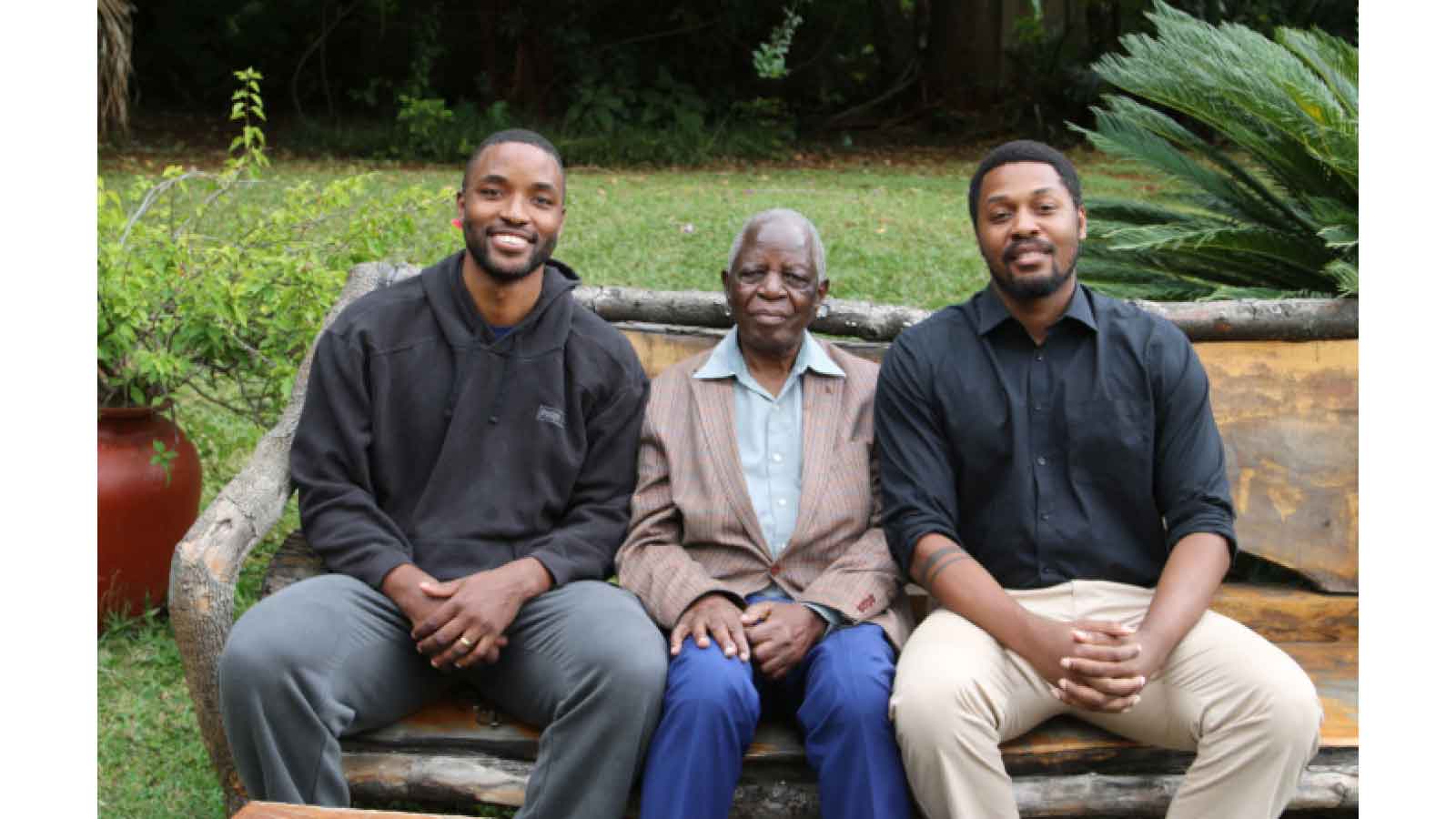
Professor Simbi Veke Mubako rendered a crucial and decisive legal mind during the liberation struggle until he was appointed ZANU chief legal advisor ahead of the 1979 Lancaster House Conference. Our Senior Reporter Nyore Madzianike (NM) sat down with Prof Simbi Mubako (SVM) as he celebrated his 90th birthday in Harare.
NM: Good afternoon, Professor. You recently turned 90. Tell us, when you were born and where?
SVM: I was born in Zaka, near Manokore School, on April 20, 1936, just three years before the Second World War began. I went to school during the war, at Manokore School and then I proceeded to boarding school at Silveria Mission in Bikita.
From there, I went on to Gokomere Secondary School, where I did my Form Four and eventually, I spent some time at Chishawasha, studying for the priesthood.
I wanted to become a priest at that time, and when I gave that one up, in 1957, I got a job as a journalist, like yourselves. I was the first editor of a magazine called Moto Magazine in Gweru from 1958 to 1959. I then left Gweru and went to university in South Africa, and started my university career, which was to take me many years.
I spent three years in Lesotho, at Roma College, and then I really wanted to become a lawyer at that time. But I could not get into law school in South Africa, or anywhere. There was no study of law in Zimbabwe at that time. So, I eventually landed in Europe, in Dublin, Ireland. That’s where I did my first law degree. I proceeded to the University of London, the London School of Economics and from there, I needed to get a job. I got married in London. I needed to get a job. I went to Zambia and became a law lecturer at the University of Zambia from 1970 to 1976.
NM: During your lectureship in Zambia, did you by any chance mix with President Mnangagwa?
SVM: Yes, very much so. Well, not only him, I met many other Zimbabweans who were fighting the liberation struggle. Comrade Mnangagwa came to Zambia when I was already teaching law at the University of Zambia and he applied to enter the law school where I was. I was in the admissions committee and I was responsible for admitting him. This was because I had heard that he was a freedom fighter who had just been released from prison and he wanted to study law. So, I was very keen to get him admitted. He was admitted and I also assisted in finding a scholarship.
In fact, I taught him the law. He was a very good student and eventually qualified in 1975. When he qualified as a lawyer, he went back to the war in Mozambique and I would periodically meet him in Mozambique because I was a legal advisor to ZANU.
Throughout that period, I would sometimes visit Mozambique and meet him. Next, I met him at the Lancaster House Conference.
Again, I was the chief legal advisor of ZANU at the Lancaster House Conference and he was in the security department of ZANU. We interacted a lot.
So, I got to know Cde Mnangagwa then and after independence, of course, I got to know him. We became members of the Cabinet together. I was the first Minister of Justice. He was Minister of Security. Eventually, he became Minister of Justice, also after I was reshuffled to another ministry. We have been working together since that time.
NM: Do you recall some of the names of those freedom fighters?
SVM: Yes, well, I met Cde Herbert Chitepo, who was the chairman of ZANU, because I was a member of ZANU anyway. Cde Chitepo was important in my life because he was the first black lawyer, and he was the first African lawyer in Zimbabwe. He inspired me to study law.
So, I was very pleased to be able to meet him in Zambia and we became friends and worked together in ZANU.
I was also able to meet many other freedom fighters, including Cde Josiah Tongogara and all the others who were working in Zambia at that time. But with Tongogara, we became particularly good friends. He introduced me to a number of his commanders, including Comrade Ndangana William. When he introduced me, he would say, look, my comrade, one of my commanders has got problems looking after his children and I would assist.
He had two daughters and he said, well, when I go to the front, nobody looks after my daughters. So, could I look after one of his daughters? And I did. Her name was Susan. She came and then lived with us.
I sent her to school. She was doing night school in Zambia and looking after my children at the same time. We became very close with Comrade Ndangana and Comrade Tongogara and others.
NM: You spoke of your rich academic history. Then, how did you manage to manoeuvre across all the said jurisdictions, considering that you were still in the colonial era with so many challenges as a Black African?
SVM: Well, at that time, you had to depend on getting scholarships. In my case, I was lucky because I was sponsored by a Catholic. He is the one who gave me the job at Moto magazine and he encouraged me to go to university in Lesotho. He paid for the fees then. He eventually found me people in Switzerland, which was his home, who were ready to sponsor me. When I moved to London, I got scholarships from the government of Sweden, and managed to do my studies that way.
NM: So, you spoke of being the ZANU legal adviser. Are there notable legal frameworks or policies that you wrote and gave to ZANU for implementation?
SVM: Well, it was not something which I could say I wrote myself, but of course, I was advising on all the policies of ZANU during the negotiations, including the land reform question.
We negotiated with the British to be able to acquire land for the black people in this country and that, as you may know, became very controversial. The British were very unwilling to grant us the authority to be able to acquire land from the white people.
We had a lot of discussions until the American government offered to pay for the land. That is how we managed eventually to convince the British that black people, the black government here, should be able to acquire land. That is how we were advising the politicians on the legal intricacies that would be involved in acquiring land.
It was the job of lawyers to be able to draft that Constitution. So, the independence constitution was drafted by us, lawyers of ZANU, lawyers of ZAPU, who were a Patriotic Front working together.
NM: We understand you also served as a Cabinet Minister. Take us through that journey.
SVM: I became the first Minister of Justice, as I have said and then minister of Home Affairs and lastly a Minister of Public Affairs.
Yes, I was the first Minister of Justice. I was responsible for changing the laws of the country in such a way that they would save a new Zimbabwe. We recast the judiciary for example, the judges and so on, the legal profession and various other laws.
I brought about changes in the prison service because I was in charge of prisons at that time. We abolished any discrimination in prisons.
NM: I understand you also served as a diplomat. Can you tell us about that?
SVM: Yes. Well, after my service as a minister, which was for 10 years, I became a judge. I became a judge for six years. Then in 1999, I was appointed ambassador to the United States.
I was an ambassador in Washington DC for another six years. That was a very difficult time when sanctions were imposed and my job was to fight the sanctions from Washington itself. Unfortunately, we didn’t succeed and sanctions have remained until now. We still have sanctions. But anyway, that was the time I served as a diplomat.
NM: We know and we understand you are also an author. Kindly share more on your literature.
SVM: Yes. Well, I have been writing, you know, from the time that I was a professor of law. I have been doing a lot of writing. Sometimes, just articles in newspapers or magazines. But in the end, I felt that it was important for me to record my experiences, as an advisor to the liberation movement.
I have written two books. One is the Zimbabwe Liberation Movement, which is yet to come out. It is being printed right now.
The second one, which you probably have seen, is titled “Zimbabwe at 45” which is a compilation of the story of the countryafter independence, that is, from independence until the last year.
NM: Beyond your public roles, what personal values, relationships, and experiences have sustained you through your journey up to today?
SVM: Well, the main experience, really, when I look back, which I find most valuable, has been my association with the party, with the liberation movement. I was always involved in academic life, but at the same time, I was very closely involved with the liberation movement. Even as a student, I was the leader of the Zimbabwe students’ union in Europe, and then we used to support ZANU as students.
But then, when I moved to Zambia, I was able to help the party more closely. In particular, as I mentioned, I was very much involved with General Tongogara and his other commanders, such as William Ndangana and others. In particular, when the party was in disarray after the death of Comrade Chitepo, it was my responsibility, more or less, to look after the party legally.
I defended them in court when Tongogara was then charged with the murder of Chitepo, which was just a manoeuvre by the Rhodesian government, which sold the lie to the Zambians so that we could fight among ourselves. They charged ZANU, in particular Tongogara and Comrade Kusadakufa Mazuva and Comrade Chimurenga with murder.
It was my responsibility to defend them in court, and we assembled a legal team, including some lawyers who came from England to join us, and we managed to free them.
They were acquitted, all of them, and Tongogara was then able to continue to Mozambique to lead the war, which he did, until the very end.
Comrade Kusadakufa Mazuva is still alive, I am still in touch with him, and we are all very grateful that we managed to defend them.
NM: How does it feel to have survived and worked with leaders in both the First and Second Republics?
SVM: Well, I served the First; I did not serve the Second Republic. I had retired, but I am still in contact with the Second Republic. Well, I feel that there’s a continuity, things are going very well, the Second Republic is clearly an improvement on the First Republic, and all that is due to a very large extent to Comrade President Mnangagwa himself. So, I feel very grateful that I have been able to see progress in both the Republics. I can only thank God that at the age of 90, things are still going very well in Zimbabwe. I think there is a clear sign of progress in Zimbabwe, and I just hope that it will continue that way, even when I am gone.
NM: Do you have a special message to share with us as you celebrate your 90th birthday?
SVM: My special message would really be one of unity, that Zimbabweans should remain united, because without unity, you cannot have progress in the country. But at the moment, there is unity; we should keep it up, remain focused, and concentrate now on development, and I am very pleased to see that there is general consciousness in the country.
People do want to see the country develop, to build new roads, interchanges and industries, to do our mining, but not just mining, we must beneficiate and build factories and so on. That is what we need to do, and I hope that will continue.