

 admin
admin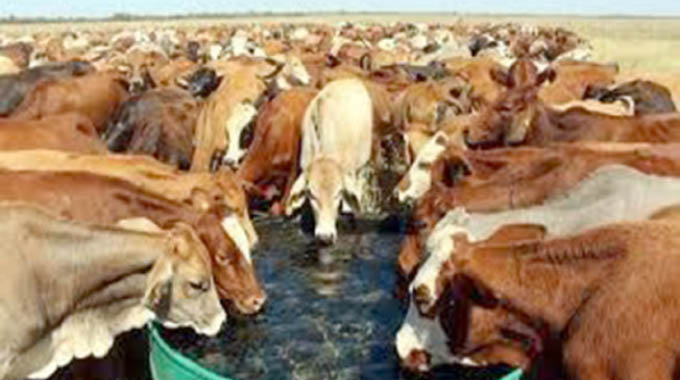
Elton Manguwo and Edgar Vhera
GOVERNMENT has urged farmers to continue implementing drought mitigation strategies to curtail poverty deaths in livestock despite the recent rains that fell in some areas.
As many as 94 000 cattle have been saved from possible starvation since the interventions started.
Livestock Production and Development director, Dr Sithokozile Sibanda said Government recognised that the early rains received in some areas could create a false sense of security, leading to complacency in long-term planning.
“It is therefore crucial for farmers to remain vigilant and continue with efforts in sustainable agricultural practices. Though these rains may provide temporary relief, the underlying challenges posed by drought remain significant,” said Dr Sibanda.
Farmers are encouraged to source protein blocks for their cattle, continue giving them urea treated stover and provide urea blocks as well.
“These strategies will help maintain livestock health and productivity, especially during challenging times,” said Dr Sibanda.
With most pastures drying up implementing strategic grazing practices can significantly enhance pasture utilisation, especially during drought conditions.
“One effective method is rotational grazing, which involves systematically moving livestock between various pastures. This approach prevents overgrazing in any single area, allowing grass to recover and maintain its health,” said Dr Sibanda.
Employing effective strategies to manage livestock during drought is crucial for safeguarding animal welfare and promoting the sustainability of farming operations.
Culling, which involves carefully evaluating the herd and identifying animals that may be less productive or costlier to maintain is key, as by reducing the herd size, producers can alleviate some pressure on available feed resources, ensuring that the remaining animals receive adequate nutrition, added Dr Sibanda.
During periods of severe drought, producers often face tough decisions related to herd management.
To effectively address feed shortages and maintain the health of their livestock, several calculated measures may need to be implemented.
Meanwhile, drought mitigation livestock coordinator, Mr Aaron Muchazivepi said the livestock drought action committee (LDAC) had saved close to 94 000 livestock from poverty deaths due to the El Nino-induced drought in some distressed districts mainly in agro-ecological regions four and five.
“The LDAC has managed to save livestock from poverty deaths by providing maize silage in the past two months. Over 8 000 tonnes of maize silage with the capacity to save over 94 000 livestock has been distributed to some areas in the 1 620 rural wards,” he said.
Mr Machazivepi disclosed that borehole drilling was continuing with special focus on agro-ecological regions IV and V.
“The establishment of water facilities, watering and feeding troughs continue in drought mitigation centres set up in the 1 620 rural wards. As the rain season starts, we encourage the dipping of cattle and provision of adequate feed and water,” Mr Muchazivepi added.
Dipping is important to tackle water borne diseases.
Mr Muchazivepi said it took three to four weeks for water bodies and grazing areas to recharge and until that happens, farmers were encouraged to continue providing the necessary provisions until the end of the lean period, which stretches to end of November.
The Ministry of Lands, Agriculture, Fisheries, Water and Rural Development set up the El Nino drought action committee (DAC) on April 29, 2024 comprising the Government, academia, parastatals, private sector and development agencies in response to the 2023/24 El Nino drought.
The LDAC is one of the eight sub-committees formed.



 Online Reporter