Online Reporter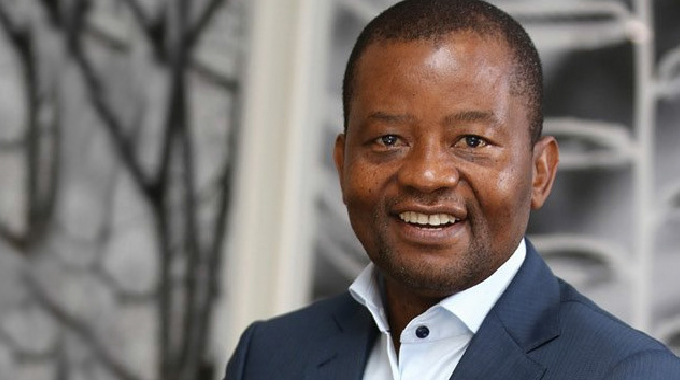
FROM a four-roomed house in Mpopoma, Bulawayo, where about eight children grew up alongside an extended family, to the boardrooms of some of Southern Africa’s biggest corporations, Peter Mthandazo Moyo’s journey is a story of education, competition, discipline and ambition.
In a wide-ranging interview with Intake Editor Limukani Ncube on Bulawayo’s Finest Podcast, the Zimbabwean-born South Africa business executive reflects on the values that shaped him, the opportunities created by education and the importance of earning success without taking shortcuts.
But Moyo’s gaze is firmly on the future. He argues that Bulawayo must stop focusing only on potholes and service delivery and first start thinking about how to grow the city’s economy, create jobs and put money into people’s pockets. Once residents have disposable income, they will be able to pay rates to cushion city operations.
He sees opportunities in solar energy, technology, higher education and the city’s industrial heritage, while calling for Bulawayo to position itself as a university and innovation hub.
He also speaks passionately about Highlanders Football Club, arguing that its next century must be built on stronger governance, financial sustainability, investment in its academy and meaningful participation by its supporters.
And despite a career that has taken him to the highest levels of corporate Africa, Moyo says his greatest legacy is much closer to home: being remembered as a good son, father and grandfather.
Moyo is the founder of Amabubesi Investments as well as Magis Capital, an investment and advisory firm, and has held high profile executive jobs that include serving as Chief Executive Officer at Old Mutual Emerging Markets (Pty) Ltd, Old Mutual Life Assurance Co. (South Africa), Group Chief Executive Officer at Alexander Forbes Ltd and roles at top organisations like Telkom, Nedbank Group Ltd and Ernst & Young Group SA and Telkom SA SOC Ltd, among others, in a professional journey spanning over decades.
Growing up in Mpopoma
Moyo was born in Luveve Clinic because both his parents came from Luveve, but he grew up in Mpopoma.
“I was born in Luveve Clinic because both my parents came from Luveve, ubaba lo mama. Ubaba had actually grown up Emanxeleni (Mbembesi), although our rural home was eDula in Gwanda, umama was from eKezi but they met up in Luveve…but I never really lived at Luveve. I grew up in
Mpopoma. I grew up in Mpopoma.
So I’ll talk about growing up in Bulawayo much more from the context of Mpopoma. In Mpopoma, we were privileged in that although it was a township, it appeared to be slightly better than most of the townships, we had good schools. I went to a primarily school called Mpumelelo. And Mpumelelo was a very, very, good school, with possibly one of the best headmasters around.
God bless his soul, Mr Dabengwa. He shaped our life from a school point of view. Like all African families, if you were to look at it today, you’ll be forgiven for saying we were very poor. But all of us lived a normal African life. We never felt we were poor. So the issue of meritocracy started coming in there. When we went to school, firstly, we went to school to perform very, very well. And there was absolutely no question about it.”
Moyo grew up in a family of eight children in a four-roomed house, with relatives from the rural home sometimes coming to live with them.
“I grew up in a family of eight children in a four-roomed house. Like I said, we never saw ourselves poor. In fact, from time to time, some of our family relatives from our rural home came to live with us.
So it was normal within that four-roomed house, there would be like 12, 14, 18 people. But we survived. And that taught us firstly, the importance of family, the importance of togetherness.”
He said the competitive environment at school also taught them that there were no shortcuts.
“So the competition was very high. So competition was the order of the day. So there was no shortcut. You did not know who marked the exams. So you actually had to deliver.”
Education opened the world
Moyo excelled at Mzingwane High School and later went to Goromonzi for Advanced Levels.
For all the years that I was at Mzingwane I was actually the top student. I slackened a bit in my
Form 4 and was, what, second or third.
But all the years, I actually got all the awards for the top students. In fact, when I was Form Two, I actually had the best, the second best mark in the whole school from Form 1 to Form 4. So yeah, I was, I can actually safely say that I was a very good student.
But the importance of that was that education defined what we could be. It did not define what you would be. It defined what you could be. And then I went to Goromonzi. And being the competitive person, I get to Goromonzi, and there were two guys that had done their O levels at Goromonzi that everybody was talking about them. I said, bloody hell, I don’t care.
When we are done with A levels, I’m going to beat these two guys. I said, if they get 15 points, I have to find a way of getting 16 points. If they get six points, I’m fine with seven. That’s how competitive I was. And fortunately, I beat both of them because it was actually the drive. “
He had initially thought he would become a doctor or pharmacist, but later chose accountancy.
“And so that actually opened the world.” After qualifying as a chartered accountant, Moyo moved to South Africa, where his career progressed rapidly.
“I’d always wanted to be a partner in an accounting firm. I ended up being a partner at Ernst & Young, one of the top international firms. I was actually the first black partner of Ernst & Young in South Africa. In fact, in the whole of Southern Africa, Zimbabwe included even at the time.”
He later joined Old Mutual, becoming CEO at some point and also held high positions in other top corporates.
“But when I look back, did I think a boy from Mpopoma could run R120 billion entity with over 30,000 employees? Of course not. Did I think a boy from Mpopoma would be the chairman of Vodacom, the biggest telecommunications company in South Africa? Of course not.”‘You can’t take shortcuts’
Moyo believes young people today have greater opportunities than his generation had because of the internet, social media and access to information.
“But it is important to know what you choose. However, you can’t take shortcuts.”
He said meritocracy would continue to reward those prepared to work hard.
“My advice to people is be grounded. Don’t take shortcuts. I think it’s Malcolm Gladwell that talks about the number of hours that you have actually got. You have to put in those hours. You’ve got to graft. You’re not going to win through taking shortcuts. You’re not going to make money through taking shortcuts.”
Bulawayo must grow its economy
Moyo remains closely connected to Bulawayo and visits the city regularly. He remembers a city that was well run, with strong infrastructure, sound systems and a population where every family had someone going to work.
“So today, what would I change in Bulawayo? The first big thing you have got to raise the incomes of abantu bakwaBulawayo.
“If you don’t raise the incomes of the people of Bulawayo, the city can’t do anything without the rates. And the city will get rates if the people of Bulawayo can afford to pay rates.”
He believes the city must focus on its strategic advantages.
“Firstly, there is no reason known to man why this city must ever have failed to have power. I mean, if you just look at the number of days of sunshine in this city, there are very few cities in the world with the same number of sunshine in a year like we have in Bulawayo. And why did we not harness even the solar power?”
Moyo also sees an opportunity in outsourced administration and call centres.
“We are, for all intents and purposes, on the same time zone as Europe. Why have we never thought about making this city the centre of excellence for administration, outsourced administration?”
He believes the National University of Science and Technology can become a major driver of the city’s economic transformation.
“And we have got to think, what do we do with Nust? We don’t talk about the science and technology only. For all we know, this city was known as an industrial city. How do we harness that and actually build on it? We should actually be saying that we need to create almost a university town out of this.”
Moyo argues that city leaders must focus on increasing Bulawayo’s economic output.
“Central to it, whoever runs the city must actually say, how do I increase the Gross Domestic Product of Bulawayo? And what levers have I got?”
He said discussions about potholes and cleanliness would remain incomplete without economic growth.
“I’ve heard people say, we are going to clean the city. Trust me, if people don’t have money, their only way of trying to make money, they are going to sell things in the streets. We need to first take them out of the streets, put them in factories, put them somewhere, then we can clean the city. One of the most difficult things to do is to make money. One of the most difficult things is how to put money in the pockets of people. We need to think about that.”
The diaspora
Moyo said Zimbabweans living abroad would only return in significant numbers if conditions at home became equal to or better than those where they live.
“People are only going to come back here if it becomes equal or better than where they live.”
He said Zimbabwe should also think creatively about attracting its diaspora back into the economy.
“We really need to fix the income generation of people so that people can afford to earn the same levels of income elsewhere.”
Highlanders: ‘We need to strengthen our foundations’
Moyo describes Highlanders as much more than a football club.
“When I lived in this town, my weekends were determined by what was happening at Highlanders.
For us, Highlanders was a way of life. But also, lest we forget, it actually became an outlet for us to express the excellence that we had as a people. So Highlanders became that vehicle.”
Moyo, together with his friend Bongani Nqwababa, who went on to become CEO of Sasol, was involved in strengthening the club’s financial systems and says Highlanders had, for many years, independently audited financial statements. He believes the club’s future depends on sound governance and financial sustainability.
“We need to strengthen our governance. We are known for very, very good governance. We need to strengthen that. I get a sense that we have gone a little bit backwards. We need to make sure that we are financially sustainable in the long term.”
He also wants greater investment in the academy, pointing to earlier generations of players who came through the club’s development structures.
“We need to strengthen that. I get a sense that we are no longer strong in that. I get a sense the club is actually not led as well as it should.”
Moyo believes community ownership of football clubs can work and cites major clubs that operate through community-based models.
“We must actually not scoff at it. But also, those of us that say we love Highlanders, we can’t keep on saying we love Highlanders and not put something on the table. We can’t keep on saying it’s a
Team Yabantu (People’s team) and we do nothing.”
He believes supporters must play a greater financial role in the club’s future.
“If you just ask the number of people that love Highlanders, and all of us just put $10 in a year. I think our fortunes will be different. I do believe community clubs do work.”
As Highlanders celebrates 100 years, Moyo says the club must build a stronger foundation for the next century.
“We have to strengthen our governance. We need to make sure that we are financially sustainable in the long term. We need to strengthen our roots for people that we can call upon when the chips are down.”
‘A good father’
Despite his achievements in business and corporate leadership, Moyo’s greatest measure of success
is deeply personal. Asked how he wants to be remembered, he said:
“To be honest, I just want to be remembered much more by my children as a good father. I hope I might have more, but to be remembered by my two grandchildren as a great grandfather. Most of the things that I’ve done in this life have really been for my family. I have been driven by what I can do for my children and my family.”
For Moyo, the journey from a crowded four-roomed house in Mpopoma to the boardrooms of major corporations was built on the same values he now believes can help transform individuals,
Bulawayo and Highlanders: education, discipline, hard work, strong foundations and a refusal to take shortcuts.