Online Reporter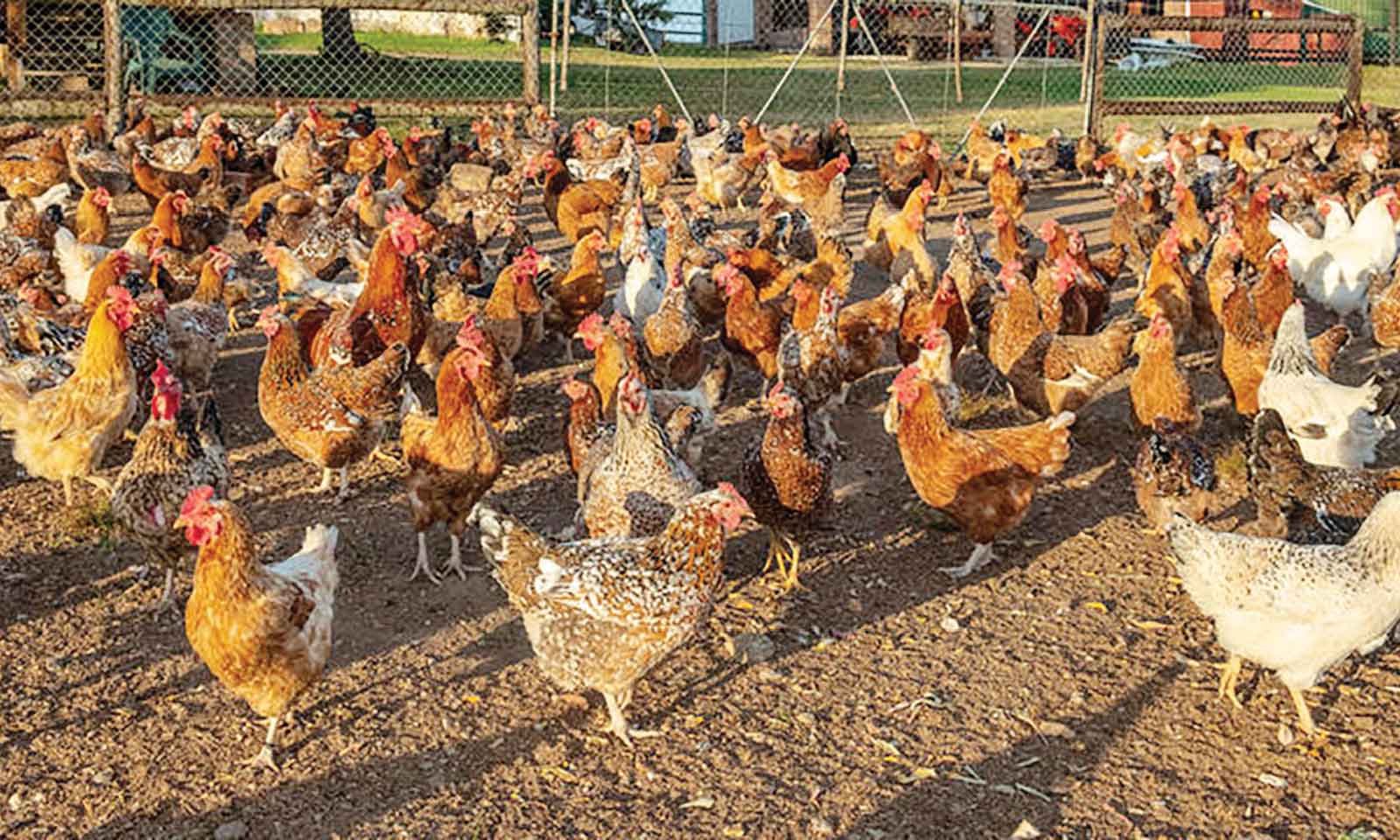
Peter Gambara
There has been a noticeable increase in interest among Zimbabweans seeking to venture into indigenous poultry production, commonly known as road runner chicken farming.
This trend has been driven largely by social media advertising and word-of-mouth recommendations.
Road runner chickens are increasingly viewed as a viable alternative to conventional broiler and layer systems, particularly by smallholder and backyard farmers looking for hardy birds that combine meat and egg production.
Despite the growing enthusiasm, information available to prospective producers remains fragmented and poorly coordinated, resulting in many farmers entering the sector without adequate technical knowledge.
Among the most popular breeds proving successful in Zimbabwe is the Black Australorp, which has gained wide acceptance due to its adaptability, reasonable growth rate and consistent egg production.
Other road runner breeds include Sasso, Sussex, Orpington, Leghorn and Brahma, although these are less common on the local market. Most road runner breeds are dual-purpose, meaning they are kept for both meat and egg production. The eggs are often sold for consumption or incubated to produce day-old chicks for resale. On average, these breeds can lay between 180 and 300 eggs per year, although they do not lay daily. Typically, a hen produces an egg once every four to five days.
Road runner chickens take longer to mature compared to commercial layers.
They reach laying age after about five months, with Black Australorps taking approximately 21 weeks, compared to around 18 weeks for conventional Rossi layers. Once mature, they can continue laying for five to seven years, with peak productivity occurring when hens are between two and three years old.
In terms of climate resilience, most road runner breeds are considered hardy, capable of withstanding cold conditions and showing moderate tolerance to heat, making them suitable for diverse agro-ecological regions of Zimbabwe. From a commercial perspective, pricing varies widely depending on breed and stage of growth. An average mature road runner bird sells for US$10 to US$15, while premium breeds such as Brahma and Orpington can fetch up to US$60 per fully grown bird. Day-old chicks for common breeds like Black Australorp and Sasso cost about US$1 to US$1,25, while special breeds command between US$5 and US$6 per chick. These premium breeds remain scarce, as only a few farmers keep them.
It costs approximately US$6 to raise a Black Australorp from day-old chick to point of lay. Several production models are available to aspiring road runner farmers.
One option is to raise chicks to laying stage and sell table eggs, which currently fetch US$7 to US$10 per tray. Another model involves investing in an incubator to hatch eggs and sell day-old chicks to new entrants in the sector.
A third, less common approach is raising birds to point of lay or full maturity, particularly cocks for meat – an option few farmers pursue due to the patience and capital required.
Weak organisation
While a Zimbabwe Free-Range Poultry Producers Association (ZFRPA) exists and operates a website, it remains largely obscure, difficult to access and even harder to join. As a result, many existing and prospective indigenous poultry producers are effectively operating without institutional support or collective representation. This vacuum has left producers vulnerable to dominant private players who aggressively market road runner poultry production through highly polished social media video advertisements.
These companies promise production contracts to interested farmers, along with a guaranteed market for eggs, positioning themselves as gatekeepers to the industry.
A handful of other players have also emerged, offering related services such as incubators, grinding mills and feed production courses. While these services are not inherently problematic, the absence of a strong, independent producers’ association means farmers often have limited bargaining power, little verification of claims being made and no neutral source of technical guidance.
This article, therefore, advocates for the coming together of existing and potential indigenous poultry producers to form a strong, inclusive and well-coordinated producers’ association capable of safeguarding members’ interests and professionalising the sector. An effective indigenous poultry producers’ association should, at minimum, be able to perform the following functions:
Provision of accurate and standardised information
Currently, many new entrants are venturing into road runner production with unrealistic expectations and without adequate technical or market information.
For example, while there is significant excitement around selling day-old chicks, producers soon discover that the market is limited and highly competitive. Egg pricing is also inconsistent. While some buyers reportedly offer US$7 per tray of 30 eggs, other producers sell the same tray for as much as US$10, creating confusion and uncertainty in the market.
A producers’ association could provide credible, up-to-date information on production costs, realistic pricing, market demand and common pitfalls, helping farmers make informed decisions before investing.
Adoption and enforcement of production standards
The absence of agreed standards has resulted in widespread quality inconsistencies, particularly in the sale of day-old chicks and fertilised eggs. It is common for producers to unknowingly purchase weak or substandard chicks, which are more susceptible to early mortality, or birds that are not genetically pure. As chicks grow, producers often observe off-colour birds and uneven growth rates, with some birds reaching maturity or laying stage much later than others, negatively affecting productivity and cash flow. Industry guidelines indicate that a fertilised egg should weigh a minimum of 50 grammes to produce a strong, viable chick.
It is also recommended that the first eggs laid by young hens should not be used for hatching, as they are typically underweight.
However, eggs sold on the open market are rarely graded, and buyers frequently receive mixed sizes, including very small eggs.
A coordinated association could introduce egg grading standards, ensuring that eggs of similar size are incubated together, resulting in uniform day-old chicks that grow and mature at similar rates.
Coordinated vaccination and biosecurity measures
There has been no collective effort to ensure that indigenous poultry, including road runners, are consistently and adequately vaccinated. While some producers follow strict vaccination programmes, others apply only minimal measures, creating serious biosecurity risks. Of particular concern is the growing trade in guinea fowl eggs and day-old chicks, some of which are reportedly sourced from forests. These practices pose a significant risk of introducing Newcastle disease into the poultry industry. A major outbreak would not only devastate indigenous poultry producers but could also spill over into the commercial broiler sector. At a national level, such an outbreak could trigger export bans, with serious economic consequences.
A producers’ association could enforce minimum vaccination standards, promote best practices and work with veterinary authorities to safeguard the industry.
Development of a coordinated and transparent market
Despite the apparent enthusiasm around road runner production, most farmers only realise later that the market for eggs, day-old chicks and point-of-lay birds is poorly defined and uncoordinated.
It is increasingly common to see producers advertising one- or two-week-old chicks on WhatsApp groups, often a sign of desperation to offload stock due to a lack of structured buyers. A strong association could play a central role in aggregating produce, negotiating fair prices, identifying reliable buyers and developing a transparent market system that benefits producers rather than intermediaries.
A case for self-regulation
A functional producers’ association should be able to establish and maintain a comprehensive register of producers, as well as individuals and institutions seeking products such as day-old chicks, fertilised eggs or point-of-lay birds.
On several occasions, I have personally visited some contractors and encountered new or potential producers looking for day-old chicks, only to be told to return after three months because the company is consistently overbooked. This illustrates both the high demand for indigenous poultry inputs and the lack of a coordinated system linking producers to buyers. A well-organised association would not only connect day-old chick producers, egg producers and customers, but also ensure that producers supplying the market meet minimum production, health and biosecurity standards.
This scenario clearly demands the establishment of a self-regulating Indigenous Poultry Producers Association, mandated to bring order, professionalism and credibility to the sector. Such an association should be empowered to employ veterinary doctors tasked with inspecting and certifying that producers have put in place the minimum required infrastructure, observe proper biosecurity measures and adhere to mandatory vaccination programmes. Veterinary inspectors would then issue certificates of compliance to producers who meet these standards.
Producers selling day-old chicks, fertilised eggs or mature birds onto the market would be required to present these certificates, thereby protecting buyers and raising overall industry standards. While this regulatory role could theoretically be carried out by the Government Veterinary Services Department, practical challenges remain. Many Government departments are underfunded and lack the resources to conduct routine field inspections.
Without sustained funding and logistical support, officers may be confined to their offices, leaving the industry largely unregulated. A voluntary, self-governing producers’ association, by contrast, has a direct interest in protecting its members, its reputation and the long-term viability of the industry, and would therefore be more proactive in enforcing standards. Beyond regulation, such an association should also employ extension agents to train and support both existing and new entrants. Currently, most new road runner producers rely heavily on information obtained from social media advertisements or from friends and relatives already in production. While this informal knowledge-sharing has value, it also carries a high risk of misinformation.
Compounding the problem is the fact that road runner and indigenous poultry production has not been adequately covered in most agricultural college curricula.
As a result, ADRAS officers (Agricultural and Rural Development Advisory Services) —formerly known as AGRITEX — may themselves lack the specialised knowledge required to adequately advise farmers in this niche but growing sector. Trained extension personnel under a producers’ association could fill this gap by offering verified, practical guidance.
This would include validating claims by incubator manufacturers, some of whom advertise machines capable of achieving hatch rates of up to 90 percent – figures that require independent verification under local conditions. Extension agents would also be responsible for providing accurate information on critical production issues such as housing space requirements, isolation distances, feed formulations, vaccination schedules, growth timelines and realistic profitability expectations. In addition, an indigenous poultry producers’ association could play a pivotal role in coordinated marketing and export development. There is growing demand, particularly among urban consumers, for road runner meat, which is widely regarded as tastier and more natural than conventional broiler meat. Increasing health consciousness is further driving this preference.
However, the current market is highly fragmented. Buyers seeking indigenous chickens often travel to rural areas and offer very low prices, taking advantage of producers’ lack of market access, bargaining power and price information.
Through collective marketing, aggregation and structured buyer engagement, a producers’ association could help ensure fair pricing, reduce exploitation and unlock higher-value domestic and export markets for indigenous poultry products.
Peter Gambara is an agricultural economist and consultant based in Harare. He wrote this article for The Sunday Mail.