


 Vusumuzi Dube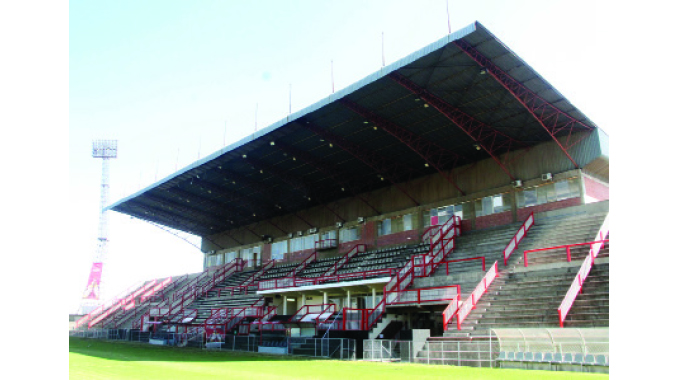
Vusumuzi Dube, Deputy Radar Editor
BARBOURFIELDS Stadium does not need an introduction in Bulawayo. You feel it before you even get inside, in the way the city leans toward it on match day, in the steady pull of voices and colour that gather long before kick-off and by the time you take your place among the crowd, it is already clear that this is not just where Highlanders play but where the club has come to understand itself over a hundred years.
Set in the suburb that gave it its name, Barbourfields has long outgrown the idea of being just a municipal facility. It has become the emotional centre of football in the city, the place where Bosso’s story has unfolded in full view of a demanding and fiercely loyal following that measures time not just in seasons but in moments that linger long after the final whistle.
The stadium belongs to the City of Bulawayo, but in truth, it has always belonged to the people who fill it. It was built in the early 1950s during a time when infrastructure for African communities was limited, first as an athletics arena before football and cycling found a home there and over time it transformed into the city’s main football stage, shaped as much by those who designed it as by those who occupied it week after week.
City of Bulawayo corporate communications manager Nesisa Mpofu traces that journey in detail, from its naming after former mayor H R Barbour, who pushed for the development of sporting facilities in residential areas, to the steady expansion that followed as demand grew.
The first grandstand, modest by today’s standards, was planned in 1960 to take 1 500 spectators at a cost of $54 000, with construction beginning in January 1961 and finishing the following year. As football tightened its grip on the city, more stands were added in 1975 and 1976 on the western side, pushing capacity to 18 000.
Further upgrades in the early 1980s saw the pitch realigned and drainage improved, while additional seating bays and facilities were introduced in phases, each extension responding to a crowd that kept coming back in larger numbers.
By the time those works were completed, Barbourfields had settled into its identity as a football ground first and everything else after, even though it continued to host major national and regional events, from the All Africa Games to the AUSC Region 5 Games and moments of national reflection such as the funeral service for Vice-President Joshua Nkomo in 1999 and Independence celebrations decades later.
Today, it carries just under 23 000 spectators across its different sections, from Soweto to Empakweni, from the wings to the reserved and VVIP areas, each space with its own rhythm and character, yet all tied together by a shared voice that rarely needs prompting.
Highlanders’ rise and Barbourfields’ growth have never been separate stories.
Founded in 1926, Bosso found in this ground a home that matched its ambitions, and over time the relationship deepened into something that feels almost inseparable. The stadium became a fortress, not only because of results but because of the atmosphere that greets visiting teams long before kick-off, a wall of sound driven by song, drum and a sense of belonging that cannot be manufactured.
For the supporters, it is a ritual as much as it is football. Black and white colours fill the terraces, songs passed down through generations echo from stand to stand and the experience takes on the feel of something older than the game itself. It is here that young fans first learn what it means to be Bosso and where older ones return to relive the moments that shaped them.
Those moments are written into the ground. League triumphs, tense derbies, cup finals that stretched nerves and lifted spirits, all of it has unfolded on this pitch.
The names that defined different eras, Madinda Ndlovu gliding through the wings, Mercedes Sibanda’s influence, Peter Ndlovu’s early brilliance, Willard Khumalo’s authority, are tied as much to Barbourfields as they are to the club itself.
Matches against Dynamos have given the stadium some of its most charged afternoons, the kind where the air shifts hours before kick-off and the noise carries across the city. Even local derbies have their own edge, with Bulawayo pride on the line and no shortage of reminders that this ground does not easily give itself away.
Yet Barbourfields has always stood for more than football. It has been a meeting point for the city, a place where people gather to celebrate, to reflect, to connect with something that feels shared. Through victories and defeats, through changing generations, it has remained constant, holding together a community that sees in Highlanders a reflection of its own history and identity.
As the club marks a century, it is difficult to separate the milestones from the place that hosted them. Every chant, every surge of emotion from the terraces, every decisive goal has added another layer to what Barbourfields represents. It is not frozen in the past, but it carries that past in a way that shapes the present.
To celebrate Highlanders at one hundred is, in many ways, to celebrate Barbourfields itself, because this is where the club found its voice and where that voice continues to echo, familiar yet never the same, drawing each new generation into a story that began long before them and shows no sign of slowing down.


 Online Reporter