Online Reporter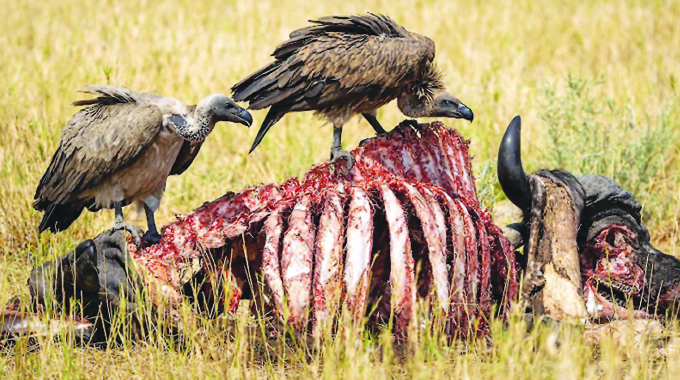
Flora Fadzai Sibanda, [email protected]
IN a stark warning echoing across the nation, BirdLife Zimbabwe, a dedicated local conservation group, is urgently calling for the protection of vultures.
These essential scavengers, often misunderstood and maligned, are teetering on the brink of extinction. Their disappearance would not only tear a hole in Zimbabwe’s ecosystem but also inflict severe environmental and economic damage.
The gravity of the situation was recently brought to light during a crucial workshop held in partnership with the National University of Science and Technology (Nust).
The event brought together a broad coalition of conservation stakeholders, including representatives from ZimParks, the Natural History Museum of Zimbabwe, and, most importantly, members of the traditional healing community.
The meeting served as a powerful forum to discuss vulture ecosystems, the invaluable services they provide, and the growing threats from both direct poisoning and the illegal wildlife trade.
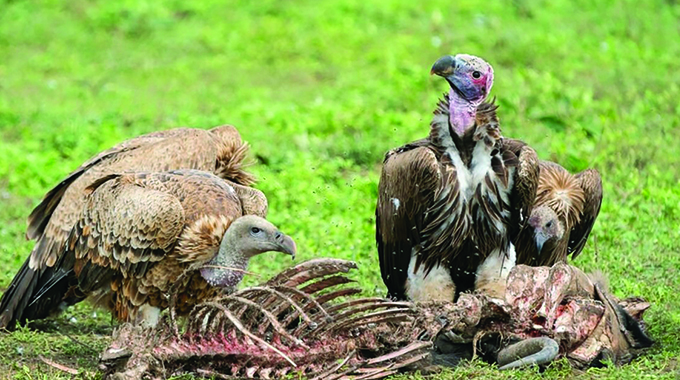
Leroy Moyo, BirdLife Zimbabwe’s Vulture Conservation manager, underscored the dual importance of these remarkable birds. He emphasised that their ecological role as the environment’s clean-up crew translates into significant economic benefits.
Recent studies, he revealed, estimate that vultures contribute over US$1 million annually to Zimbabwe’s economy. By strengthening existing conservation laws, the nation could secure even greater economic returns.
Moyo highlighted the practical, cost-saving service vultures provide.
“We all know vultures are famous for clearing up dead animal carcasses. For instance, when cattle die, the birds consume the carcass, a process that would otherwise cost farmers money to remove and dispose of properly,” he said.
This natural, free-of-charge waste disposal system prevents the spread of diseases and pests, a service that would be prohibitively expensive to replace.
Raising public awareness about this hidden economic value is a key strategy to prevent their indiscriminate killing.
Vultures face numerous threats, from deliberate poisonings to targeted killings fuelled by a misguided belief in their supernatural powers.
In response, BirdLife Zimbabwe has launched educational workshops aimed at informing communities about the birds’ vital role.
These workshops are forging a critical bridge between scientific conservation and long-held cultural beliefs.
This collaborative approach is already yielding results. Abson Moyo, representing the Zimbabwe National Traditional Healers’ Association (Zinatha), expressed his gratitude for the insights gained at the workshop and pledged the association’s full support for the conservation efforts.
He acknowledged the historical importance of vultures in traditional healing practices but affirmed that the new understanding of the broader ecological impact has prompted a change in their approach.
“Vultures are very important to us as traditional healers. But after learning how killing them affects everyone else, we are now making every effort to find other alternative medicines that will not require us to kill them,” he said.